Kurta
Clothing Definitions — definitions of garments and clothing terms from Apparel Search
Search Apparel Search
At a Glance
Definition: A kurta is a loose, collarless traditional shirt worn across South Asia by men and women, falling to just above or below the knees, usually with a short neck placket and side slits.
Also known as: Kurti (the women's, often shorter, version of the garment)
Pronunciation: KUR-tah
Category: Clothing Definitions
Word Origin
From Hindi-Urdu kurtā, the word used across South Asia for a collarless shirt or tunic; forms of the same word travelled widely through Persian and Turkish dress vocabulary for loose upper-body garments.
A kurta is a loose, straight-cut shirt worn across South Asia — in India, Pakistan, Afghanistan and beyond — by both men and women. It falls to just above the knees or well below them, is traditionally collarless, opens with a short placket at the neck, and is slit at the sides so the wearer can walk, sit and ride freely. The women's version is often called a kurti. This page explains the kurta's cut and fabrics, the trousers and garments it is worn with, and its range from plain everyday cotton to embroidered festive silk.
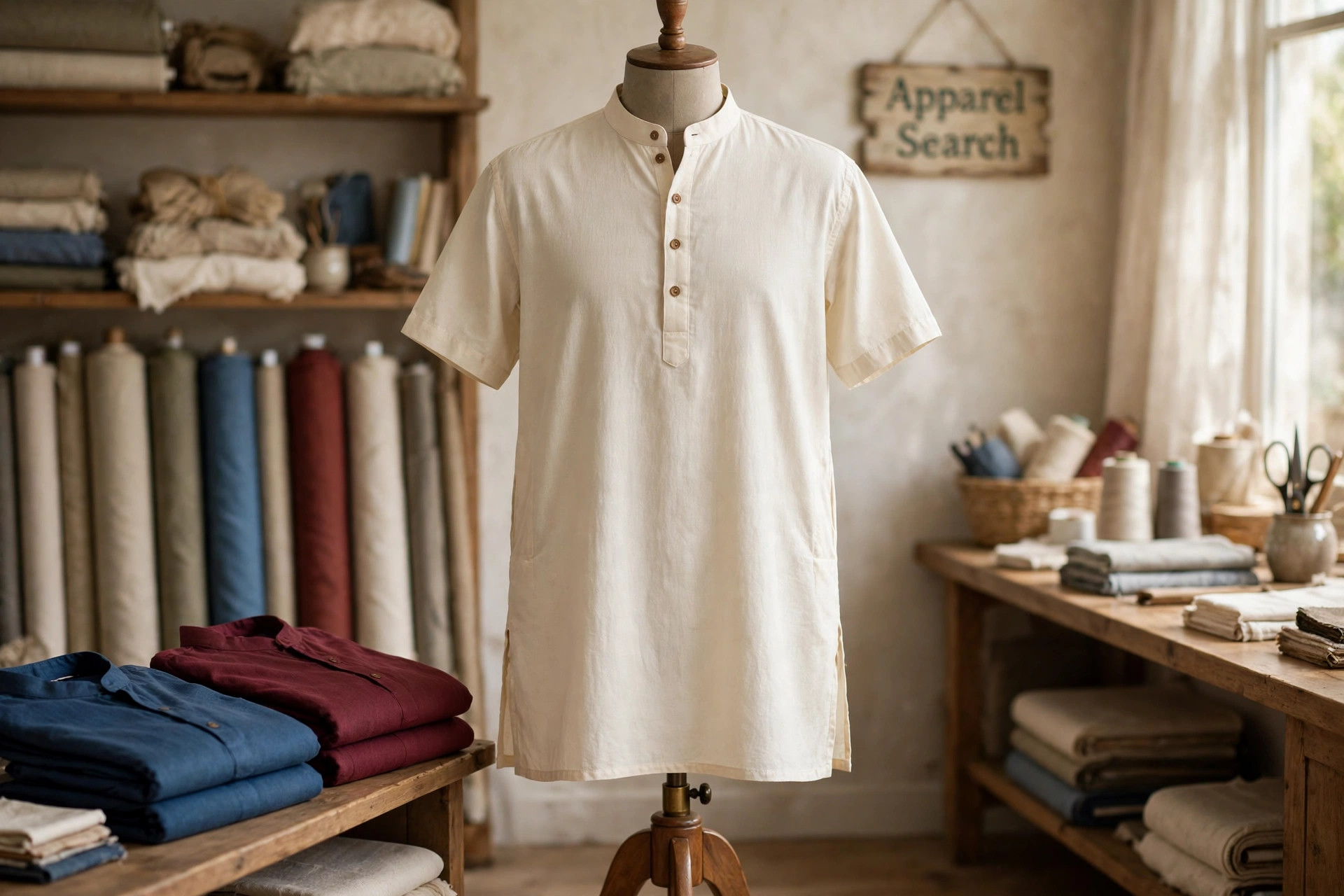
The Garment: Cut and Features
The kurta's pattern is deliberately simple. The body is cut straight, without darts, waist shaping or a collar; the neck is a round or shallow V opening extended by a short buttoned placket so the garment can be pulled on over the head. Sleeves may be long or short and are set plainly into the armhole. The defining construction detail is the pair of side slits at the hem: because the shirt is long and worn loose over trousers, the slits stop the skirt of the garment binding across the hips when the wearer sits cross-legged, climbs steps or rides. Pockets, where present, sit in the side seams.
Almost every feature answers the climate the garment was made for. The loose, straight cut lets air move around the body; the collarless neck and short placket avoid a tight band at the throat; and cotton — the standard fibre — absorbs perspiration and washes easily, with white and pale colours reflecting the sun. It is a tunic in construction, and its simplicity is the point: with no collar, cuffs or set-in tailoring to fit, a kurta can be made by any competent tailor from a length of cloth, which helped it remain daily clothing rather than becoming costume.
What a Kurta Is Worn With
The kurta is the top half of several established outfits. Worn with the churidar — close, bias-cut trousers cut extra long so the surplus cloth gathers in soft wrinkles at the ankle — it forms the classic formal pairing for men and women alike. Worn with the looser salwar, the drawstring trouser wide at the top and narrower at the ankle, it is everyday dress across Pakistan and northern India; the full outfit of top and salwar is the salwar kameez, in which the kameez is the long top itself. Men also wear the kurta with the pajama, a plain loose drawstring trouser, and in some regions with a dhoti.
Modern dress has widened the pairings. The women's kurti is now routinely worn with leggings or jeans, both in South Asia and in the diaspora, and men's kurtas appear with jeans for informal occasions. For formal and festive wear the plain kurta is layered: a waistcoat or a tailored jacket such as the Nehru jacket goes over it, turning the simple shirt into the base of a dressed outfit without changing the garment itself.
Fabrics and Regional Styles
Everyday kurtas are usually cotton or cotton blends, chosen for coolness and easy washing. Above that base, fabric and surface work carry the garment's occasion and its region. Lucknow is known for chikan, white thread embroidery worked around the placket and cuffs; Rajasthan for block-printed cottons; other centres for woven borders, mirror work and dyed silks. Festive and wedding kurtas are cut in silk or silk blends with embroidery at the neck and chest, while the plainest long cuts in undyed cotton remain daily wear. The same pattern, in other words, spans workday and celebration entirely through cloth and decoration.
Kurtas were traditionally custom-made: the customer bought a length of fabric and took it to a tailor, who cut the garment to measure — a system still common across South Asia. Ready-made kurtas are now sold everywhere the garment is worn, and South Asian clothing stores serve the diaspora worldwide. The kurta also forms part of the national costume picture of the region, alongside the saree for women, as the garment most associated with South Asian dress.
The Kurta in Wider Fashion
The kurta has repeatedly crossed into international fashion. In the mid-2000s a shortened, lighter fashion version appeared in designer collections — Versace among them — and in mainstream stores, cut more like a tunic top and worn with jeans. Those fashion kurtas borrow the collarless neck, placket and side slits but shorten the body and lighten the cloth. The traditional garment continues underneath the trend, unchanged in cut: a long, loose, collarless shirt whose design has needed no revision because it was already fitted to its climate, its cloth and its way of life.
Not to Be Confused With
The three names describe overlapping garments at different levels. A kurta is the loose, collarless long shirt itself, worn by men or women. A kurti is the women's version — usually shorter, often more fitted and more decorated, and now commonly worn as a tunic top with leggings or jeans. The salwar kameez is not a single garment but the outfit: a long top (the kameez, very similar to a kurta) worn with salwar trousers and usually a dupatta scarf. A kurta names the shirt; salwar kameez names the whole ensemble.
Common Questions
What is a kurta?
A kurta is a loose traditional shirt worn in India, Pakistan and Afghanistan, falling just above or somewhere below the knees. The women's version is sometimes called a kurti.
What is a kurta worn with?
A kurta is worn over loose drawstring trousers such as the churidar or salwar, or over jeans and leggings in modern dress. Festive kurtas may be layered with a waistcoat or jacket.
What fabrics are kurtas made from?
Everyday kurtas are usually cotton or cotton blends for coolness in a hot climate. Silk, embroidered and printed kurtas are made for festivals, weddings and formal wear.