Mardi Gras Outfit Guide
One festival, two dress codes — hours on the parade route by day, and some of the most formal balls in America by night.
Mardi Gras — Fat Tuesday, the last day before Lent — is the peak of a Carnival season that opens on Twelfth Night, January 6; in 2027 it falls on Tuesday, February 9. New Orleans is its capital, with Mobile, Alabama — where the American celebration began — and the rest of the Gulf Coast close behind. For the wardrobe it is two festivals in one: parade days, spent outdoors and on foot for hours, and the krewe balls, which sit at the very top of the American formality ladder. This guide dresses both, and explains the three colours you will see everywhere. Festival principles that apply all year are in our cultural and festival outfit guide.
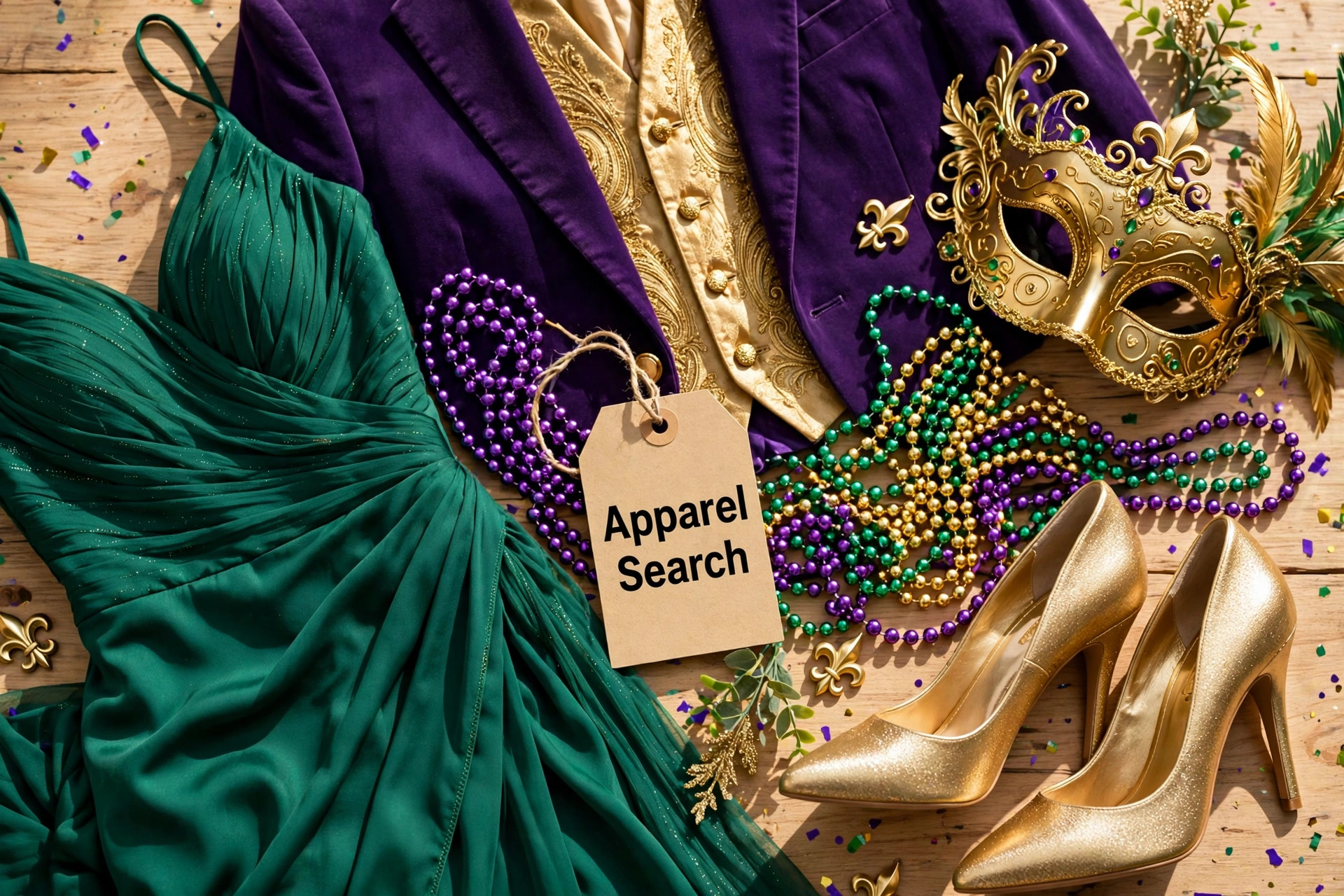
Parade Days: Dressed for the Route
A parade day is an endurance event dressed as a party: hours standing on the route, walking between parades, weather that swings, and both hands needed for the throws — the beads, doubloons and trinkets the krewes toss to the crowd. Build the outfit in this order:
- Shoes first. Broken-in, closed and comfortable, on feet that will cover miles and stand on confetti-strewn streets. The ball shoes come out at night; the route belongs to trainers and sturdy boots.
- Layers for a February day. Gulf Coast Carnival weather can open cold and close mild. Wear peelable layers in the three colours, and leave a warm one at your base for after dark.
- Hands free. A crossbody bag or deep pockets — you need both hands free for catching, and somewhere for doubloons and your phone.
- The colours, worn proudly. A purple, green or gold top, scarf or hat makes you part of the scenery; on the route there is no such thing as too much of them.
- Jewellery stays home. The beads you catch are the day's jewellery. Anything you would grieve over losing should not be on the route.
Purple, Green and Gold
The Three Colours
In 1872 the Rex krewe gave Mardi Gras its colours: purple for justice, green for faith and gold for power. They have dressed the festival ever since — in beads and throws, in parade floats and house decorations, in the sugar on the king cake, and in what everyone wears. One colour, two or all three are all correct; the only mistake is none of them.
The palette does practical work as well as symbolic: in a crowd of thousands it is how groups find each other, how photographs read as unmistakably Carnival, and how a plain outfit becomes a Mardi Gras outfit with a single scarf or strand of beads. Our colour theory for dressing guide covers working with three strong colours at once.
Ball Nights: The Formal End of the Calendar
The krewe balls are among the most formal events in American social life. The grand traditional balls present debutantes, stage call-out dances to set music, and hold their guests to codes that have not relaxed in a century: floor-length gowns, black tie for men at most balls and white tie at the grandest. Invitations state the code, and it is meant literally — at some balls it is checked at the door. If you are invited, read the wording the way you would read it on a state occasion, and when the invitation and this page disagree, the invitation wins. Our dress codes explained guide sets out black tie and white tie in full. Not every Mardi Gras party is a ball — costume parties and viewing parties fill the same nights at every level of formality — which is why the invitation, not the festival, sets your dress code.
Costume or Outfit?
Fat Tuesday itself belongs to the maskers: full costume, much of it homemade and much of it satirical, fills the French Quarter and the walking parades on the day. The weekends before it run mostly on themed outfits — real clothes in the colours, with costume pieces as accents. The rule of thumb: the closer you are to Fat Tuesday and the French Quarter, the more costume is the local language; the parade routes and the grandstands are outfit territory. Both are correct in their place, and a mask works in either.
Shop Mardi Gras Outfits on Amazon
Mardi Gras outfits in purple, green and gold, ball gowns, masquerade masks and parade-day layers are all stocked on Amazon.
Shop Clothing on AmazonProduct links are kept in one place on the Apparel Search Amazon shopping guide, so this page can stay a guide rather than a catalogue.
Common Questions
When is Mardi Gras in 2027?
Fat Tuesday falls on Tuesday, February 9, 2027 — the day before Ash Wednesday and the start of Lent. The Carnival season it crowns opens on Twelfth Night, January 6, and the biggest parade weekend runs from Saturday, February 6 through Lundi Gras on Monday, February 8.
What do the Mardi Gras colours mean?
Purple stands for justice, green for faith and gold for power. The Rex krewe established the three colours in 1872, and they have dressed the festival ever since — in beads, costumes, outfits and even the sugar on the king cake.
What should I wear to watch the parades?
Build for hours outdoors on your feet: broken-in closed shoes, layers you can peel off as a February day warms up, a crossbody bag so both hands are free for catching throws, and something in purple, green and gold. Leave jewellery you would mind losing at home — the beads you catch are the day’s jewellery.
How formal is a Mardi Gras ball?
As formal as American dressing gets. Krewe balls call for floor-length gowns, and black tie for men — white tie at the grandest traditional balls. The dress code on the invitation is meant literally and may be enforced at the door, so treat it the way you would treat a code printed for a state occasion.
Related Guides
Cultural & Festival Outfit Guide
The parent guide: the customs that touch your clothes at every festival — coverage, shoes, head coverings and colour symbolism.