Apparel Search Consumer Guides
What to Wear to the Theatre & Opera
The modern auditorium has no dress code and strong opinions. Here is how much effort each kind of night expects — and how to sit comfortable, and look right, through three acts.
A century ago the question this page answers had a printed answer: evening dress, specified by the house. Today no usher will stop you at the door in anything short of fancy dress — and yet the audience at any evening performance is visibly, deliberately dressed. This page, part of our everyday special occasions guide, is about that surviving custom: what it actually asks of you at the theatre, at the opera, at opening night and at the Saturday matinee, and the practical dressing — layers, seats, intervals — that three hours in an auditorium chair demand.
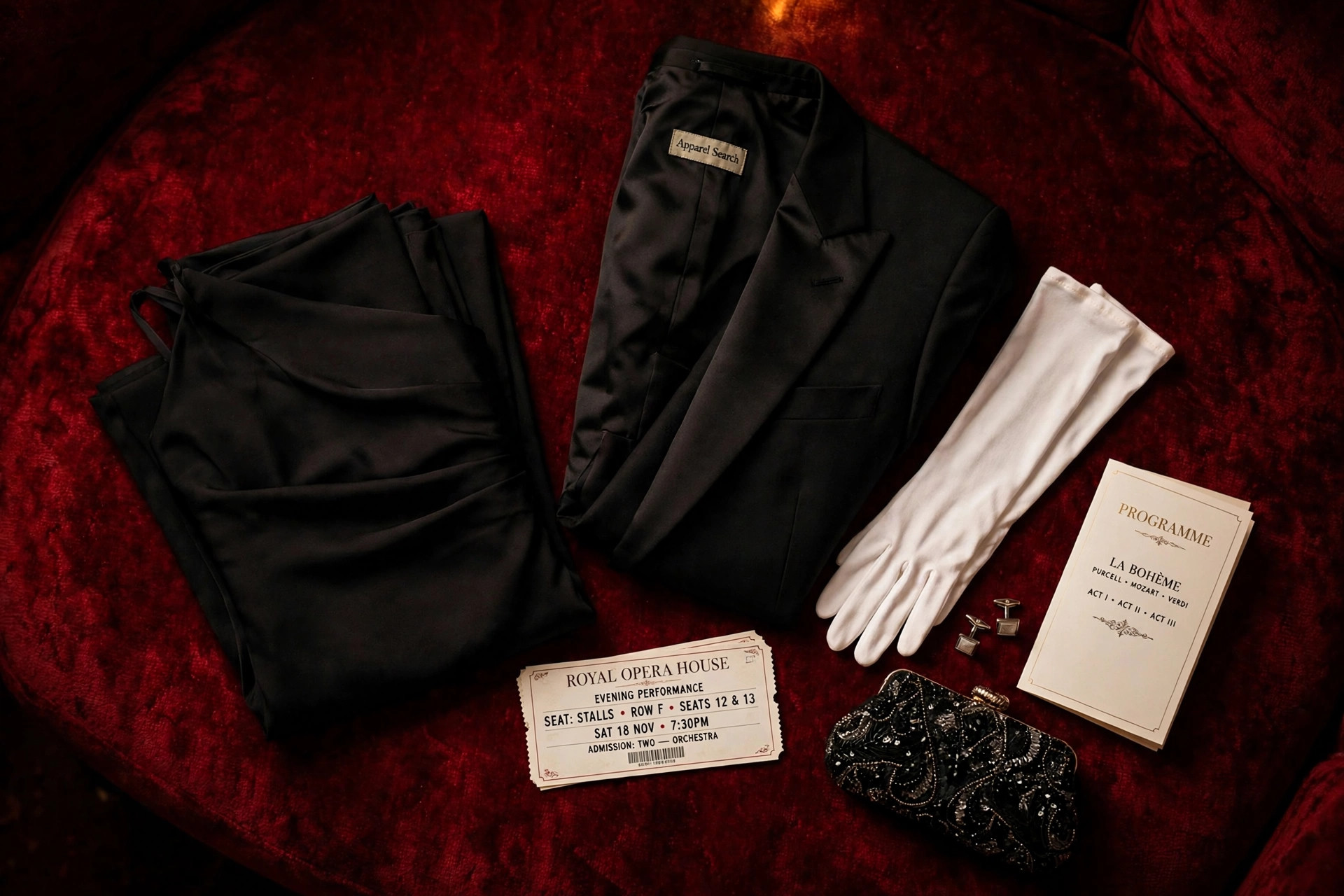
The Modern Rule: No Code, But a Custom
The working principle of modern theatre dressing is that your clothes are part of the audience's side of the bargain. The company on stage is in costume, lit, and giving the evening everything; the house responds with a small ceremony of its own — dressing as though the night is an occasion. That does not mean formality for its own sake. It means the level of a good dinner out: a dress or smart separates, a jacket for men, shoes that are not the day's workhorses. Arrive at that level for any ordinary evening performance and you will match the room at almost any theatre in the world. The variations that matter are not about the play; they are about which performance of it you are attending.
Opening Night, Regular Evening, Matinee
- Opening nights, premieres and galas dress highest. These are the theatre's own parties: press, patrons and the company afterwards. Cocktail attire is the floor — the cocktail attire page has the specification — and at opera and ballet premieres, black tie is not merely safe but traditional. If your invitation came with a reception attached, dress for the reception.
- Regular evening performances sit at smart-dinner level. A knee-length or midi dress, an elegant jumpsuit or tailored separates for women; a blazer or suit, tie optional, for men. This is the correct answer to about eighty percent of "what do I wear to the theatre" questions, including first visits and gifts of tickets.
- Matinees are daytime events. Smart casual, done well: the outfit for a good lunch, with theatre manners. Sunday matinee audiences include families, tourists and subscribers of forty years' standing, in everything from dresses to cardigans — land in the polished middle and you are right.
- The venue's grandeur nudges everything up a half-step. A grand old opera house, a national theatre, a famous festival: the building itself is dressed, and audiences respond to it. A fringe or studio theatre nudges the other way. Read the building the way our hub teaches you to read any venue.
Opera Specifics
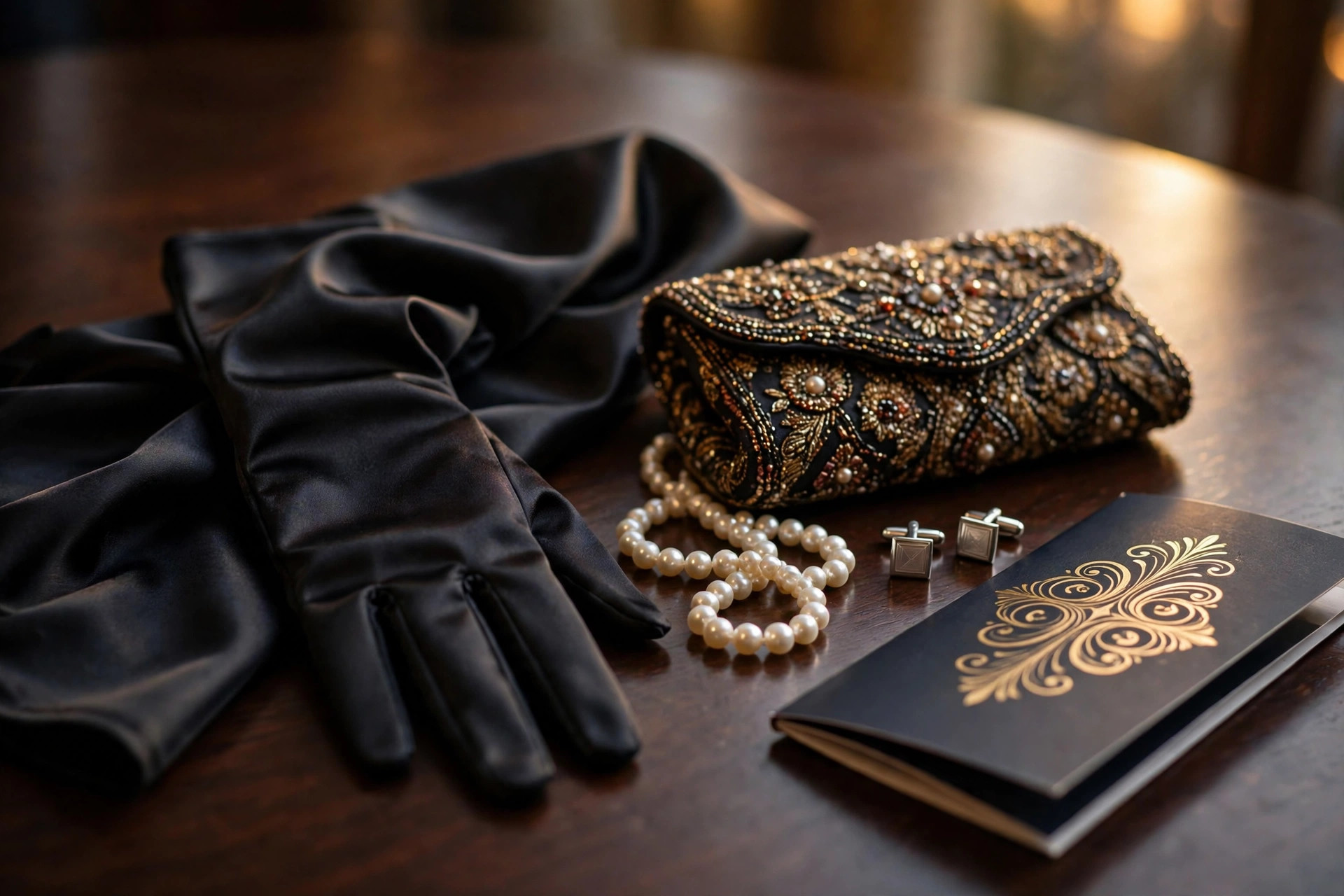
The opera is the theatre's formal elder sibling, and it keeps more of the old ways. At the great houses — and on opening nights, first nights of new productions and weekend evenings anywhere — a real share of the audience still wears evening dress: long dresses appear, dinner jackets appear, and the interval becomes a fashion parade that is part of the entertainment. Nothing is compulsory, but the opera is the one remaining everyday occasion where dressing up is never wasted. It is also the natural home of the opera glove — the above-elbow glove named for this room — worn with sleeveless evening dresses, and of the full black tie optional register: at the opera, optional tips heavily toward wearing it. Ballet sits half a step below opera, musicals half a step below straight plays at the big houses, and spoken theatre is the most relaxed of the family — but all of them reward the smart-dinner baseline.
The Air-Conditioning Layer
Every auditorium is refrigerated for a full house under hot lights, and your seat's draught does not care that you dressed for a summer evening. The layer is therefore not an accessory but a system component. Women: a wrap, shawl, fine knit or tailored jacket that reads as part of the outfit in the lobby and works as a blanket negotiations-free across the knees in the seat. Men: the blazer is already the layer — one more reason the smart-dinner formula includes it; in winter, a proper coat checked at the cloakroom beats a padded jacket carried through the evening. Two courtesies belong to the layer too: check bulky coats rather than sitting on them (your neighbours paid for their sightlines), and keep fragrance at the level of your own seat — in a dark, warm, crowded room, scent is shared whether you intend it or not, and clothing carries it furthest.
A stricter room runs on the same courtesies, with enforcement behind them: the courtroom. Hats off, messages off, fragrance and jewelry silenced — there the mistakes list carries consequences beyond embarrassment, and our court dress codes and mistakes page walks through it, rule by rule.
Shop Evening Dresses, Tuxedos & Theatre Outfits on Amazon
Ready to shop? Product links are kept in one place on the Apparel Search shopping guide:
Shop Evening Outfits on AmazonThis link opens the Apparel Search shopping guide for Amazon, where the product links are kept in one place.
Outfit Formulas
For Women
- Evening performance: a midi or knee-length dress in a fabric with some life — the little black dress is the undefeated default — or an evening jumpsuit; heels or dressy flats; the wrap over everything.
- Opening night / opera: a longer dress, up to full evening from the evening gowns guide, or your best cocktail dress raised with gloves, jewellery and a clutch.
- Matinee: a daytime dress, a skirt and fine knit, or tailored trousers with a silk shirt — polished, comfortable, unshowy.
- Sitting strategy: three acts punish a tight waistband, a skirt that rides, and shoes that must be walked off in the interval. Choose seams and shoes you can forget about; the play should hold your attention, not your trousers.
For Men
- Evening performance: a suit, or a blazer with dress trousers; tie by instinct — at the opera and on Saturdays, wear one. The tuxedo guide is there when the night calls for the full works.
- Opening night / opera: dark suit and tie as the floor; dinner jacket entirely at home; black tie where the house or the invitation leans that way.
- Matinee: smart trousers, an open-collar shirt and a blazer or fine knit — the dressed end of smart casual, per the men's formalwear guide's ladder.
Common Questions
Is there a dress code for the theatre today?
Almost no theatre enforces one any more. What survives is a custom, not a code: the audience dresses as if the evening matters, which for most evening performances means smart clothes — the level of a good restaurant dinner. You will not be turned away in jeans at an ordinary performance, but you will be in the minority, and most people find the evening feels better when their clothes rise to it a little. The performers dress up; the custom is simply returning the compliment.
What is the difference between opening night and a matinee?
About two steps of formality. Opening nights, premieres and galas are the theatre's own special occasions: cocktail dresses and suits as a floor, black tie genuinely at home at opera and ballet premieres. A regular evening performance sits at smart dinner level. A matinee is a daytime event wearing an evening's clothes off: smart casual is the norm, the audience skews practical, and your good daytime outfit — the one for a nice lunch — is exactly right. When tickets were a gift or a first visit, dress for the evening version if unsure; nobody regrets being the better-dressed row at a matinee.
Can I wear jeans to the opera?
At most houses, at an ordinary performance, nobody will stop you — and at many you will see a few pairs. But the opera keeps more of the old custom than the theatre does, especially at the grand houses and on weekend evenings, where much of the audience still treats it as a dressed occasion. A first opera, a famous house or a special production deserves better than denim: dark trousers and a blazer, or a dress, cost little more effort and match the room you paid to sit in. Save the jeans for the cinema.
Why is it always cold in theatres, and what should I bring?
Auditoriums are cooled for a full house under stage lighting, and a seat in the stalls can sit in a draught for three hours. Every experienced theatregoer carries a layer: a wrap, shawl or fine knit for women, a blazer or an extra layer for men — which handily is also the piece that makes the outfit look dressed. Choose a layer that works draped over the shoulders in the lobby and over the knees in the seat, and avoid anything so bulky it annexes your neighbour's chair.
Back to the Everyday Special Occasions Guide
How to read any invitation — venue, hour, occasion — plus the retirement party and garden party guides.