Women's Opera Gloves Guide
Above the elbow and unmistakably formal: satin, leather and stretch opera gloves for galas, weddings and grand evenings.
Shop Women's Opera Gloves Now
Shop Opera Gloves on Amazon Shop Opera Gloves on eBayThe Amazon and eBay links on this page are affiliate links. If you make a purchase through them, Apparel Search may earn a commission.
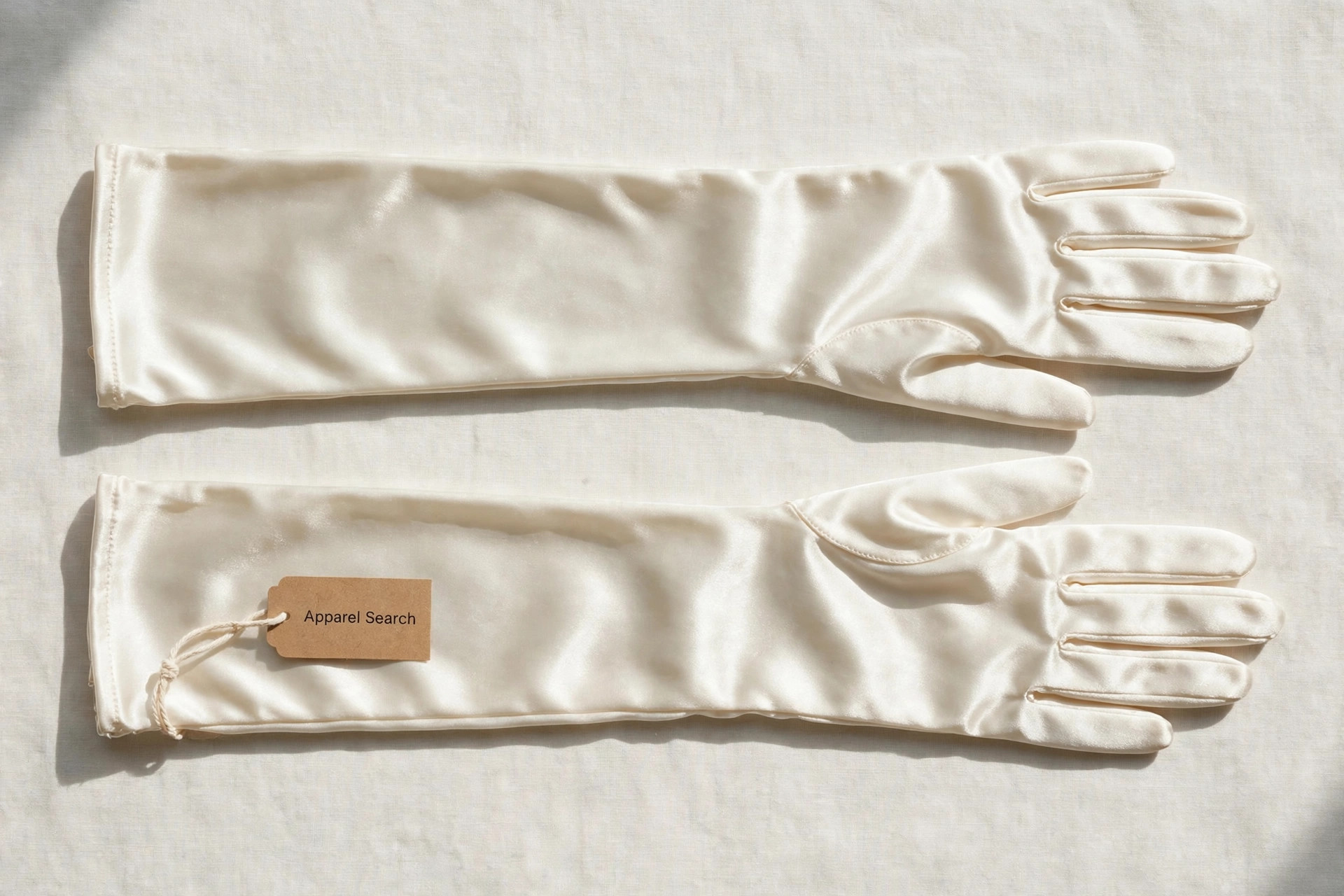
Opera gloves are the longest gloves in a woman's wardrobe: formal gloves that reach above the elbow, traditionally measured not in inches but in buttons — an 8-button glove reaches the forearm, 16-button reaches above the elbow, and longer still approaches the shoulder. Worn smooth, worn ruched, or pushed down to the wrist in soft folds, they turn a sleeveless dress into a complete formal look.
Once governed by strict etiquette, opera gloves now appear at galas, weddings, proms, red carpets and in fashion styling that borrows their drama for modern outfits. This guide covers lengths and how to measure them, the fabrics from satin to fine leather, how to put long gloves on properly, and the relaxed modern version of the old rules.
Opera Glove Lengths: Reading the Button Measure
The button measure is a traditional French scale: each 'button' is roughly an inch of length above the wrist, whatever the glove's actual buttons. An 8-button opera glove ends mid-forearm, a 12-button reaches around the elbow, a 16-button — the classic true opera length — ends above the elbow on the upper arm, and 20-button and longer styles reach toward the shoulder for the most dramatic gowns.
Choose length against the dress, not in the abstract. The glove should end where the sleeve begins, with no awkward gap of bare arm: sleeveless and strapless gowns take the full 16-button or longer, while a cap or short sleeve suits a 12- or 16-button worn ruched down. Trying a length on with the actual dress, and raising your arms, settles questions no chart can.
Fabrics: Satin, Stretch, Leather and Lace
Satin opera gloves, usually with stretch in the weave, are the formal standard: smooth, light-catching, and available in white, ivory, black and every bridal and ballgown shade. Matte stretch fabrics give a modern, understated line and the easiest fit. Kid leather opera gloves are the luxury classic — fine, close and expensive, traditionally in white or black. Lace and sheer opera gloves suit bridal and vintage looks, trading coverage for delicacy.
Fit at the top is the practical test: the glove must stay up on the upper arm through an evening of movement. Look for a snug top band, gentle elastication or a silicone grip strip, and try the sit-down, raise-a-glass test before the event. A glove that needs constant tugging fails its only job, which is to be forgotten once worn.
Wearing Opera Gloves: Modern Etiquette, Styling and Care
The old etiquette was precise — gloves on for arrival, dancing and receiving lines; removed for eating, then the glove's hand portion sometimes tucked back — and its spirit still works: do not eat in opera gloves. Slip them off for dinner and drinks that risk spills, keep them on for dancing, photographs and conversation, and never wrestle them in public; a quiet moment to remove or replace them is part of the grace. Rings go under the glove or not at all; bracelets, if worn, go over it.
To put them on: turn the glove partly inside out, ease it over the fingers, then unroll it smoothly up the arm, smoothing out twists as you go — never haul by the top edge. Style-wise, ivory and white belong to brides and debutante formality, black is the most versatile evening choice, and a coloured satin opera glove with a simple dress is a confident modern statement. Care: hand-wash stretch satin gently or dry-clean as labelled, clean leather only with specialist products, and store flat, smoothed out, in a bag or drawer away from light.
Common Questions
How long are opera gloves?
Traditionally measured in buttons, each roughly an inch above the wrist. A 16-button glove — the classic opera length — reaches above the elbow; 8-button ends mid-forearm, 12-button around the elbow, and 20-button or longer reaches toward the shoulder. Choose the length so the glove meets your dress's sleeve with no gap of bare arm.
Do you keep opera gloves on all evening?
Almost — but not for eating or drinking anything that could spill. Traditional etiquette, still sensible today, is to wear them for arrival, dancing, photographs and conversation, and slip them off quietly for dinner. Rings are worn under the gloves or left off; a bracelet, if any, goes over the glove.
How do I stop long opera gloves from slipping down?
Fit and the top band do it. Choose a snug size with a firm top edge, elastication or a silicone grip strip, and test with the actual dress — raising your arms and sitting down — before the event. A glove that is too large in the arm will slide no matter how elegant it looks standing still.
Women's Gloves Guides
Gloves by type for women — every women's guide in this cluster:
More to Explore on Apparel Search
Back to where this cluster began — gloves built for the wheel: revisit driving gloves.
Next: Women's Driving Gloves Guide: Perforated Leather, Knuckle Cutouts & Grip »Looking for Women's Clothing Stores?
This guide helps you choose opera gloves in the right length and fabric for your dress. To browse where to buy, visit our womens clothing store directory, where you can find retailers that carry them.