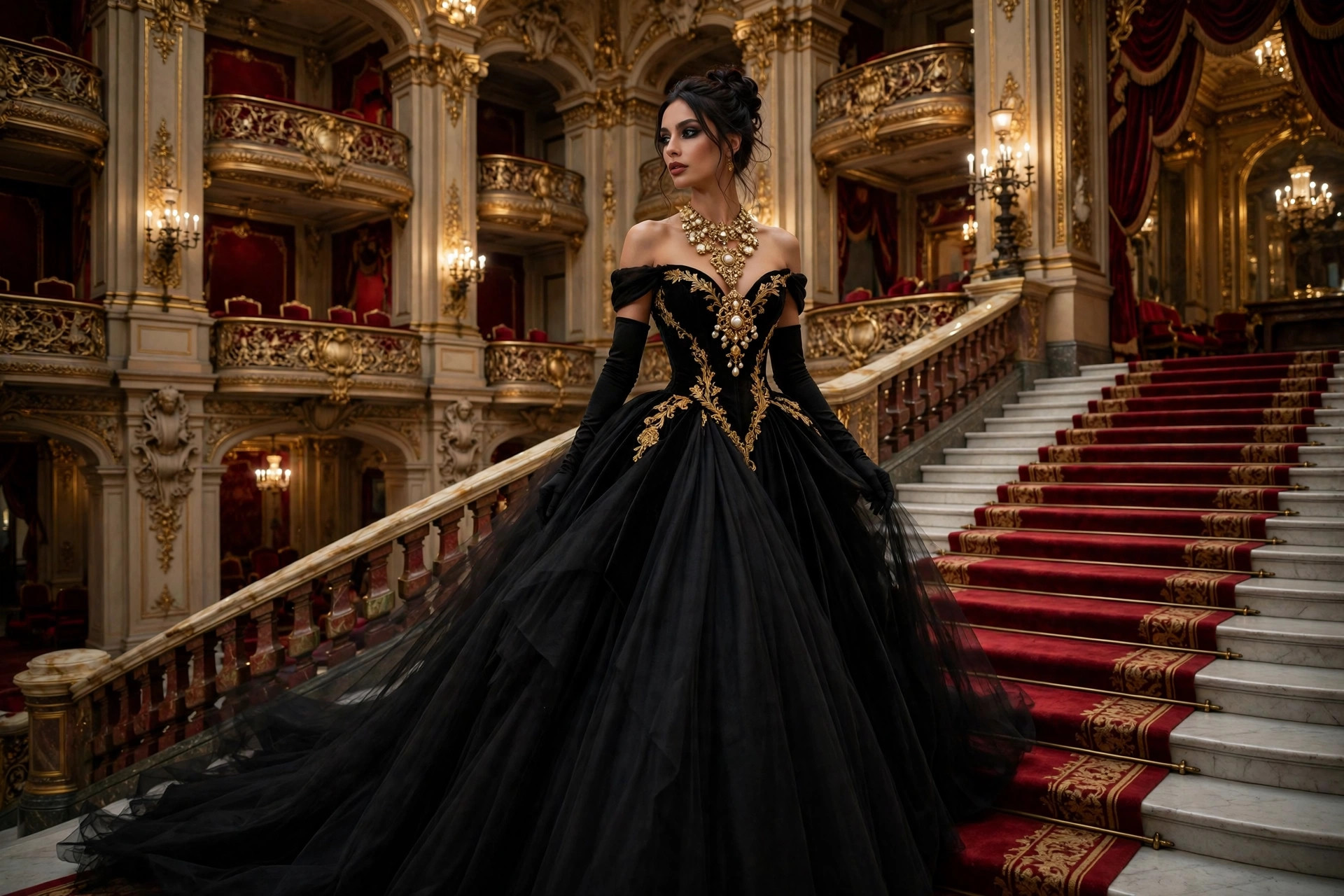
The Opera Aesthetic dresses for the grandest room in the city: sweeping gowns, long opera gloves, pearls and statement necklaces, velvet, satin and drama at full volume. It draws on the visual world of the opera house — gilded balconies, red velvet seats, chandeliers, divas in full voice — and on the tradition of the audience dressing as magnificently as the stage. As a named aesthetic it is less a trend cycle than a permanent glamour code, refreshed whenever evening dressing turns theatrical again.
A Night at the Opera: Where the Look Comes From
Opera was society's grandest regular night out for two centuries, and its audience dressed for the boxes as deliberately as the singers dressed for the stage. The conventions hardened into a code: floor-length gowns, gloves that reached above the elbow — the opera gloves our opera gloves guide is named for — jewellery that caught candlelight and later chandelier light, and wraps of velvet, satin or fur against the night air.
Film and photography kept the code in circulation long after dress codes relaxed: the opera scene is cinema's shorthand for civilisation at its most polished, and red-carpet dressing borrows from it constantly. The modern Opera Aesthetic simply names that inheritance and wears it consciously — to the opera itself, where audiences are dressing up again, and to balls, galas, formal weddings and any evening that deserves a staircase moment.
The Key Opera Aesthetic Pieces
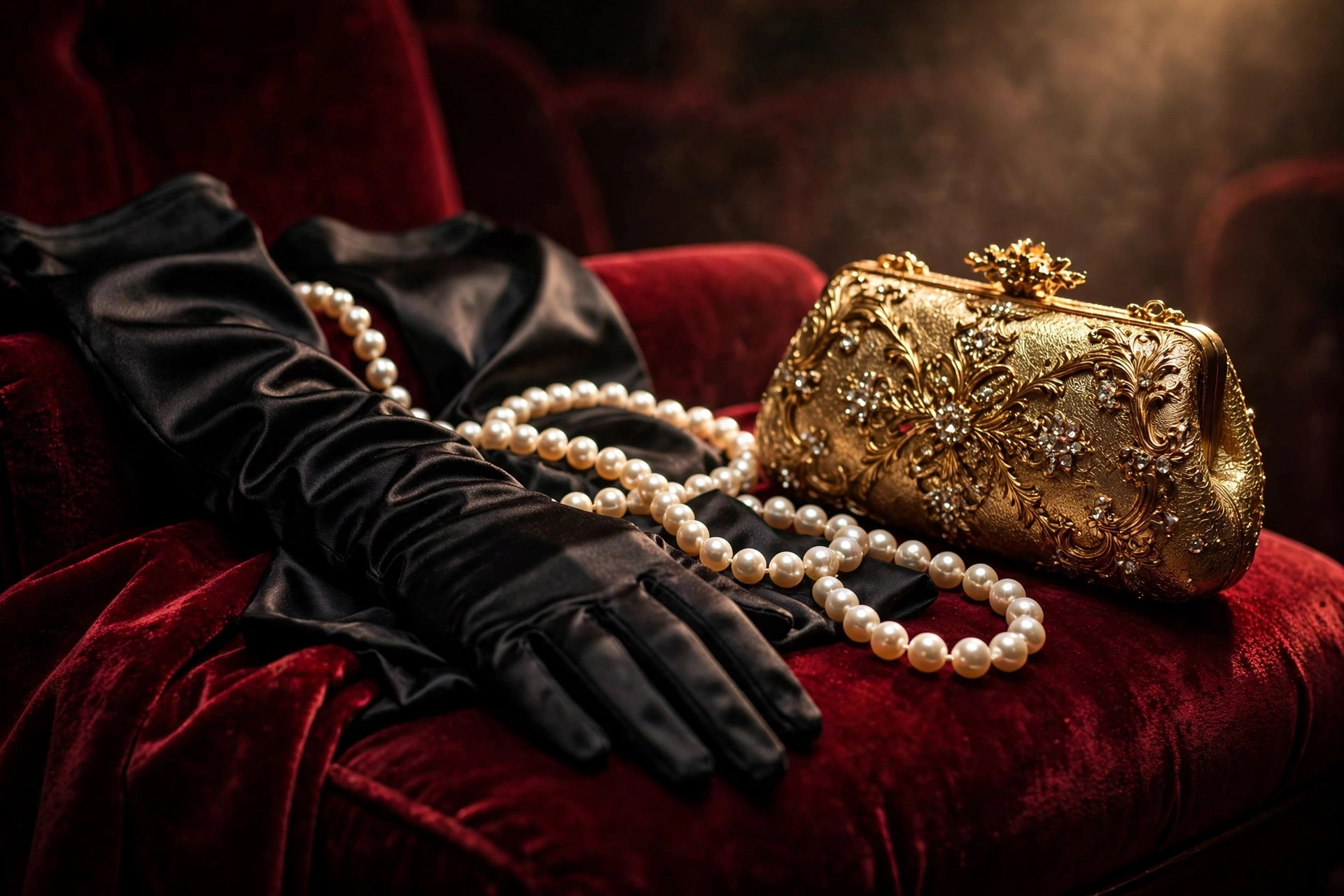
The gown is the centrepiece: floor-length, in a silhouette with presence — column, mermaid, or full ballgown — and a fabric with light behaviour, satin that pours, velvet that absorbs, or embellishment that scatters it. Our evening gowns guide covers the main silhouettes. Gloves are the signature accessory: above-elbow opera gloves in satin, velvet or fine leather transform a sleeveless gown instantly, and their removal at dinner remains one of fashion's small ceremonies.
Jewellery goes grand and classical — a necklace with real presence at the throat, chandelier earrings, pearls in ropes or a single perfect strand, a cocktail ring. Shoes disappear under the hem but matter at the staircase: our opera pumps guide covers the classic closed court shoe the tradition favours. A small hard clutch, a wrap or stole, and hair worn up complete the silhouette; everything about the look is considered, and nothing is casual.
The Palette: Red Velvet and Gold Leaf
The opera house itself supplies the palette: deep red, black, gold, ivory and the jewel tones that glow under warm light — emerald, sapphire, ruby, amethyst. Velvet red is the aesthetic's emblem colour, worn as a gown or used as the ground against which gold jewellery shines. Black is the eternal alternative, made grand by fabric and jewellery rather than colour.
Metallics are structural here: gold at the throat and ears, gold on the clutch, gold thread in brocade. Silver and crystal suit the cooler jewel tones. What the palette avoids is daytime language — pastels, prints meant for gardens, matte casual fabrics — because the aesthetic's whole register is evening, candlelight and ceremony. If an outfit would look at home at lunch, it is not opera yet.
Wearing the Opera Aesthetic Today
Full opera dress has real occasions: the opera and ballet themselves, charity galas, formal balls, black-tie weddings and milestone celebrations, all of which still reward the effort visibly. The modern adjustment is restraint in one place — gown at full drama with sleek hair and one jewellery statement, or gloves and pearls with a simpler column dress — so the look reads as elegance rather than re-enactment. Vintage gowns and gloves, plentiful second-hand, carry the aesthetic authentically and sustainably.
Scaled down, its elements elevate ordinary evenings: opera gloves with a cocktail dress, a pearl necklace against a black knit at a concert, a velvet wrap over a plain dress in winter. The Opera Aesthetic overlaps its glamorous neighbours — Neo Deco shares its black-and-gold evenings with a geometric accent, and Glamoratti shares its appetite — but opera is the most classical of the three, and the one most likely to still be correct in fifty years.
Common Questions
- What are opera gloves?
- Gloves long enough to reach above the elbow, traditionally worn with sleeveless or strapless evening gowns. They take their name from the opera, where formal audiences wore them as part of full evening dress. Satin, velvet, kid leather and stretch fabrics are the classic materials, in white, ivory or black.
- Do people still dress up for the opera?
- Increasingly, yes. Most houses no longer enforce a dress code, and audiences range from jeans to black tie, but opening nights, galas and premieres still draw full evening dress — and many attenders dress up for the pleasure of it. A gown is never wrong at an evening performance.
- What jewellery suits the Opera Aesthetic?
- Classical statement pieces: a substantial necklace, chandelier earrings, pearls, and a cocktail ring, in gold or silver with real stones or good crystals. The jewellery should hold its own against a gown and a grand room, so delicate everyday pieces are replaced, not layered.
- What is the difference between the Opera Aesthetic and Neo Deco?
- Both dress for grand evenings in black and gold. Neo Deco is driven by 1920s geometry — sunbursts, chevrons, architectural jewellery — while the Opera Aesthetic is driven by the opera house tradition: gowns, long gloves, pearls and classical drama without a specific decade's motifs.
- Can the Opera Aesthetic work for a wedding guest?
- Yes, for formal and black-tie weddings, with the usual guest discipline: no white or ivory gown, and drama kept a notch below the wedding party's. A jewel-toned gown, gloves for the evening portion and classical jewellery fit a grand venue beautifully.
Fashion Aesthetics and Trends Series
This guide is part of the Apparel Search fashion aesthetics and trends series: the named styles, from social-media aesthetics to revived eras, that shape how people dress now — what each one is, where it came from, and how to wear it well. Browse the full series below.