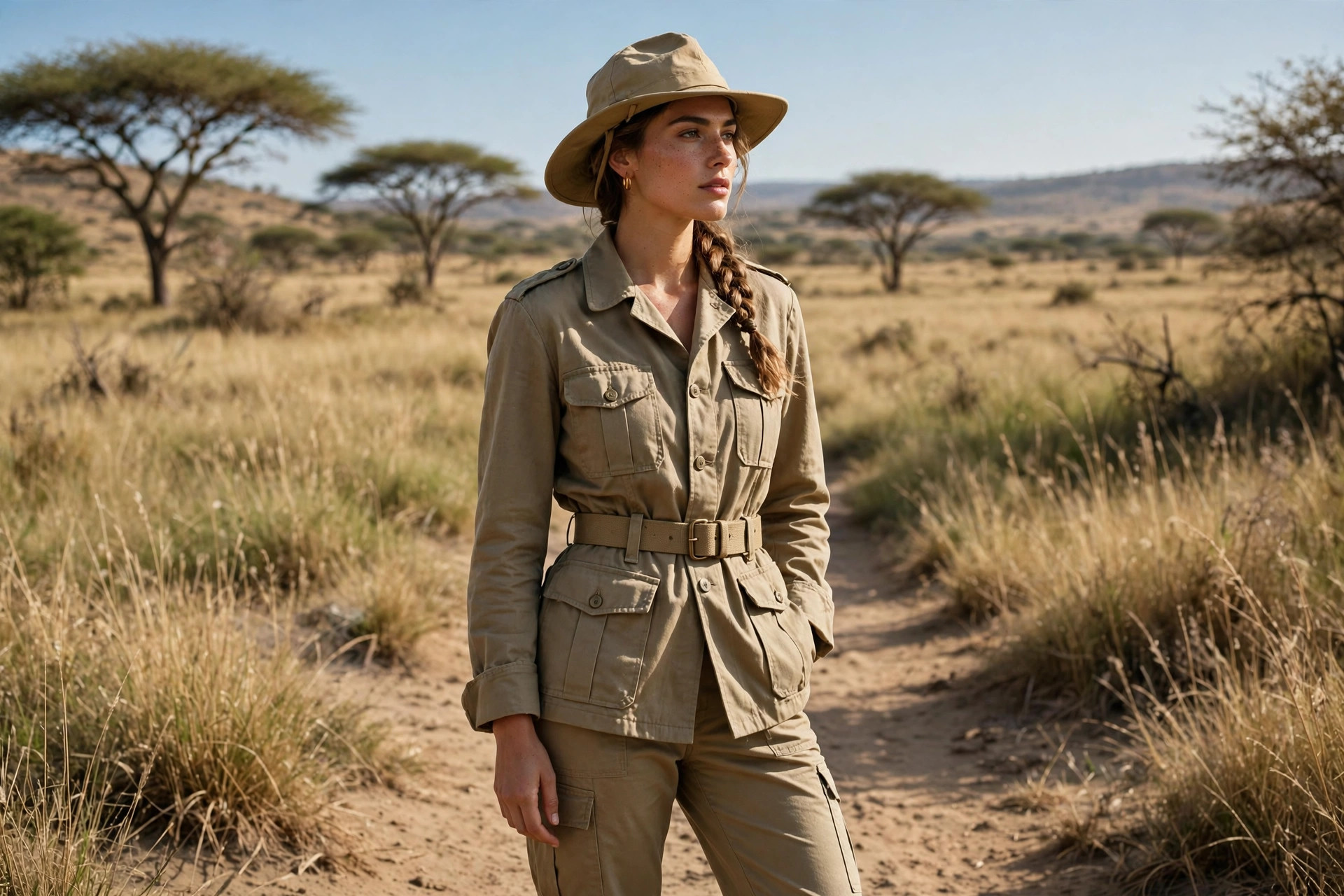
Khaki Coded is a utility-led fashion aesthetic that builds entire outfits from the khaki family — khaki, sand, stone, olive and tan — using explorer and workwear clothing: safari jackets, cargo trousers, belted shirts, canvas, pockets everywhere. Named in Pinterest Predicts' 2026 forecasts, it is part adventure wardrobe, part tonal minimalism: practical clothes in dusty earth colours, styled with the discipline of a uniform and the romance of an expedition.
Khaki's Long March From Uniform to Wardrobe
Khaki began as camouflage. The word comes from the Urdu and Persian for dust, and British regiments in nineteenth-century India adopted dust-coloured uniforms because white ones made targets. The colour then travelled through every expeditionary wardrobe of the next century — safari suits, explorers' kits, desert campaigns — collecting associations of competence, travel and self-reliance. Hollywood sealed them: the khaki-clad archaeologist and the safari heroine are stock figures of adventure cinema.
Civilian fashion has borrowed that competence for decades, most visibly in the chino and the cargo trouser. Khaki Coded is the moment the borrowing becomes the whole outfit. Rather than one khaki piece grounding brighter colours, the aesthetic stacks khaki on khaki — jacket, trouser, belt, boot, hat — and finds its variety in fabric, pocket and shade. Our guides to women's khaki pants cover the garment the colour is named for.
The Key Khaki Coded Pieces
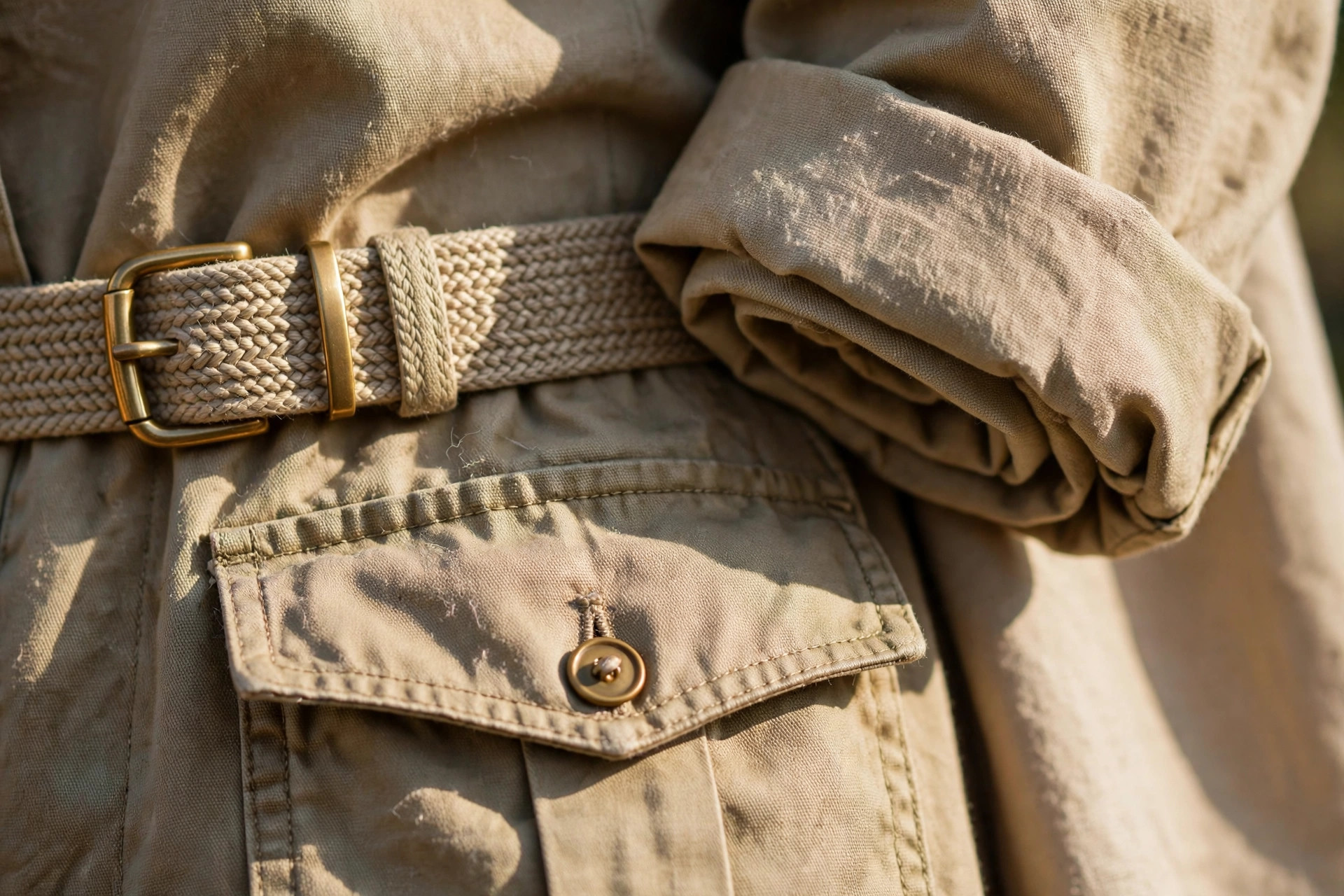
The safari jacket is the signature piece: four bellows pockets, a belted waist, epaulettes if you want the full reference — see our safari jacket definition for the original specification. Cargo trousers and shorts come next; the women's cargo pants guide covers modern fits, which are cleaner than the baggy 2000s original. The pocket is the aesthetic's decorative device — flapped, buttoned, bellows — and it should look like it works, even when it only carries a phone.
Supporting pieces stay in the expedition kit: cotton twill overshirts, utility vests, canvas belts with brass hardware, bucket and field hats, desert boots and leather sandals, and bags in canvas or worn leather. Fabrics are matte and natural — cotton, linen, canvas, suede — because shine would break the dusty spell. Everything in the wardrobe looks like it could be packed in a duffel and shaken out ready to wear.
Tonal Dressing in Dust Colours
Khaki Coded is a lesson in tonal range. The family runs from pale stone and sand through true khaki — a green-brown — to deep olive and tobacco, and a good outfit uses at least three depths: pale shirt, mid khaki trouser, darker olive jacket, for example. Tonal dressing fails when every piece is the identical shade, which reads as an actual uniform; it succeeds when the shades step gradually and the textures differ — smooth chino against slubby linen against canvas webbing.
Brown leather is the palette's natural metal-and-more: belts, boots and bags in tan, chestnut or dark brown warm the greens and stop the outfit sliding into military surplus. Gold jewellery suits it better than silver, and the only true outsiders allowed in are white — a white shirt or trainer refreshes the dust — and black, used sparingly for a bag or sunglasses. Bright colour is not forbidden so much as off-brief: the aesthetic's pleasure is restraint.
Khaki Coded vs Gorpcore — and Making It Feminine or Sharp
The obvious neighbour is gorpcore, which also dresses for the outdoors. The difference is equipment versus expedition: gorpcore wears technical modern gear — shells, trail shoes, branded performance fabrics — while Khaki Coded wears the older, natural-fibre explorer kit and cares about silhouette. Gorpcore looks ready to climb; Khaki Coded looks ready to travel. They share cargo pockets and little else.
Styling decides the register. Belt the jacket, choose a cropped or tailored cargo, add heeled sandals or clean loafers and gold hoops, and the look turns sharp and feminine; leave the shirt untucked over straight cargos with desert boots and it stays rugged. Either way, keep hair and grooming neat — the romance of the aesthetic is the well-organised traveller, not the dishevelled one — and let one piece, usually the jacket or the trouser, carry the pockets while the rest stay plain.
Common Questions
- What does Khaki Coded mean?
- It describes an outfit coded — programmed, almost — in khaki: built entirely from the khaki, sand, stone and olive family, using explorer and utility clothing such as safari jackets and cargo trousers. Pinterest Predicts named it among its 2026 fashion forecasts.
- Is khaki a colour or a fabric?
- Both, historically. Khaki is a dust-brown-green colour, and khakis became the name of the cotton twill trousers dyed that colour. In the aesthetic, the colour leads: any fabric can join if its shade belongs to the dusty earth family, though natural matte fabrics suit it best.
- What is the difference between Khaki Coded and gorpcore?
- Gorpcore dresses in modern technical outdoor gear — waterproof shells, trail runners, performance brands. Khaki Coded dresses in the older natural-fibre explorer wardrobe — safari jackets, canvas, cotton cargos — in a strict khaki palette, and cares more about silhouette than specifications.
- Can Khaki Coded be worn to work?
- In many offices, yes. A belted khaki overshirt or safari-style jacket over tonal tailored trousers reads as a soft suit, and the palette is inherently professional. Keep pockets neat, fabrics pressed and shoes polished, and it is one of the easiest trend aesthetics to take into a workplace.
- What colours clash with khaki?
- Cool bright colours fight it most: icy blue, bright pink and stark black-and-white contrast all pull against khaki's warm dustiness. White in soft doses and brown leather in any dose are its friends; silver jewellery looks colder against it than gold.
Fashion Aesthetics and Trends Series
This guide is part of the Apparel Search fashion aesthetics and trends series: the named styles, from social-media aesthetics to revived eras, that shape how people dress now — what each one is, where it came from, and how to wear it well. Browse the full series below.