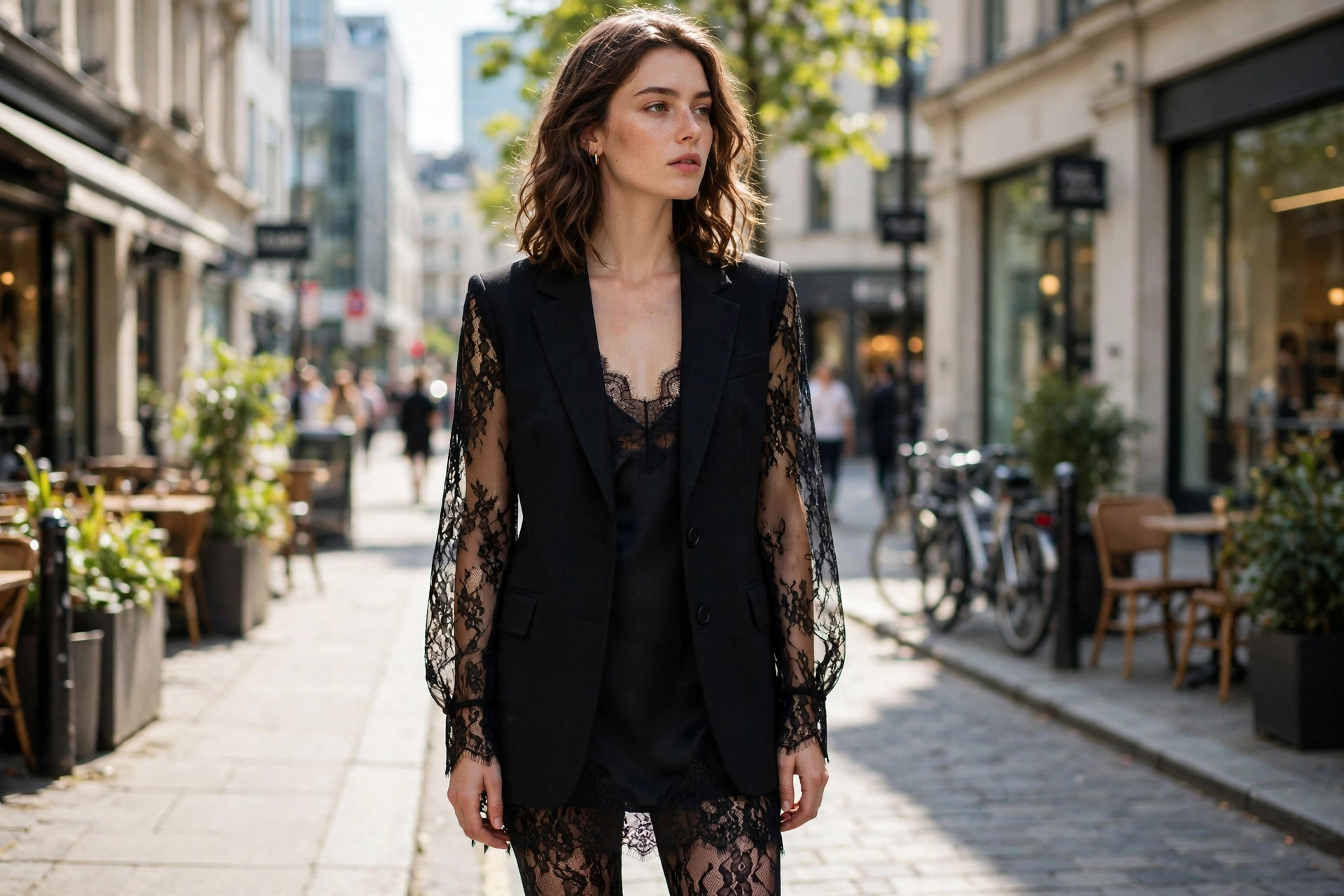
The Laced Up aesthetic is built on a single fabric used with imagination: lace, placed where you would not traditionally expect it — edging a tailored blazer, panelled into denim, layered over tailoring, worn as tights, gloves, socks and scarves, even worked into sportswear. Named in Pinterest Predicts' 2026 forecasts, it takes lace out of the bridal-and-lingerie box and treats it as a versatile fashion material: sometimes romantic, sometimes edgy, always deliberate.
Lace Before It Was a Trend
Lace has been precious for five hundred years. Hand-made lace once cost more than gold jewellery, signalled status at every European court, and gave its name to the trims on everything from christening gowns to mourning dress. Our lace guide traces the main types — needle lace, bobbin lace, Chantilly, guipure — and the definitions section covers techniques such as bobbin lace in detail. Machine production made lace affordable, and the twentieth century gradually filed it under lingerie, bridal and grandmother's curtains.
Fashion has rescued it in cycles ever since — 1980s pop stars in lace gloves and leggings, 1990s slip dresses trimmed with it, 2010s lace everything — and each rescue moved lace further from its formal home. Laced Up is the current cycle, and its defining move is placement: the lace is not the garment, it is the interruption in the garment, the soft engineered detail in an otherwise ordinary piece of clothing.
Where the Lace Goes Now
The signature placements are at the edges and the joins. Lace trims finish the hems of skirts, shorts and tailored trousers; lace panels inset the sleeves of blazers, shirts and knitwear; a lace camisole layer shows at the neckline or hem of a plain jumper. Lace tights and socks — covered in our lace tights guide — are the easiest entry piece, turning plain dresses and skirts lace-coded in one step, and lace-up boots nod to the name from the footwear side, as our lace-up boots guide shows.
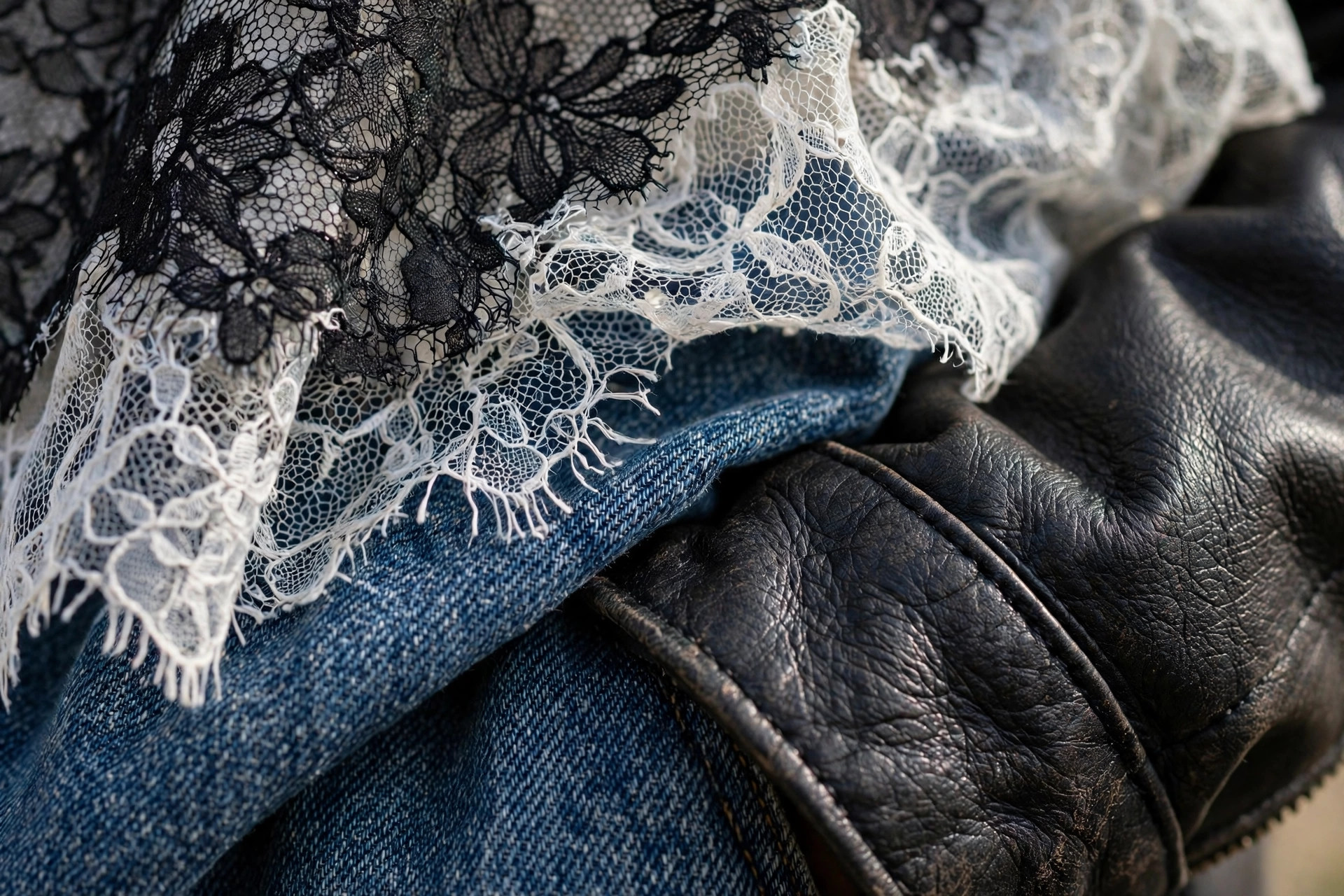
Bolder versions put lace over contrast: black lace layered on white tailoring, white lace over denim, a lace skirt worn over trousers, lace gloves with a leather jacket. The full lace dress remains the aesthetic's evening peak, but the everyday version is almost always a partial one — a garment that would be plain without its lace, which is exactly the point.
Choosing Lace That Looks Expensive
Lace quality varies more than almost any fabric's, and the eye learns it fast. Good lace has a clear, dense pattern with defined edges — floral or geometric motifs you can read at arm's length — and a soft but substantial hand. Cheap lace looks blurry, feels scratchy or papery, and its pattern dissolves into mesh. Chantilly-style lace, fine and flat with outlined motifs, reads most elegant; guipure, heavier and raised, reads bolder and survives tailoring better.
Colour discipline keeps lace modern. Black and white dominate the aesthetic, with cream, dusty pink and the occasional red as accents. The twee trap — pastel lace plus bows plus frills — is avoided by contrast and company: lace worn with denim, leather, tailoring or trainers stays sharp, while lace worn with more lace needs the confidence of the coquette aesthetic to pull it off. One lace element per outfit is the safe dose; two, if one is small.
Styling Laced Up for Real Life
Start where the risk is lowest: lace socks with loafers, lace tights under a winter dress, a lace-trimmed camisole under a cardigan or blazer. Each adds the texture without changing the outfit's category, and each can be removed from your wardrobe rotation the week the mood passes. The step up is the lace panel or trim on a tailored piece — the blazer, the trouser hem — which suits workplaces better than lace's reputation suggests, because tailoring frames it.
Evenings take the full range: lace over satin, lace with velvet, the lace dress itself. Romantic pairings connect Laced Up to Vamp Romantic, where the same lace turns gothic in black and wine, and to balletcore, whose wrap tops and soft skirts welcome lace trims naturally. Care keeps lace alive: wash inside out, in a bag, on gentle cycles, and never wring guipure — press it flat and dry it away from heat.
Common Questions
- What is the Laced Up aesthetic?
- A fashion aesthetic built on lace used in unexpected places: trims on tailoring and denim, lace panels in sleeves, lace tights, socks and gloves, and lace layered over contrasting fabrics. Pinterest Predicts named it for 2026. The lace is usually a detail within an outfit rather than the whole garment.
- How do I wear lace without looking bridal?
- Choose black or coloured lace instead of white, and keep the company modern: denim, leather, tailoring, trainers. Bridal readings come from white lace worn head to toe with romantic styling; a black lace trim on a blazer or lace tights with boots read as fashion, not wedding.
- What is the easiest Laced Up piece to start with?
- Lace tights or lace-trimmed socks. They cost little, fit an existing wardrobe, and change the mood of plain dresses, skirts and shorts immediately. A lace-trimmed camisole layered under knitwear is the next step up.
- Which lace looks best quality?
- Lace with a dense, clearly defined pattern and soft substantial feel — Chantilly styles for elegance, guipure for bold raised texture. Blurry, scratchy or papery lace with an indistinct pattern reads cheap at any price, so judge by the motif's clarity and the fabric's hand.
- Can lace be worn to work?
- Yes, when tailoring frames it. A lace panel in a blazer sleeve, a lace trim at a blouse cuff or neckline, or lace tights with a conservative dress all stay professional. Save full lace dresses and sheer lace layers for evenings.
Fashion Aesthetics and Trends Series
This guide is part of the Apparel Search fashion aesthetics and trends series: the named styles, from social-media aesthetics to revived eras, that shape how people dress now — what each one is, where it came from, and how to wear it well. Browse the full series below.