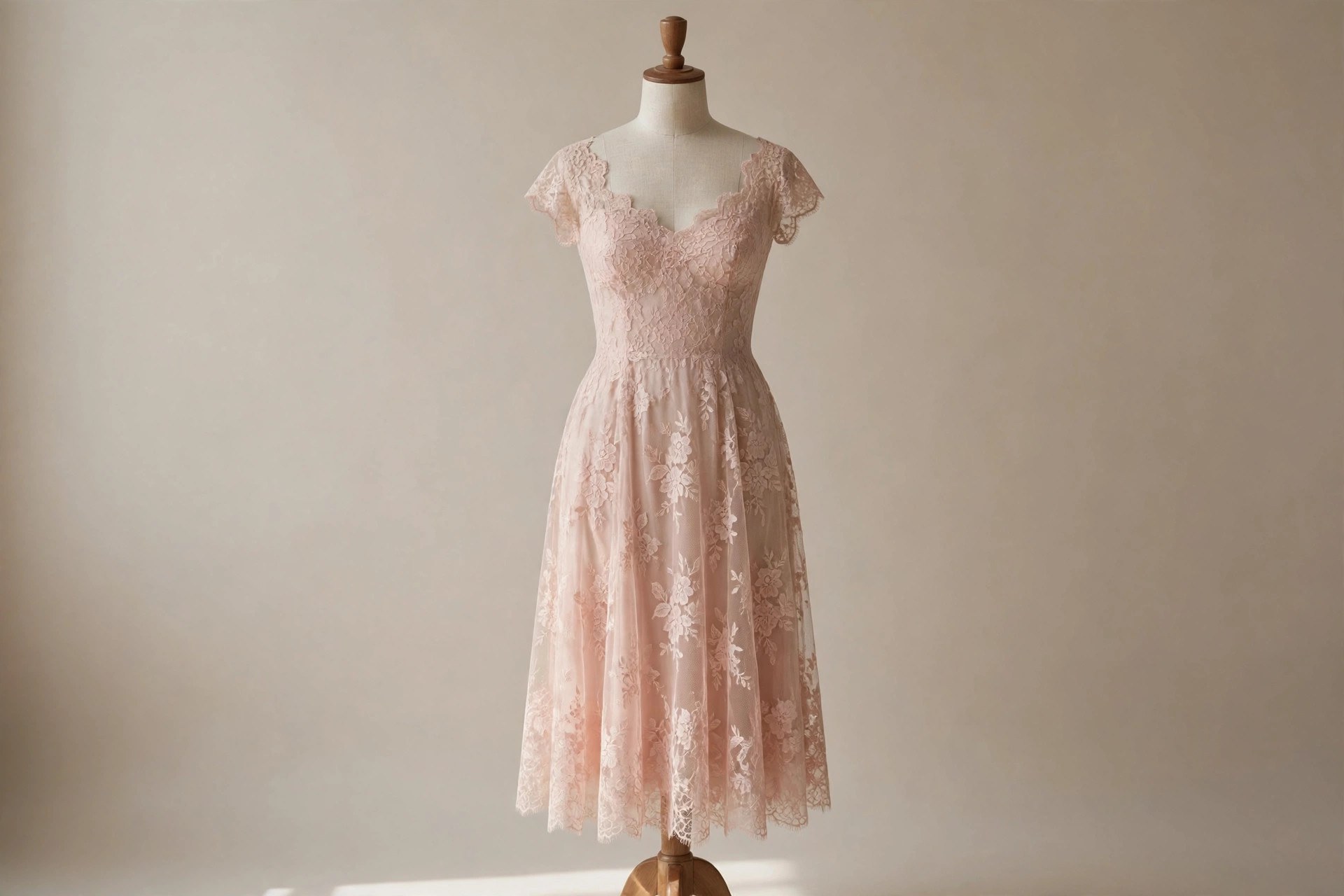
A lace dress is a dress built around lace fabric — covering the whole garment, forming the bodice and sleeves, or overlaying a plain lining so the pattern shows in relief. It is one of the longest-running formal styles in fashion because lace supplies pattern, texture and decoration in a single fabric, leaving the cut itself simple. Modern versions range from a cotton eyelet sundress to a fully lined evening sheath, and the lace type, color and lining together decide how formal any given dress really is.
The Main Lace Dress Styles
The sheath is the classic formal shape: close-fitting, usually knee-length, with the lace laid over a smooth lining so the pattern stays uninterrupted. It suits weddings, christenings and smart dinners, and it depends on good lace because there is nowhere for poor quality to hide.
A lace slip dress takes the opposite approach — a simple bias-cut or straight underdress shape with lace at the neckline, hem or as a full overlay — and reads modern and understated rather than traditional. Lace maxi dresses cover everything from soft festival styles in crochet-look cotton to full evening gowns.
Judging Lace Quality
Good lace announces itself up close. The pattern should be clearly defined, with clean motif edges rather than fuzzy ones, and the ground net should be even, without thin patches or pulled threads. Run a hand over it: quality lace feels soft and pliable, while cheap lace often feels stiff, scratchy or papery because of heavy synthetic content and finishing.
Construction details confirm what the fabric suggests. Pattern pieces should be matched at the side seams on better dresses, scalloped edges should be used deliberately at hems and necklines rather than cut through, and zips should sit flat without puckering the lace. Color is the quickest formality guide: black, navy and deep jewel tones read evening; white, ivory and blush read bridal or summery; and bright colors in cotton lace read as cheerful daytime dresses rather than formal wear.
Occasions, Etiquette and Care
The lace dress is a reliable wedding-guest choice in almost any color except the bridal range: as a guest, avoid white, ivory, cream and very pale blush that photographs white, unless the couple has specifically asked guests to wear it. Soft colors, florals over colored linings, and deeper shades are all safe and flattering.
Care follows the fabric. Fine lace dresses are best hand washed cold or professionally cleaned, and many labels specify dry cleaning because linings and lace can react differently to water. Never wring lace; roll it in a towel to remove water and dry it flat or on a padded hanger.
Common Questions
- What should a wedding guest avoid in a lace dress?
- Avoid white, ivory, cream and the palest blush shades, because lace in those colors photographs as bridal even when the cut is clearly a guest dress. It is the combination of lace and a bridal color that causes the problem, not the fabric itself. Choose a clear color instead — dusty blue, sage, burgundy, navy or a floral lace over a colored lining are all safe — and you can wear lace to a wedding without any worry.
- How can I tell if the lace on a dress is good quality?
- Look at the pattern closely first: motifs should have clean, defined edges and an even net ground with no thin or pulled areas. Then feel it — good lace is soft and drapes, while poor lace feels stiff or scratchy. Check the finishing as well: matched patterns at the seams, scalloped edges used at hems, a smooth opaque lining and a zip that lies flat all point to a dress that has been made with care.
- Can a lace dress work for the daytime?
- Yes, if the fabric and color are right. Cotton eyelet and crochet-style lace in white, pastel or bright colors are daytime fabrics, especially in fit-and-flare or simple shift shapes worn with flat sandals and minimal jewelry. What keeps a lace dress formal is the combination of fine net lace, dark or metallic colors, long lengths and full linings. Change those elements and the same basic idea becomes an ordinary, wearable summer dress.
- How should a lace dress be stored?
- Hang it by the fabric loops sewn inside the dress rather than by the shoulders or straps, which can stretch lace, and keep it inside a breathable cotton garment bag rather than plastic. Give it space so the lace is not crushed or caught against sequins, hooks or rough embellishment on neighboring clothes. White and ivory lace should be stored away from sunlight to prevent yellowing, and the dress should always go away clean, since invisible marks can set over time.
Romantic Fabrics & Feminine Details
Soft fabrics, gathered details and vintage-inspired shapes run through this whole series. These six guides cover the lace, tulle and structured styles that give an outfit its romantic side, with honest notes on fit, styling and care for each one.