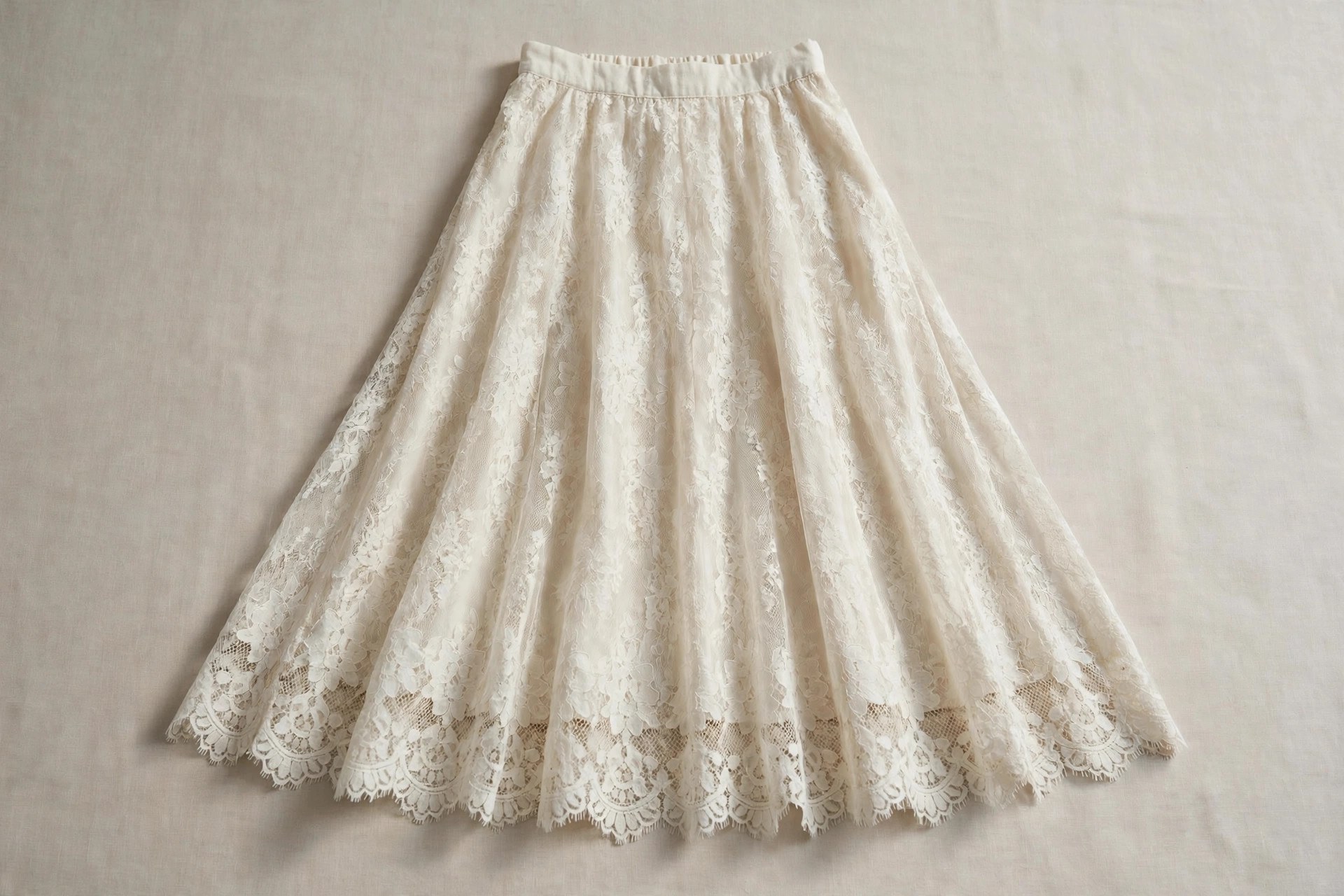
A lace skirt is a skirt made from lace, or trimmed generously with it, worn over a lining that gives the openwork pattern something to show against. The lace itself provides the decoration — floral, geometric or scalloped — so the skirt needs little else in the way of detail. Lengths run from mini to maxi, and the same fabric family can look sweet and casual in cotton eyelet or formal and dramatic in black Chantilly, which is why the lace skirt keeps returning across very different wardrobes.
The Laces Used in Skirts
Chantilly lace is fine and flat, with delicate floral motifs outlined on a net ground; it drapes softly and reads the most traditionally dressy. Guipure lace is heavier and bolder, its motifs joined by bars rather than net, with a slightly raised texture that suits structured A-line and pencil skirts.
Crochet-style lace imitates hand-crocheted work, usually in cotton or a cotton blend, and brings a relaxed, handmade feel that pairs naturally with denim jackets and sandals. Most modern skirt laces are woven on machines from polyester, nylon or cotton blends, which keeps them affordable and reasonably sturdy.
Lined, Partially Lined and Sheer Styles
Almost every lace skirt is lined, because the openwork is see-through by design. A full lining in a smooth, skin-tone or matching fabric gives complete coverage and lets the pattern read clearly. Partially lined skirts stop the lining at mid-thigh and let the lace continue sheer to the hem, an effect that lengthens the leg and lightens a midi or maxi length.
Length changes the mood as much as the lace does. A lace mini is playful and modern, a knee-length pencil in guipure is polished enough for an office with a dress code that allows pattern, and a flowing lace maxi belongs to weddings, holidays and evenings out. Fitted laces with a little stretch wear closest to the body, while A-line cuts in stiffer lace stand away and are generally the most forgiving and comfortable to sit in.
Styling and Caring for Lace
Because the skirt carries all the pattern, keep the top plain and tucked in: a fine knit, a simple camisole or a crisp shirt shows the waistband and lets the lace be the point of the outfit. A tailored blazer sharpens a lace skirt for smarter settings, while a plain T-shirt and flat sandals pull eyelet or crochet styles firmly into daytime.
Lace snags, so treat it gently. Keep it away from rough jewelry, hook-and-eye fastenings and coarse bag straps, and turn the skirt inside out before washing. Hand washing in cool water is safest for fine lace; sturdier cotton and polyester laces usually tolerate a gentle machine cycle inside a mesh bag.
Common Questions
- What is the difference between Chantilly and guipure lace?
- Chantilly is a fine, flat lace with delicate floral designs worked on a net background, so it drapes softly and looks light against the lining. Guipure has no net ground at all; its heavier motifs are joined by small bars, giving a bolder, slightly raised pattern with more structure. On a skirt, Chantilly tends to suit flowing and formal styles, while guipure holds up well in fitted and A-line shapes.
- Can a lace skirt be worn casually?
- Yes, and the lace type decides how casual it looks. Eyelet and crochet-style laces in cotton are daytime fabrics, and a skirt in either one works with a plain T-shirt, a denim jacket and flat sandals. Fine net laces in white or pastel can also dress down with a simple knit. The styles that stay dressy are black or dark Chantilly, long partially lined skirts, and anything with a sheen or heavy embellishment.
- How do I stop a lace skirt from snagging?
- Most snags come from contact with something rough or pointed: jewelry clasps, watch straps, sequined tops, hook fastenings on other garments, and coarse handbag hardware. Check the outfit for catching points before you sit down or pick up a bag. Handle the skirt by its waistband, keep it separate from embellished clothes in the wardrobe, and store it flat or folded with tissue if the lace is fine. Small pulls can often be eased back gently with a fingertip rather than cut.
- Should a lace skirt be lined?
- In practice, yes. Lace is an openwork fabric, so an unlined lace skirt would be transparent. Most are sold with a full lining for coverage, or a shorter partial lining that leaves the lower part of the skirt sheer for a lighter, more evening effect. If you are buying a partially lined style, check where the lining ends in daylight and against your skin tone, because the join line is part of the look and needs to fall where you are comfortable with it.
Romantic Fabrics & Feminine Details
Soft fabrics, gathered details and vintage-inspired shapes run through this whole series. These six guides cover the lace, tulle and structured styles that give an outfit its romantic side, with honest notes on fit, styling and care for each one.