Women's Skirts Guide
A skirt is a garment covering the body from the waist downward, fitted at the waist or hips and fuller below — with hemlines from mini to floor-length.
Shop Women's Skirts Now
Shop Women's Skirts on Amazon Shop Women's Skirts on eBayThe Amazon and eBay links on this page are affiliate links. If you make a purchase through them, Apparel Search may earn a commission.
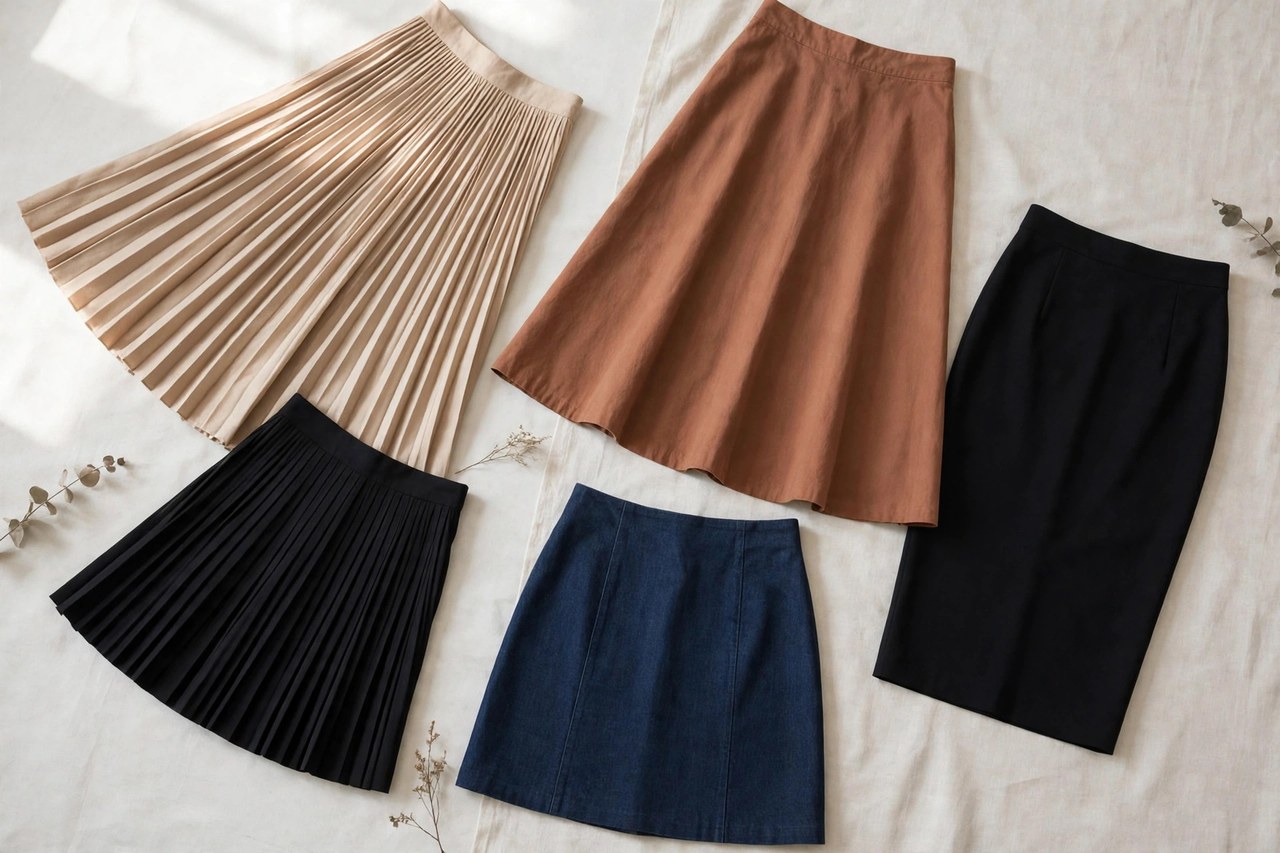
A skirt is the lower part of a dress or gown, covering the wearer from the waist downwards — or, as most skirts are now sold, a separate outer garment serving the same purpose. The hemline of a skirt can vary from very short to floor-length; the hemline is simply the line formed by the lower edge of the garment, and in a skirt it defines the length. That one moving line is the category's most famous variable: the trendy length of a skirt has varied considerably throughout the years, driven by fashion, and the real factors in choosing it are age, body type, society, occasion, and ultimately the choice of the individual.
This guide organizes the category by its three working parts: length, silhouette and construction. It covers the named lengths from micro to maxi, the shapes from pencil to circle, how fullness is built with darts, gores, pleats and panels, and the fabrics and linings that make a skirt hang as designed. Specialty skirts — denim, leather, tennis and the rest — branch from here to their own pages.
Lengths: The Hemline Ladder
The length ladder runs in named steps. The micro and mini skirt end at mid-thigh or above. The classic short skirt ends above the knee, and the knee-length skirt — at, just above or just below the knee — is the category's professional anchor. Midi skirts end at mid-calf, a length that depends heavily on the wearer's height, which is why midi is a proportion, not a measurement. For proportion rules, styling ideas and shoe pairings in detail, see our midi skirt guide. For the at-the-knee step in detail, see our knee-length skirt guide. Maxi and floor-length skirts end at the ankle or the floor and carry the most fabric and movement of any length.
Choose length by occasion and proportion together. A length that ends at the widest point of the calf shortens the leg visually; ending just below the knee or below the calf's curve lengthens it. High-low and asymmetrical hems combine two lengths in one skirt. And length is personal: age, body type, society and occasion inform the choice, but the wearer makes it — the marketplace offers every length in nearly every season.
Silhouettes and How Fullness Is Built
Most skirts are fitted to the body at the waist or hips and fuller below, and the fullness is introduced by specific means: darts, which taper fabric smoothly at the waist; gores, triangular panels that flare the skirt gradually; pleats, folds that release fullness when you move; or panels, shaped sections sewn together. The named silhouettes are combinations of these: the pencil skirt stays narrow to the knee with darts alone; the A-line flares gently from the hip; the circle and full skirt build flare from gores, panels or a full circular cut; pleated skirts fold their fullness flat until it moves. Three of these silhouettes now have dedicated guides of their own: the pencil skirt, the pleated skirt and the short, flared skater skirt.
Around those anchors sit the wrap skirt, closing with ties or buttons and adjusting at the waist; the tiered and ruffled skirt, gathering horizontal bands; the trumpet and mermaid skirt, fitted to the knee then flaring; and the draped extreme — a skirt can be simply a draped garment made of a single piece of fabric, such as a pareo. When a skirt hangs wrong, the cause is usually in this section: fullness built in the wrong place for the fabric's weight, pleats that should have been pressed, or a silhouette fighting the body it is on.
Fabrics, Linings and Slips
Modern skirts are usually made of light to mid-weight fabrics such as denim, jersey, worsted wool or poplin — extended now by crepe, satin, linen, corduroy, leather and silk, all represented in the marketplace's wide selection of fabrics, colors, prints and silhouettes. Fabric weight must match construction: a circle skirt needs cloth light enough to swing, a pencil skirt needs cloth firm enough to hold its line, and pleats need a fabric that takes and keeps a pressed fold, which is why pleated skirts so often use polyester blends.
Skirts of thin or clingy fabrics are often worn with slips, to make the material drape better and for modesty — a half slip under an unlined skirt stops clinging, static and show-through in one step. The slip turned into a skirt in its own right is covered in our slip skirt guide. Linings serve the same purpose built-in, and a quality skirt in wool, silk or light cotton is usually lined. A structured waistband with a zip sits smoothest under tucked tops; an elastic or drawstring waist trades polish for comfort.
Fit, Movement and Care
Fit a skirt at the waist and hip first: the waistband should sit at the intended waist without rotating as you walk, a classic sign the proportions are mismatched to yours. Sit down in it: pencil and straight skirts need a vent or kick pleat to allow a normal stride, and any skirt that rides up severely when seated is too short in the hip for its length. Check that side seams hang vertical and the hem hangs level.
Care follows fabric: wool and structured skirts rest on wide hangers, pleats are stored hanging and re-pressed rather than washed flat, and denim and jersey skirts wash like their trouser counterparts. A skirt wardrobe built on three lengths — knee, midi and one personal favorite — across a pencil, an A-line and a fuller silhouette covers nearly every occasion the category serves.
Related Women's Guides
Photos

More to Explore on Apparel Search
- Short Skirts
- Madras Skirts
- Short Leather Skirts
- Short Denim Skirts
- Short Black Skirts
- Short Red Skirts
- Tennis Skirts
- Cotton Tennis Skirts
- Mini Skirts
- Skirt Stores
- Maxi Skirts Guide
- denim skirts
- short skirts
- Leather Skirts
- Cotton Skirts
- Silk Skirts
- Fashion Designers
- Popular Brands
- Women's Clothing Stores
- Women's Clothing Wholesalers
- Women's Fashion
- Lace Skirt Guide
- Tulle Skirt Guide
- Bubble Hem Skirt Guide
Looking for Women's Clothing Stores?
This guide helps you choose women's skirts. To browse where to buy, visit our women's clothing store directory, where you can find retailers that carry them.