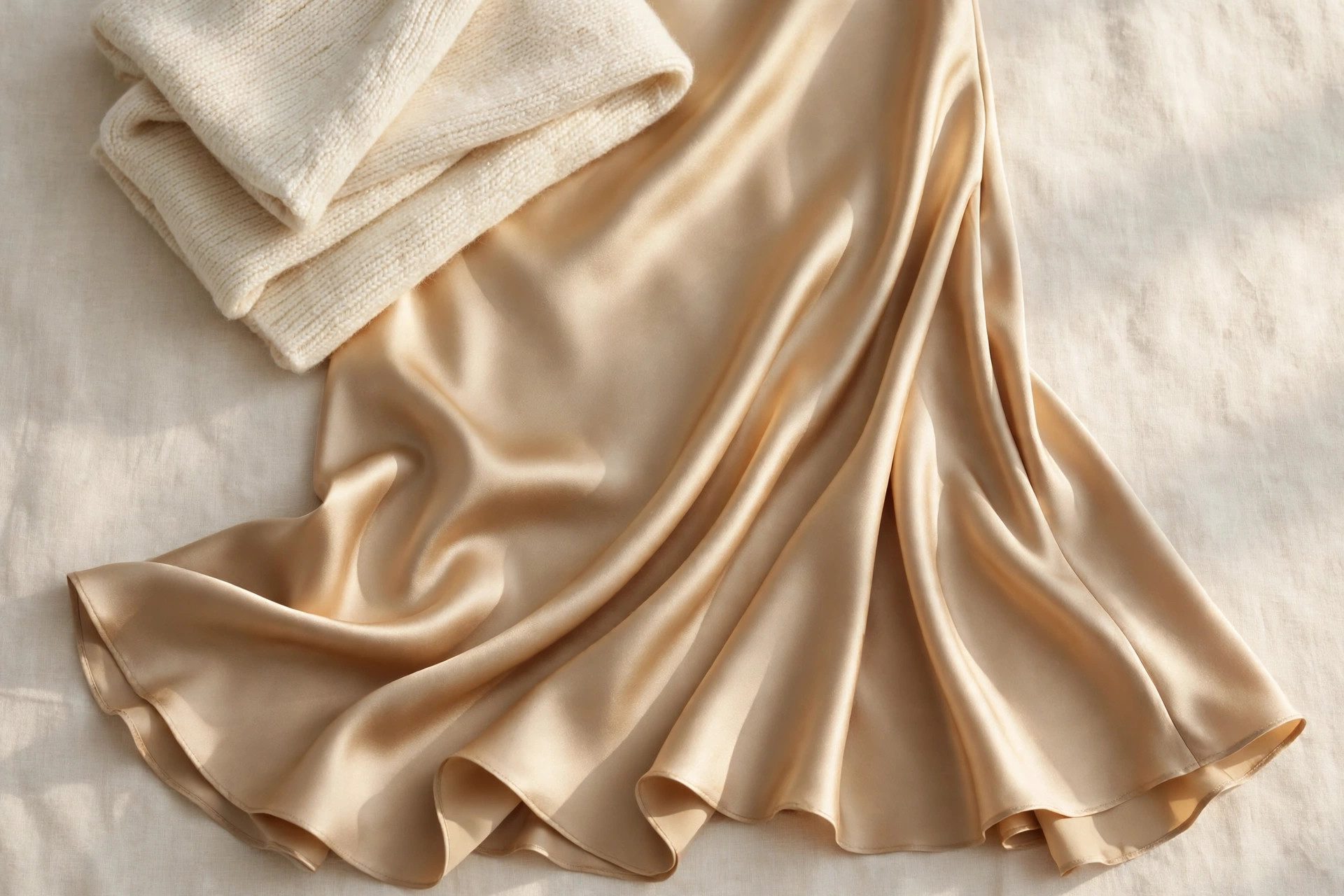
A slip skirt is a skirt cut like a lingerie slip: straight or gently flared, usually in satin, silk or a silk-look fabric, and almost always cut on the bias so the cloth pours over the body instead of standing away from it. It has no darts, no pleats and no structure to speak of — an elastic or flat waistband, a fluid column of fabric, and a hem that is most often at midi length, with knee-length and maxi versions either side. The slip skirt became a wardrobe staple in the 1990s and returned to stay because it does something no structured skirt can: it makes a plain sweater or T-shirt look deliberately dressed.
The Bias Cut Is the Whole Story
Bias cutting means the fabric is cut at 45 degrees to its grain, so the woven threads run diagonally. Diagonal cloth stretches and drapes in a way straight-grain cloth cannot: it skims curves, ripples when you move, and falls in soft folds at the hem. That drape is the slip skirt's entire character — and its entire demand. A bias skirt shows what is underneath it, follows the body closely without any elastane, and can twist or grow slightly in length over a day's wear as the diagonal threads settle.
Fabric choice decides how the bias behaves. Silk satin is the original: fluid, luminous, expensive and delicate. Polyester and viscose satins deliver most of the look at a fraction of the price and care burden, with slightly less movement. Matte crepe versions read more like tailored skirts and show less. Weight matters: a heavier satin drapes in smooth sheets, while a very light one clings and outlines. If you are between the two, the heavier cloth is the more forgiving garment.
What to Wear Underneath
Because a slip skirt reveals outlines, underwear is part of the outfit. Seamless, smooth underwear in a shade close to your skin disappears; visible lines and textured lace do not. In pale satins, a short half-slip under the skirt prevents show-through against the light and stops the fabric clinging to the legs with static — the traditional solution, and still the best one. Static is the slip skirt's everyday enemy in dry weather: an anti-static spray, a slip, or choosing lined versions all fix it.
Fit at the waist matters more than fit anywhere else. Most slip skirts use a flat band or hidden elastic; the skirt should rest at the waist or high hip without the elastic biting, because a biting band creates a line the fluid fabric will faithfully display. If a slip skirt clings at the hips but swings at the hem, that is the bias working as designed. If it pulls in horizontal creases, it is too small.
Styling: Knitwear, Tees and Boots
The slip skirt's famous pairing is contrast: a fluid satin skirt under a chunky, matte knit, the jumper half-tucked or belted at the front. The textures argue and the outfit wins. Summer reverses the weight — a plain T-shirt or camisole and trainers or flat sandals, the skirt providing all the polish. For evenings, a matching satin camisole makes a two-piece dress effect, and heeled sandals finish it. Work wear is possible in conservative offices with a matte crepe version, a blazer and loafers, but shiny satin at midi length reads as evening in formal workplaces — know your office.
Shoes follow the season. Ankle boots are the winter standard and meet the midi hem cleanly; knee-high boots under the hem remove the leg gap entirely in cold weather. The skirt works across the year by changing what surrounds it, which is why it earned its staple status: one slip skirt, worn with knits, tees, boots and sandals in turn, covers more occasions than almost any other single skirt.
Common Questions
- What do you wear under a slip skirt?
- Seamless, smooth underwear in a skin-close shade, so nothing outlines through the bias-cut fabric. Under pale colours, add a short half-slip: it prevents show-through, stops static cling, and helps the skirt hang smoothly. Textured lace and thick waistbands will show, so keep everything underneath flat.
- Is a slip skirt see-through?
- It can be in pale, lightweight satins held against the light. Darker colours and heavier satins are effectively opaque. The reliable fix for a pale slip skirt is a half-slip underneath, which also improves how the skirt drapes. Check a new skirt in daylight before wearing it out.
- Can you wear a slip skirt to work?
- In most modern offices, yes — choose a matte crepe or heavier satin version at midi length, and pair it with a blazer, a fine knit or a tucked shirt and loafers. High-shine satin reads as evening wear in formal workplaces, so save the shiniest versions for after hours unless your office is creative.
- How do you wash a satin slip skirt?
- Follow the label. Silk usually needs hand washing in cool water or dry cleaning. Polyester and viscose satins often machine wash cold on a gentle cycle in a mesh bag. Never wring a bias-cut skirt — roll it in a towel to press water out, then hang it to dry so the diagonal cut settles back to its true length.
Skirt Styles & Lengths
This page is part of our series on the core skirt styles — the cuts and lengths every skirt wardrobe is built from.