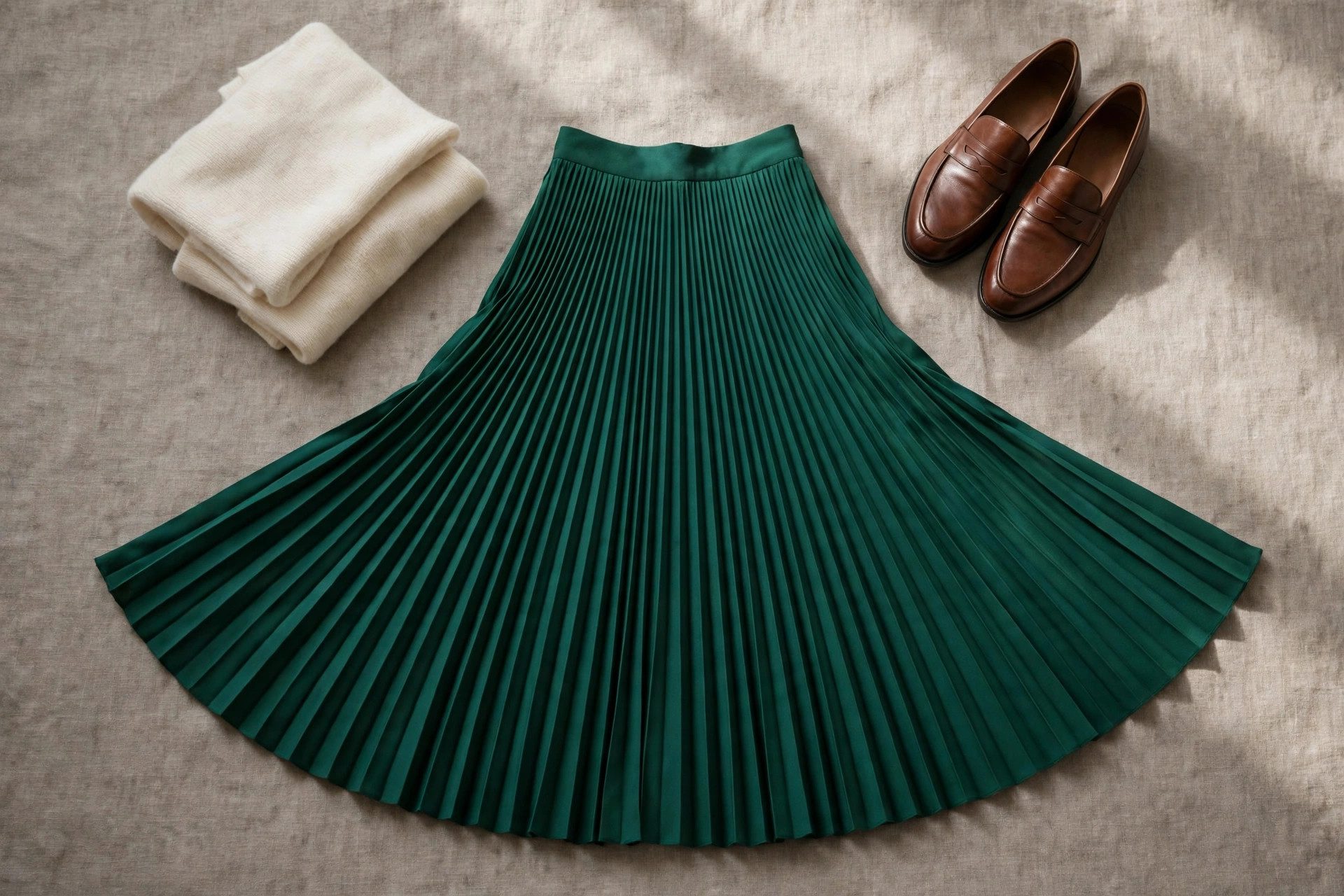
A pleated skirt is a skirt whose fullness is built from folds — pleats — that are stitched, pressed or heat-set into the fabric. The folds sit flat at the waist and release as the skirt moves, so a pleated skirt swings when you walk and settles when you stand still. Pleats can run the full length of the skirt or be stitched down over the hip and released below it, and the style is made at every length from mini to maxi, with the pleated midi skirt the modern standard. Fabric decides the rest: the same pattern in crisp polyester crepe and in soft wool produces two different skirts.
Types of Pleats: Knife, Accordion, Box and Sunburst
Knife pleats are the classic form: uniform folds all pressed in one direction, overlapping like roof shingles. They give even, predictable fullness and are the pleats of school skirts, kilts and most high-street midi skirts. Accordion pleats are narrower and sharper, alternating peaks and valleys like the bellows of the instrument; they are usually heat-set into fine polyester and produce the fluid, light-catching movement of evening and occasion skirts. Box pleats fold fabric away from a centre point on both sides, making a flatter, more tailored panel — common on uniforms and structured day skirts — while inverted pleats hide the fold inside, releasing a neat kick of movement at the hem.
Sunburst pleats start narrow at the waist and widen toward the hem, cut so the skirt flares as the pleats open — the most dramatic form, usually in satin or lamé for evening. A separate decision is how far the pleats are stitched down: pleats sewn flat over the hips and released at mid-thigh keep the waistline smooth and suit most bodies, while pleats released from the waist give maximum swing and maximum volume. When you try a pleated skirt on, walk in it — pleats are a moving garment, and the mirror at rest tells you only half the story.
Fabrics and Pleats That Last
Whether pleats survive the season depends on fibre and finish. Polyester and polyester blends can be heat-set: the folds are baked in at temperatures the fibre remembers, so the pleats are effectively permanent and survive washing. This is why most pleated skirts are synthetic, and it is a genuine functional advantage, not a compromise. Wool pleats well and holds a pressed crease through a season of wear, but the pleats are maintained by pressing, not by the fibre — they soften with humidity and sitting, and need a press to restore. Silk and viscose pleats are usually soft and shallow; they drape beautifully and lose their edge fastest.
Cotton and linen pleats are pressed, casual and expected to rumple — treat them as a summer style, not a crisp one. Whatever the fabric, pleats dislike two things: being crushed in an over-full wardrobe, where the folds are flattened unevenly, and very hot irons on synthetic cloth, which can glaze or melt the fold. Hang a pleated skirt by its waistband with the pleats aligned, and it will repay you by coming out of the wardrobe ready to wear.
Styling a Pleated Skirt
Pleats add volume below the waist, so the styling rule is a calm top half: a tucked-in blouse, a fitted T-shirt, a slim knit or a cropped jumper that ends at the waistband. A belt over the waistband sharpens the line further. For work, a knife-pleat midi in crepe or a fine wool blend with a tucked shirt and loafers is one of the most reliable outfits in the category — formal enough for most offices, comfortable enough for a full day. Finer accordion pleats in satin-finish fabrics move into evening with a camisole or a fine knit and heeled sandals.
The two common mistakes are both about proportion: a long, loose top left untucked, which buries the waist and makes the pleats start from nowhere; and pleats in a fabric too stiff for their width, which stand away from the body like a lampshade. Narrow pleats in fluid fabric flatter more bodies than wide pleats in stiff fabric. On shoes, pleats accept almost everything — trainers and a pleated midi are a settled weekend uniform — but avoid ankle straps that fight the hemline on shorter lengths.
Common Questions
- Do pleated skirts suit everyone?
- Yes, with the right construction. Pleats stitched down over the hip and released below add movement without adding hip volume, and suit most bodies. Fine accordion pleats in fluid fabric are the most forgiving; wide knife pleats in stiff fabric add the most width. Length matters too — a pleat that ends below the widest part of the calf lengthens the leg.
- How do you wash a pleated skirt?
- Check the label first. Heat-set polyester pleats usually machine wash cold on a gentle cycle; hang the skirt by the waistband with the pleats smoothed into line and let it dry in shape. Wool and silk pleats are often dry clean or hand wash. Never wring a pleated skirt, and store it hanging rather than folded so the folds are not crushed flat.
- Why do the pleats in my skirt fall out?
- Usually because the pleats were pressed rather than heat-set, and washing, humidity and sitting gradually relax them — normal for wool, cotton and silk skirts. A careful press with a steam iron, working fold by fold, restores them. Heat-set polyester pleats should not fall out; if they do, the skirt was likely washed or ironed too hot.
- What shoes go with a pleated skirt?
- Almost all of them. Loafers and low heels suit work pleats, trainers take a pleated midi casual, ankle boots meet a pleated hem neatly in cold weather, and heeled sandals dress fine accordion pleats up for evenings. The one caution is ankle straps or boot tops that end exactly where the hem does, which cuts the leg line.
Skirt Styles & Lengths
This page is part of our series on the core skirt styles — the cuts and lengths every skirt wardrobe is built from.