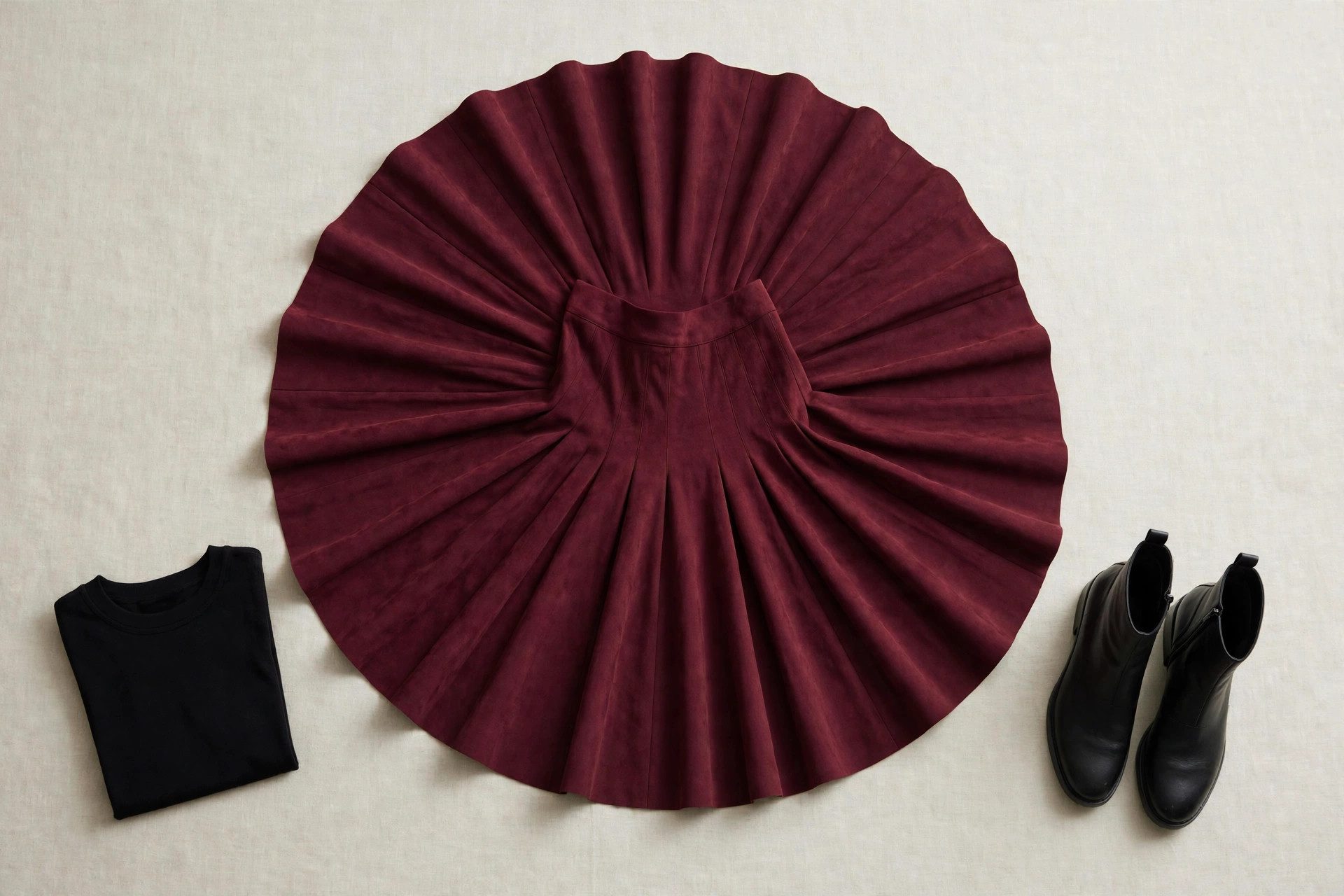
A skater skirt is a short skirt that is fitted at the waist and flares out in a full circle of fabric, ending at mid-thigh to just above the knee. It is cut on the same principle as a circle skirt — a ring of cloth with the waist at the centre — but at the shorter length figure skaters wear, which is where the name comes from. The flare starts right at the waist rather than at the hip, so the skirt stands away from the body and moves with a pronounced swing. Because the shape is built into the cut, a skater skirt needs no pleats, gathers or darts to do its work.
What Makes a Skater Skirt
Lay a skater skirt flat and it forms a near-complete circle with a small hole at the centre for the waist. That geometry is the whole design: the waist is the only fitted point, and everything below it is flare. Most versions close with a back zip and a flat waistband, and the hem is usually narrow and simply finished because a full circular hem is long — a single skater skirt can use several metres of fabric around the hemline.
Length is the skater's defining limit. At mid-thigh to above-the-knee the proportions read playful and balanced; extend the same cut to the knee and below and it becomes a circle skirt or a full skirt instead. The shortness is also why fabric weight matters: a light fabric in a full circle at this length lifts and blows around outdoors, while a fabric with body stays where it was put. Many skater skirts are therefore made with built-in shorts or worn with them, a practical inheritance from the sport that named the style.
Skater vs Circle Skirt vs A-Line
The three flared skirts are easy to confuse and worth separating. A circle skirt uses the same circular cut as a skater but at longer lengths — knee, midi or maxi — and its flare reads as sweep rather than bounce. A skater skirt is that cut kept short. An A-line skirt is different in kind: it is built from shaped panels that fit through the hip and flare gradually toward the hem, so it lies much closer to the body and has far less fullness at the hem.
In wear, the difference is movement and formality. The A-line is the quiet, workable one; the circle is the dramatic one; the skater is the energetic one, and the least formal of the three. If a skirt's flare begins at the waist and the hem would form a full ring laid flat, it is in the circle family whatever the shop calls it. If it fits the hip first and flares after, it is an A-line.
Fabrics, Fit and Styling
The classic skater fabrics have body: ponte, scuba and firm jersey hold the flare in a smooth bell shape and need no ironing, which is why they dominate the style. Velvet skaters are a winter and party staple, and denim or twill versions give the cut a more structured, casual register. Fit is decided at the waist alone — it should sit at the natural waist without digging in, because there is no hip fitting to share the work; if the waistband is loose, the skirt will rotate and hang unevenly.
Styling follows the volume rule: fullness below, neatness above. Fitted T-shirts, slim knits, tucked shirts and cropped jumpers all work; a bodysuit gives the cleanest line. In winter the skater's standard outfit is tights, ankle boots and a fitted jumper — the tights also answer the length question in wind and on stairs. Trainers and a tee make it a weekend skirt; heels and a fitted top take the same skirt to a party. Long, loose layers over a skater skirt bury its shape, so keep jackets cropped or fitted.
Common Questions
- What is the difference between a skater skirt and a circle skirt?
- Cut, they are the same: both are full circles of fabric fitted only at the waist. The difference is length and effect. A skater skirt is short — mid-thigh to above the knee — and reads playful and sporty. A circle skirt is longer, usually knee-length or below, and reads as sweep and drama.
- Are skater skirts still in style?
- They cycle in and out of the trend spotlight but never leave shops entirely, because the cut is a permanent pattern, not a seasonal print. Ponte and scuba skaters sell year-round as basics, and velvet versions return every party season. Worn with tights, boots and a fitted knit, the style reads classic rather than dated.
- What shoes go with a skater skirt?
- Ankle boots and trainers are the everyday answers, and both suit the skirt's energy. Heeled pumps or sandals dress it up for parties. In winter, tights with ankle boots or knee-high boots are the standard combination. Avoid very chunky long boots that meet the hem closely — the gap of leg is part of the proportion.
- Can you wear a skater skirt in winter?
- Yes — it is one of the easiest skirts to winterise. Choose a heavier fabric such as ponte, velvet or a wool blend, and wear it with opaque tights or fleece-lined tights, ankle boots and a fitted jumper. Many wearers add shorts underneath short full skirts for wind security, a habit borrowed from skating itself.
Skirt Styles & Lengths
This page is part of our series on the core skirt styles — the cuts and lengths every skirt wardrobe is built from.