Women's Asymmetric Skirt Guide
Short at the front, long at the back; pointed at one side, level at the other — the asymmetric skirt replaces the straight hem with a deliberate angle.
Shop Women's Asymmetric Skirts Now
Shop Women's Asymmetric Skirts on Amazon Shop Women's Asymmetric Skirts on eBayThe Amazon and eBay links on this page are affiliate links. If you make a purchase through them, Apparel Search may earn a commission.
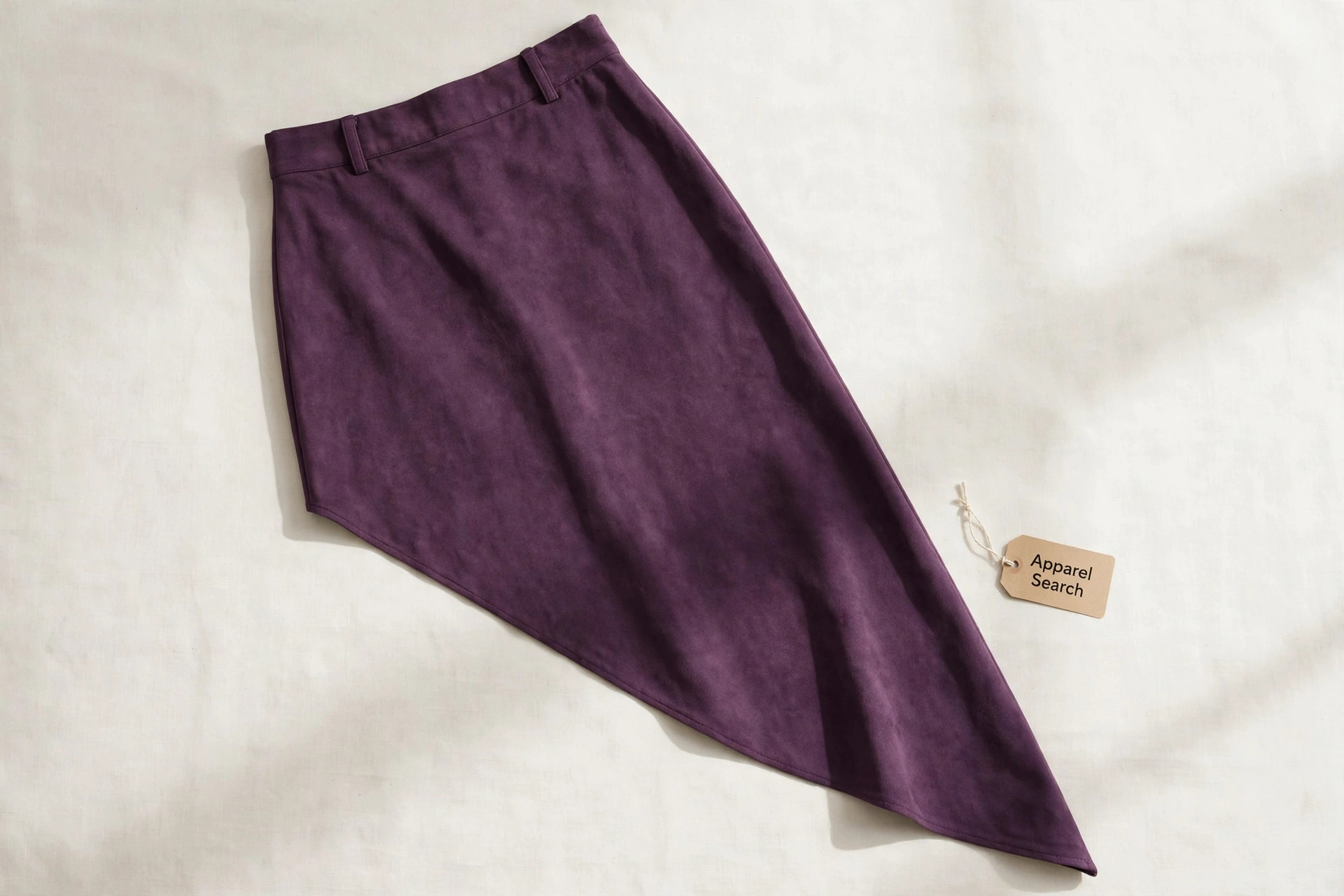
An asymmetric skirt is any skirt whose hem is deliberately uneven: higher at the front than the back, cut on a diagonal from one side to the other, or falling in the points of a handkerchief hem. Where every other skirt in this cluster is defined by its waist, flare or construction, the asymmetric skirt is defined by its edge. The angle is the design, and it changes how the whole garment moves: one side swings long while the other shows leg, in the same step.
The best-known member of the family is the high-low skirt (also sold as a mullet or waterfall hem), which swept fashion in the early 2010s — short enough in front to show shoes and knees, trailing long behind for drama without a train's commitment. Diagonal and handkerchief hems are older and quieter: the handkerchief hem, made from square panels whose corners hang as points, belongs to 1970s and boho dressing and returns with every revival of that mood.
The Three Hem Families
High-low: the hem circles the body but sits high — often above the knee — at the front and drops to calf, ankle or floor at the back, usually in a smooth curve. Diagonal: the hem runs on one slant from a high point at one hip to a low point at the opposite side, the most architectural and modern of the three. Handkerchief: the skirt is cut from one or more square or layered panels, and the corners fall as soft points around the leg at uneven lengths — the points move independently, which gives this hem its flutter. Each family has its own temperament: high-low is dramatic, diagonal is sharp, handkerchief is romantic.
Cut decides whether asymmetry looks intentional. A designed angle is decisive — several inches of difference, a clean curve or a true point. A hem that differs by a timid inch reads as a manufacturing error, which is why these skirts should be judged on the body, in motion. Symmetrical-skirt rules about level hems do not apply, but their spirit does — the unevenness must look chosen.
Movement, Legs and Proportion
The asymmetric hem's real subject is the leg: it frames one or both legs at an angle no straight hem can, which is why high-low skirts became the red-carpet and party solution for showing shoes and leg while keeping a gown's sweep. Petite wearers gain from the high front, which shows leg and prevents a long skirt from swallowing the frame; the long back supplies the occasion feeling. Diagonal hems lengthen by the same logic as diagonal seams elsewhere — the eye travels the slant and reads height.
Balance is the skill. A dramatic hem is already the outfit's loudest line, so the body above it stays simple: fitted or tucked tops, minimal belts, jewellery that does not introduce rival angles. On any body shape, the rule from our styling guide holds — one statement direction per outfit. Handkerchief hems, with points moving everywhere, take the plainest tops of all; a high-low in a solid colour can carry a little more interest above the waist because its curve is one calm line.
Fabrics and the Honest Checks
Asymmetry needs fabric that shows an edge. Fluid chiffon, georgette, rayon and soft jersey make high-low curves pour and handkerchief points flutter; the long back of a high-low should move a beat after you do. Crisp fabrics — taffeta, organza, cotton — hold diagonal hems at their designed angle and suit the architectural versions. Very heavy fabric drags the long side down and distorts the intended difference between sides; very thin fabric in a diagonal cut can twist on the body and migrate until the high point is no longer where it started.
Checks before buying: walk a full circle and confirm the long side clears the floor in your shoes (a trailing back hem is a tripping hazard on stairs — lift it, as generations of long-skirt wearers have). Sit and confirm the short front still covers what it should at its highest point. Check the hem finishing on points and curves, where cheap versions fray first. And store asymmetric skirts folded rather than hung by one side, so the long section's weight does not stretch the bias over time.
Common Questions
What is an asymmetric skirt?
A skirt with a deliberately uneven hem: high at the front and long at the back (the high-low hem), cut on a diagonal from one side to the other, or falling in handkerchief points. The uneven edge is the design feature — it shows the leg at an angle, adds movement, and should always look decisive rather than like a levelling mistake.
What is the difference between a high-low skirt and an asymmetric skirt?
High-low is one type of asymmetric skirt — the hem is short at the front and long at the back. Asymmetric is the wider category, also covering diagonal hems that slant from one side to the other and handkerchief hems that fall in points. All high-low skirts are asymmetric; not all asymmetric skirts are high-low.
Are asymmetric skirts flattering?
Generally yes: the high front of a high-low hem shows leg and shoe while the long back keeps the drama, which suits petite frames especially well, and diagonal hems lengthen the leg line visually. Keep the top simple and tucked so the hem's angle is the outfit's single statement, and check that the short side still covers properly when seated.
Dress & Skirt Silhouette Guides
Every dress and skirt silhouette guide in this cluster — the new guides plus the classic silhouettes already on Apparel Search — in alphabetical order:
- Women's Bubble Dress
- Women's Circle Skirt
- Women's Cold Shoulder Dress
- Women's Column Dress
- Women's Empire Dress
- Women's Fit and Flare Dress
- Women's Prairie Dress
- Women's Prairie Skirt
- Women's Sheath Dress
- Women's Shift Dress
- Women's Skater Dress
- Women's Slip Dress
- Women's Surplice Dress
- Women's Swing Dress
- Women's Tea Length Dress
- Women's Tent Dress
- Women's Tiered Dress
- Women's Tiered Skirt
- Women's Tulip Skirt
- Women's Wrap Dress
- Women's Wrap Skirt
More to Explore on Apparel Search
Looking for Women's Clothing Stores?
This guide helps you choose women's asymmetric skirts. To browse where to buy, visit our womens clothing store directory, where you can find retailers that carry them.