Women's Sheath Dress Guide
A sheath dress is a fitted, straight-cut dress, nipped at the waist with no waist seam — its bodice and skirt darts are combined into one shaping line.
Shop Women's Sheath Dresses Now
Shop Women's Sheath Dresses on Amazon Shop Women's Sheath Dresses on eBayThe Amazon and eBay links on this page are affiliate links. If you make a purchase through them, Apparel Search may earn a commission.
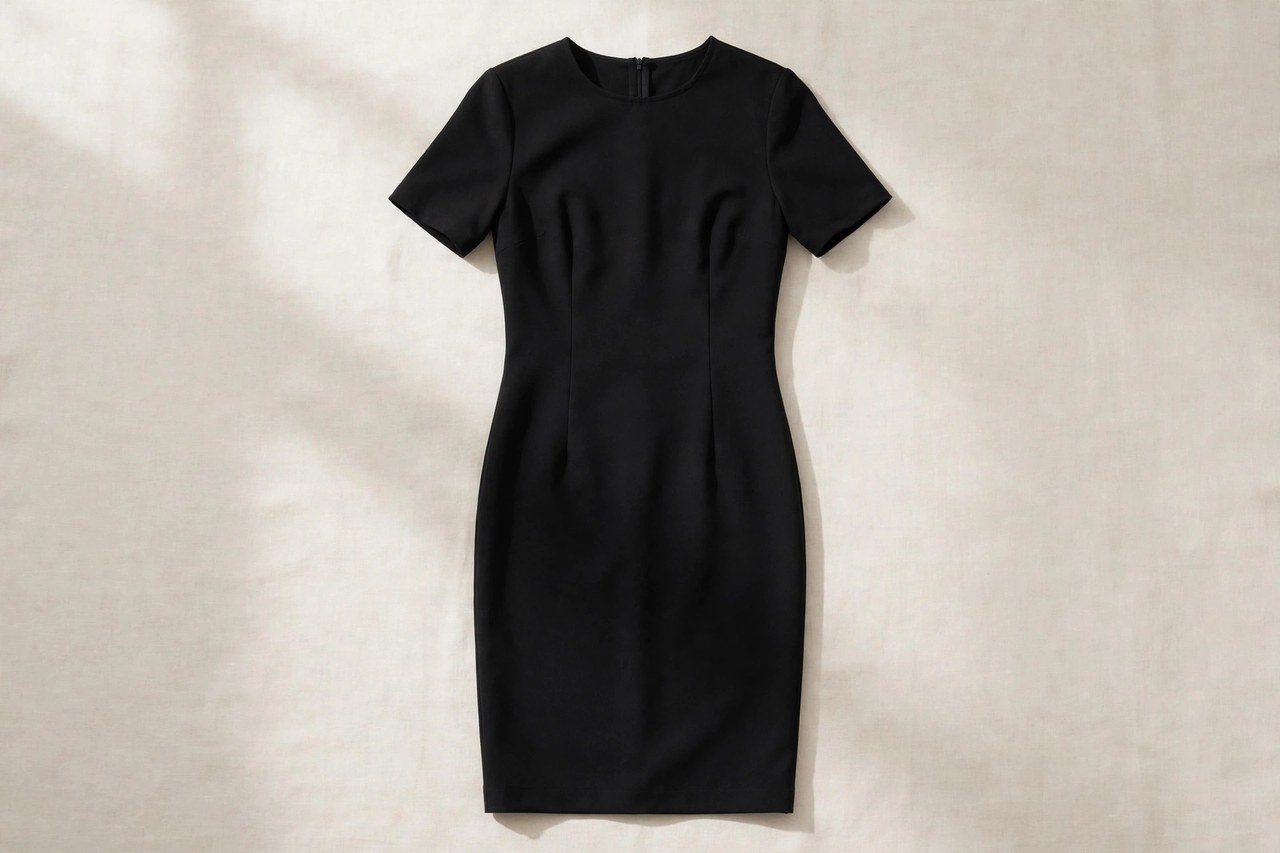
The word sheath in fashion means a woman's close-fitting dress. A sheath dress is a fitted, straight cut dress, often nipped at the waistline with no waist seam. The style often is worn with short sleeves and reaches the knee, though sheath dresses come in many lengths and patterns. Its sleek, unbroken line is the whole design: no waist seam interrupts the fall from shoulder to hem, which is why the sheath serves equally as a work dress, a cocktail dress and, in recent years, a popular wedding dress silhouette.
This guide explains how that line is built, because the sheath's simplicity is engineered, not accidental. It traces the style from ancient Egyptian art through the Princess sheath of the 1870s, Paul Poiret's modern version and the most famous sheath ever photographed — then returns to fit, fabric and alteration.
Construction: One Dart Doing Two Jobs
Regarding construction, the bodice and skirt are joined together by combining the skirt darts into one dart: the method aligns the skirt darts with the bodice waist dart, so a single shaping line runs through where a waist seam would otherwise be. The dress emphasizes the waist as its skirt portion is fitted, yet the eye reads one continuous garment. Princess seams, side shaping and a center-back zipper or vent complete the usual engineering, and a back vent or slit is functional, not decorative — a straight skirt needs it to walk and sit.
Fabric must cooperate with that construction. The sheath wants cloth with body — wool crepe, ponte, structured cotton, suiting blends and firm silk — that holds the darted shape and smooths over the body. Very soft or clingy fabrics reveal every under-layer and make the absence of a waist seam a liability instead of an elegance. Lining matters for the same reason: a lined sheath slides over the body, holds its hem level and survives a working day without creasing into a record of every chair it met.
History: Princess Sheath, Poiret and the 1950s
The Princess sheath dress was popular between 1878 and 1880, associated with the Princess of Wales, later Queen Alexandra; it was constructed with bodice and skirt cut in one with a gored skirt, worn without a bustle but with a small pad, and tightened at the front by ribbons attached inside the back. The sheath idea itself is far older — the design is commonly seen in ancient Egyptian art — but its modern form arrived when American socialites were still looking to Paris for the latest trends.
Paul Poiret is credited as the first designer of the modern sheath dress, creating along with it a rubber girdle as an alternative to the boned corset to wear beneath. In contrast to Victorian curves, the sheath offered a sleek look, reaching the United States in 1908. By the 1950s the sheath had become the modern look for American women, and in 1961 Audrey Hepburn wore Hubert de Givenchy's black sheath in Breakfast at Tiffany's, after which the dress became known as the little black dress — the sheath's most enduring identity.
Fit: Tailored, Not Tight
A sheath fits by following the body with a small, even allowance everywhere — it should skim at bust, waist and hip without pulling horizontally at any of them. Horizontal creases mean the dress is too tight or too short in that zone; vertical sagging means it is too large. Shoulder and bust fit come first, because they are hardest to alter; waist and hip adjustments on a sheath are routine tailoring, and this is a silhouette that rewards a modest alteration budget more visibly than almost any other dress style.
Check the vent, the zipper and the sitting test. Sit, climb a step and raise your arms: the hem should stay near its standing level, the back vent should open for the step and close at rest, and the zipper should lie flat throughout. Sleeveless, short-sleeved and three-quarter-sleeved sheaths all follow the same rules. Choose length by occasion and proportion — the classic sheath reaches the knee, and that knee-length version remains the most versatile across work, evening and formal daytime wear.
Wearing and Care
The sheath's plain surface is a deliberate ground for accessories: a belt at the waist it already implies, a structured bag, classic pumps, or a single piece of jewelry carry the styling, while busy additions compete with the line. As a cocktail dress it takes evening fabrics and finishes; as a wedding dress it takes ivory, lace overlays and length. In black, it is the little black dress, styled up or down across almost the whole social calendar.
Care follows fabric: dry-clean structured and lined sheaths, press darts and seams from the inside, and hang on wide hangers that support the shoulders the dress's line depends on. Store it unbuttoned and unzipped enough to relax the closure, and re-check the vent stitching each season, since that small seam takes the strain of every step. A sheath has nowhere to hide wear, which is the final argument for buying its construction well: darts aligned, lining sound, fabric with body, fit tailored once and properly.
Related Women's Guides
Photos

More to Explore on Apparel Search
More to Explore on Apparel Search
Looking for Women's Clothing Stores?
This guide helps you choose women's sheath dresses. To browse where to buy, visit our women's clothing store directory, where you can find retailers that carry them.