Women's Slip Dress Guide
A slip dress is a dress that resembles a slip — bias-cut, narrow-strapped and fluid — but is made and meant to be worn as outerwear, on its own.
Shop Women's Slip Dress Now
Shop Women's Slip Dress on Amazon Shop Women's Slip Dress on eBayThe Amazon and eBay links on this page are affiliate links. If you make a purchase through them, Apparel Search may earn a commission.
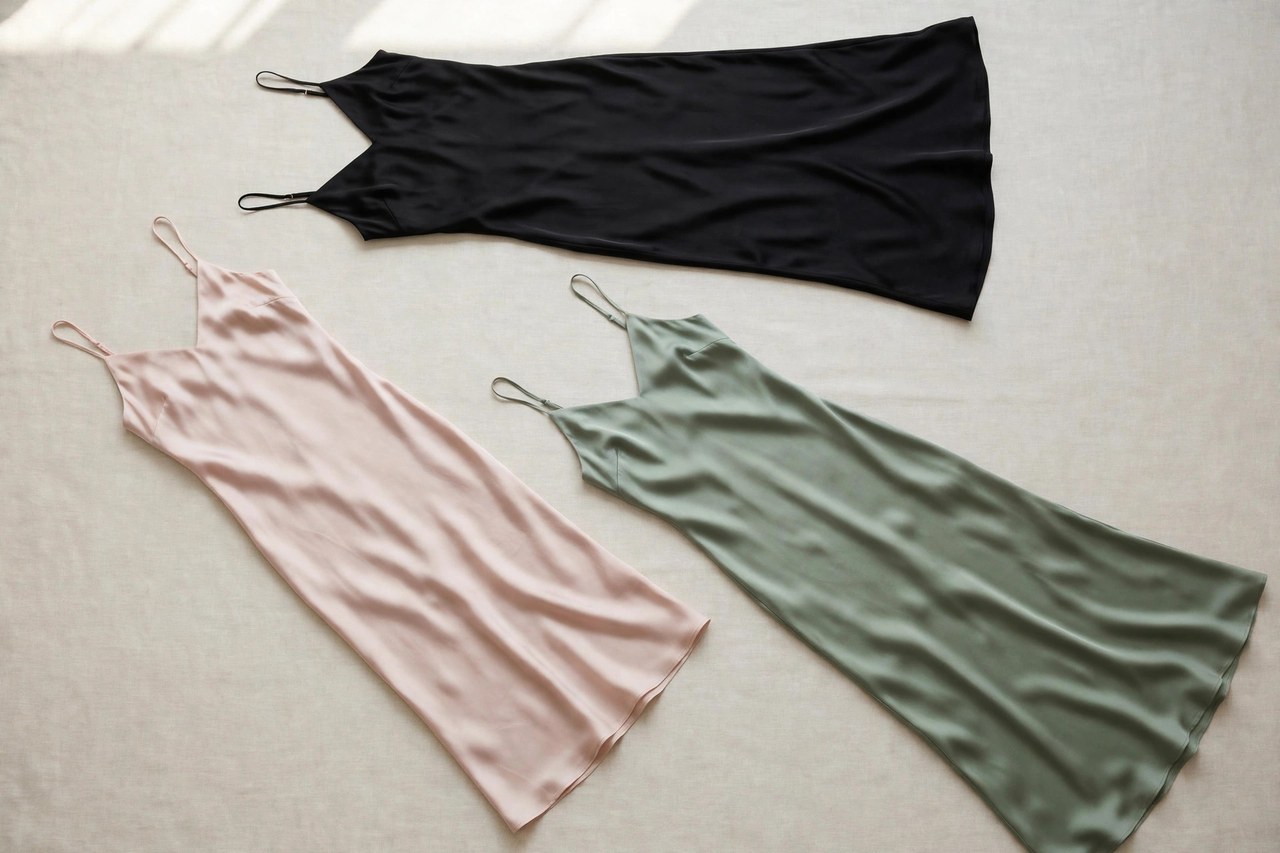
A slip dress is a woman's dress that closely resembles a slip or petticoat, and the resemblance is the design. It began as an undergarment shape that rose beyond its origins to become a dress in its own right. The distinction that matters is intent: the slip, covered on its own page here, is a layer worn under other clothes, while the slip dress is intended to be seen, finished as outerwear with proper hems, quality fabric and construction that stands alone.
Through lace and sheer elements the style can hint at its undergarment ancestry, and that ancestry is exactly its fashion charge. This guide covers the dress as a garment: the bias cut that makes it move the way it does, the fabrics that suit it, lengths from mini to maxi, and how to layer and style a deliberately simple dress without losing its point.
The Bias Cut and Narrow Straps
A slip dress is traditionally cut on the bias, meaning the fabric is cut at a 45-degree angle to its weave. Bias cutting makes a woven fabric drape and stretch mechanically, so the dress skims and flows over the body instead of standing away from it or clinging by elastic. It is why two dresses of identical measurements, one straight-cut and one bias, wear completely differently, and why a true bias slip dress feels fluid rather than tight.
The shoulders carry the other signature: spaghetti straps, narrow straps that leave shoulders and back largely bare and put the dress's whole support on two fine lines. Better dresses make those straps adjustable, because strap length sets where the neckline and any lace trim sit. Necklines are usually a soft cowl, a straight or V front, or a lace-trimmed edge borrowed directly from the lingerie the dress references. Seams are minimal by design, so fabric quality shows with nowhere to hide.
Fabrics: Silk, Satin and Modern Alternatives
Silk and satin are the popular fabrics for this dress, and for good reason: both have the fluid fall and low sheen the bias cut shows best. Silk charmeuse is the classic, light and liquid, at a classic price. Satin-faced synthetics and silk blends reproduce the surface at lower cost and with easier care, though they breathe less in heat. Matte crepe and sandwashed silk give a softer, less glossy version for daytime.
Fabric weight decides how a slip dress behaves. Very light fabrics reveal every layer beneath and every seam of what is worn under them, which is why smooth, minimal underlayers are the practical pairing. Slightly heavier satins and lined bodices give more coverage and structure while keeping the drape. A slip dress with a partial lining through the body is the easiest-wearing version and the one most first-time buyers are happiest with.
Lengths and Styling, Day to Evening
Lengths run the full range. A mini slip dress can be dressed up or down and has a definite party character. Midi is the most versatile length, working with sandals, ankle boots or trainers and a jacket. Maxi slip dresses read as evening or occasion wear in satin, and as relaxed summer dressing in matte fabrics. The dress is a blank, fluid column, so shoes and layers do most of the styling work.
Layering is the slip dress's second life. Worn over a fine t-shirt or under a blazer, cardigan or leather jacket, it shifts from evening piece to everyday one; a knit thrown over it turns it into a skirt. Belts are optional and change the bias drape, so add one loosely or not at all. Because the dress itself is understated by design, one strong accessory — earrings, a shoe, a bag — is usually the right amount of addition.
Fit and Care
Fit a slip dress by drape, not compression. It should fall from the straps, skim the bust and hip without pulling horizontal stress lines, and move when you walk. Bias fabric relaxes with wear and warmth, so a dress that feels exactly fitted in the morning may hang looser by evening; straps adjusted slightly short compensate. If the fabric pulls tight across the hip, the bias cannot do its work and the next size will paradoxically look slimmer.
Care follows the fabric label closely. Silk versions are usually dry clean or careful hand wash, hung away from direct sun; satin synthetics often machine wash gently. Store a bias dress folded or on a padded hanger for a short time only — hung by its spaghetti straps for months, a bias dress can literally grow longer, since the cut stretches under its own weight. Folded in a drawer is the safest long-term home for it.
Related Women's Guides
Photos

More to Explore on Apparel Search
Looking for Women's Clothing Stores?
This guide helps you choose women's slip dresses. To browse where to buy, visit our women's clothing store directory, where you can find retailers that carry them.