Women's Summer Dress Guide
A summer dress is the broad warm-weather dress category — any lightweight, breathable dress made to keep you cool and dressed in one easy piece from June through August.
Shop Women's Summer Dresses Now
Shop Women's Summer Dresses on Amazon Shop Women's Summer Dresses on eBayThe Amazon and eBay links on this page are affiliate links. If you make a purchase through them, Apparel Search may earn a commission.
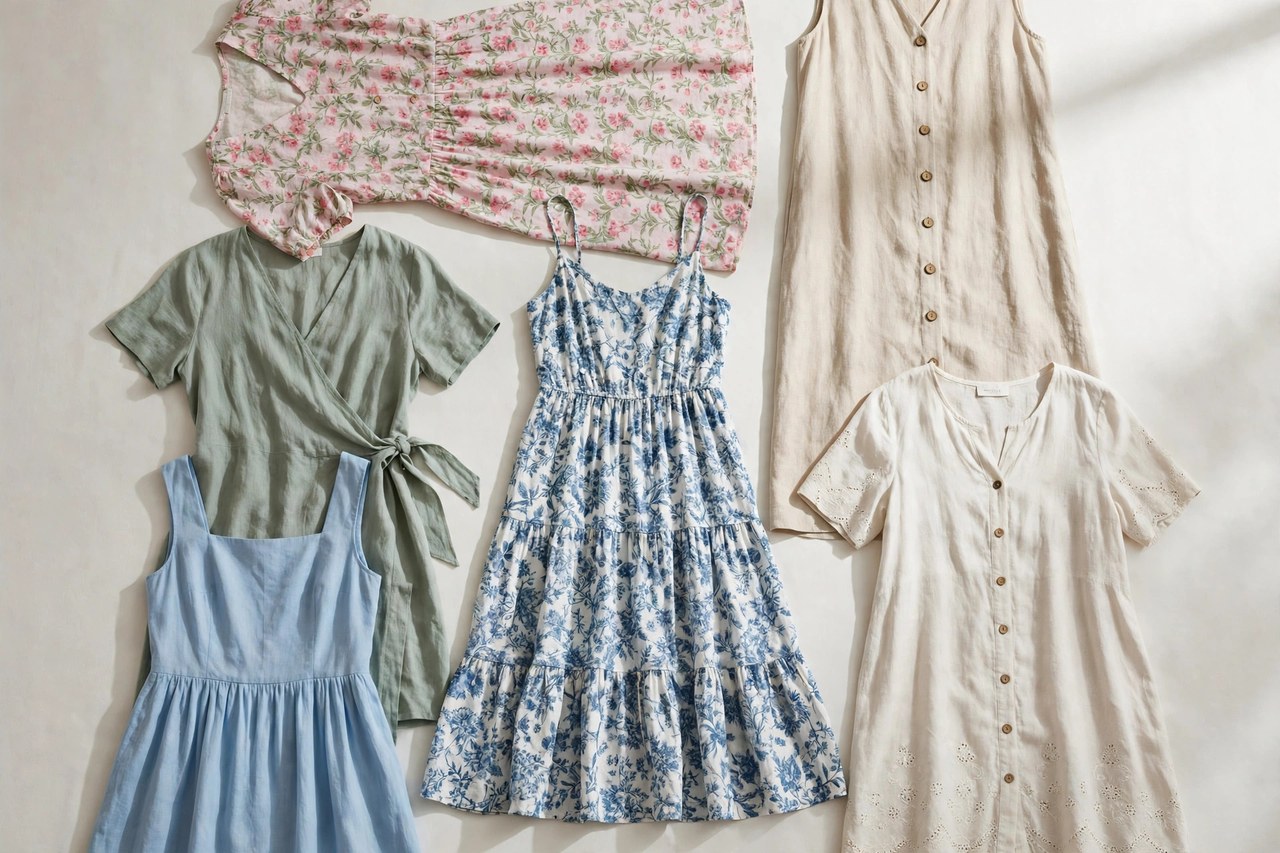
A summer dress is the umbrella term for dresses designed for the warmest season of the year — June through August in the northern hemisphere, December through February in the southern. As the weather heats up, summer dresses help you stay fashionable as well as cool, and they are typically made of lightweight, breathable fabrics whose whole purpose is comfort on hot days. Nearly any dress silhouette can be a summer dress if the fabric and construction suit the heat.
That breadth is what separates this page from the sundress page. A sundress is one specific, casual style inside this larger category. A summer dress, by contrast, can be a sleeveless sheath, a belted shirtdress, a flowing maxi or a simple t-shirt dress, and it can be polished enough for work or an event. This guide covers the category as a whole: the fabrics that breathe, the silhouettes worth knowing, and how to choose a dress that still feels good at the hottest hour of the day.
Styles Inside the Category
The styles shoppers actually browse are a good map of the category: t-shirt dresses, crepe midi dresses, linen-blend dresses, embroidered popover midis, shirtdresses, open-back dresses, belted cotton-poplin midis and cover-up maxis, along with tiered bodices and bandeau necklines. Flutter sleeves and short sleeves belong here too — a summer dress does not have to be sleeveless, and a small sleeve can be more comfortable in strong sun or cold air conditioning than bare shoulders.
Length sorts the category by occasion. Mini and knee-length dresses are the everyday, coolest-wearing options. Midi dresses are the most versatile, moving from daytime to dinner with a change of shoes. Maxi dresses in lightweight fabrics give full coverage while still moving air around the legs, which is why they anchor vacation and festival dressing. Wrap dresses and floral wrap styles earn their popularity honestly: the wrap adjusts at the waist, and the print hides the wrinkles a long, hot day produces.
Fabrics That Actually Breathe
Fabric decides whether a summer dress works. Cotton, linen and cotton-linen blends absorb moisture and let air through, and they are the classic choices. Rayon and viscose drape beautifully and feel cool against the skin, though they wrinkle and need gentler washing. Crepe and gauze add texture that lifts fabric slightly off the body, and eyelet and seersucker build airflow into the weave itself. Heavy, unlined synthetics are the trap: they can look light while trapping heat all day.
Construction matters as much as fiber. An unlined or lightly lined dress in a breathable fabric will out-perform a lined dress in the same cloth, because linings are often polyester and sit directly against the skin. Look for dresses whose lining, if any, is cotton voile. Smocked or elastic backs, adjustable straps and side slits all add movement and ventilation. A useful test in the fitting room is simple: if the dress feels warm standing still under shop lights, it will feel far warmer on a July sidewalk.
Fit, Prints and Styling for Heat
Summer fit should skim rather than cling. A dress that touches the body at the shoulders and waist but releases over the stomach, hips and thighs lets air circulate, which is the garment's cooling system. A-line, empire, swing and tiered shapes all do this by design. Cinch gently with a soft belt or a sash if you want definition, and be wary of tight elastic all the way around the midsection by mid-afternoon, when bodies run warmer and slightly swollen from heat.
Prints and color are practical here, not just decorative. Playful prints and colors are encouraged, and floral dresses remain the signature summer print because a busy pattern camouflages perspiration, wrinkles and the small marks of a day out. Light colors reflect heat on the surface, while darker colors hide dampness better — choose according to your day. Finish with flat sandals and a crossbody bag for daytime, and swap in a low heel and simple jewelry for evening; the one-piece ease is the point, so keep the rest effortless.
Care and Getting More Summers From a Dress
Summer dresses are washed more often than almost anything else in the closet, so care decides their lifespan. Wash cotton and linen in cool water and dry them in shade where possible, because strong sun fades bright prints. Rayon dresses often do better hand washed or in a mesh bag on gentle, and they should be reshaped while damp. Hang dresses by their loops or on padded hangers so thin straps do not stretch, and steam rather than iron when the fabric allows it.
Rotate rather than repeat: two or three summer dresses worn in turn will each last longer than one favorite worn daily. Mend a loose hem or strap before it tears in wear. Stored clean at season's end, away from plastic bags that trap moisture, a well-chosen summer dress in a natural fabric will come back the next June looking like the easiest decision in the wardrobe — which is exactly what the category promises.
Related Women's Guides
Photos


Looking for Women's Clothing Stores?
This guide helps you choose women's summer dresses. To browse where to buy, visit our women's clothing store directory, where you can find retailers that carry them.