Fashion Festivals
Apparel Search fashion summary — a short guide to fashion festivals.
A festival is a day or period of celebration — an organised series of concerts, films, food markets and gatherings, often held annually in the same place, though festivals can equally move between locations and intervals. A fashion festival, in the sense used here, is a festival at which fashion is important: not necessarily an event for selling clothing, but one where what people wear is part of the spectacle.
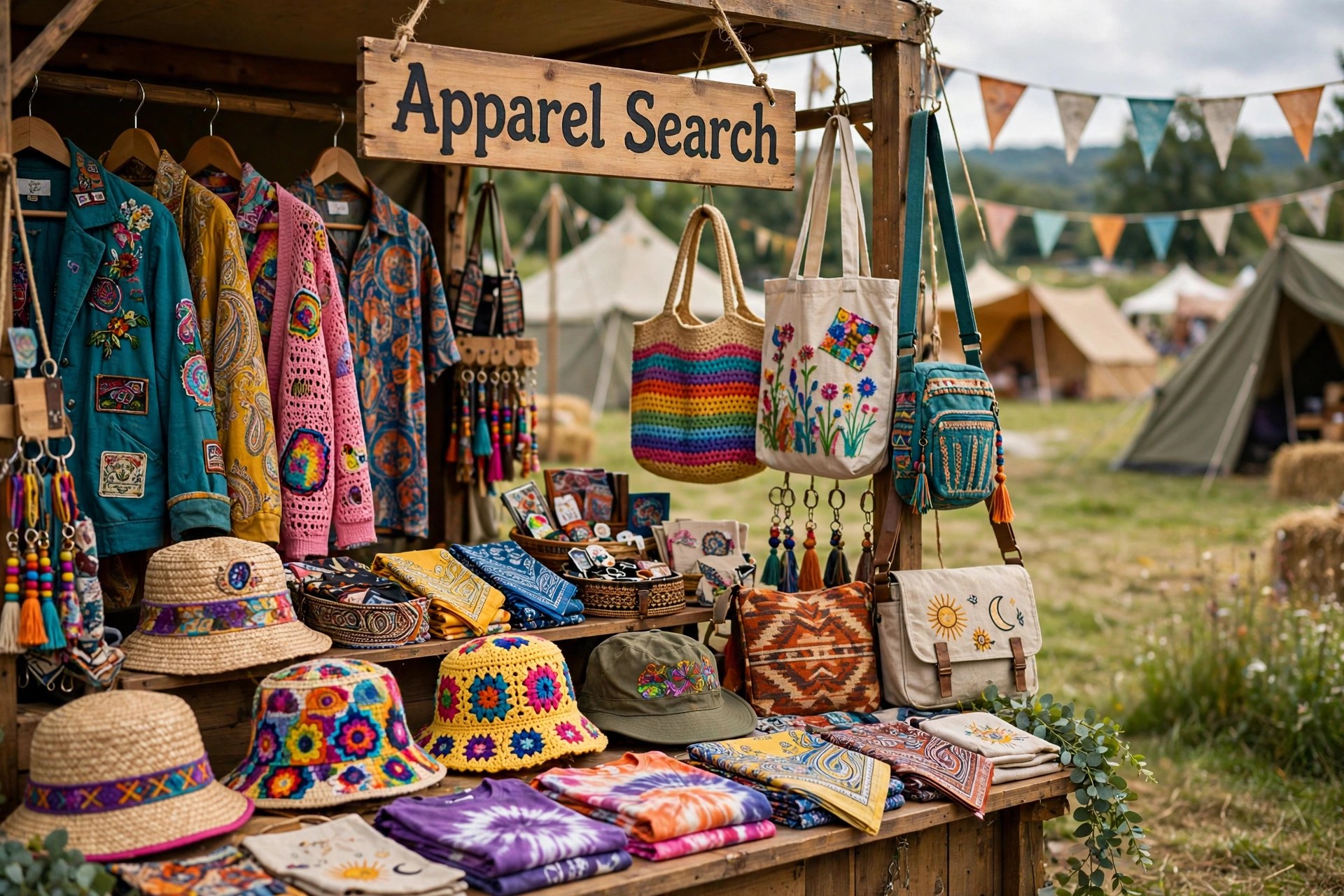
Fashion Festivals — Explore & Resources
Why Festivals Became Fashion Events
At many festivals the clothing, shoes and fashion accessories being worn are a large part of the attraction. Celebrities and fashion influencers attend in planned outfits, fans and media judge those outfits publicly, and a festival look can travel around the world in photographs within hours. That coverage turned major festivals into unofficial fashion weeks for casual and bohemian style, and retailers now build festival collections around the season.
The United States has two standard examples. The Coachella Valley Music and Arts Festival made desert festival dressing — boots, hats, fringe, denim — into a recognisable style category of its own. The New Orleans Jazz & Heritage Festival pairs its music with a city whose own dressing culture is part of the draw. Woodstock, the 1969 music festival, is the historical champion of the form: its crowd's clothing became the lasting visual record of an era's style.
International Festivals and Festival Dressing
Internationally, the list widens beyond music. Carnival in Rio de Janeiro, Brazil, is costume on the largest scale in the world. Glastonbury Festival in England made practical dressing — wellington boots against famous mud — into a fashion statement photographed every year. The Sziget Festival in Hungary, one of the largest music and cultural festivals in Europe, is held every August on Óbudai-sziget, a leafy 108-hectare island on the Danube in northern Budapest. King's Day — Koningsdag — in the Netherlands turns a whole country orange for a national holiday.
The dressing rule that connects them all is participation: festival fashion is worn by the crowd, not presented to it. Practicality leads — weather, ground conditions and long days decide footwear and layers — and self-expression fills whatever room practicality leaves. Anyone attending should plan to look deliberately stylish within those limits, because at a modern festival the audience is also the show.
Festival Style as a Retail Category
Festival dressing has become a retail category in its own right. Stores now release festival collections timed to the big events — breathable fabrics, boots that can survive a field, hats, layered pieces for temperature swings and bags that leave the hands free — and festival coverage in fashion media treats the crowd's outfits as trend evidence for the summer season. That commercial layer sits on top of the older reality: people dressed expressively at festivals long before retailers named the look. The category works because it solves genuine problems — heat, mud, long days — with clothes that photograph well, which is the festival combination in a single sentence.
Photos

Common Questions
What is a fashion festival?
A festival — a celebration event such as a concert series or cultural gathering — at which fashion is important: the clothing and accessories worn by attendees, celebrities and influencers become part of the event's appeal and coverage.
Which US festivals are known for fashion?
The Coachella Valley Music and Arts Festival, famous for desert festival style, and the New Orleans Jazz & Heritage Festival are leading examples, with Woodstock in 1969 as the historically significant starting point.
What should I wear to a festival?
Start with practicality — footwear for the ground and weather, layers for long days — then express yourself within those limits. Festival fashion is participatory: the crowd's outfits are part of the spectacle.