Fashion Calendar
Apparel Search fashion summary — a short guide to fashion calendar.
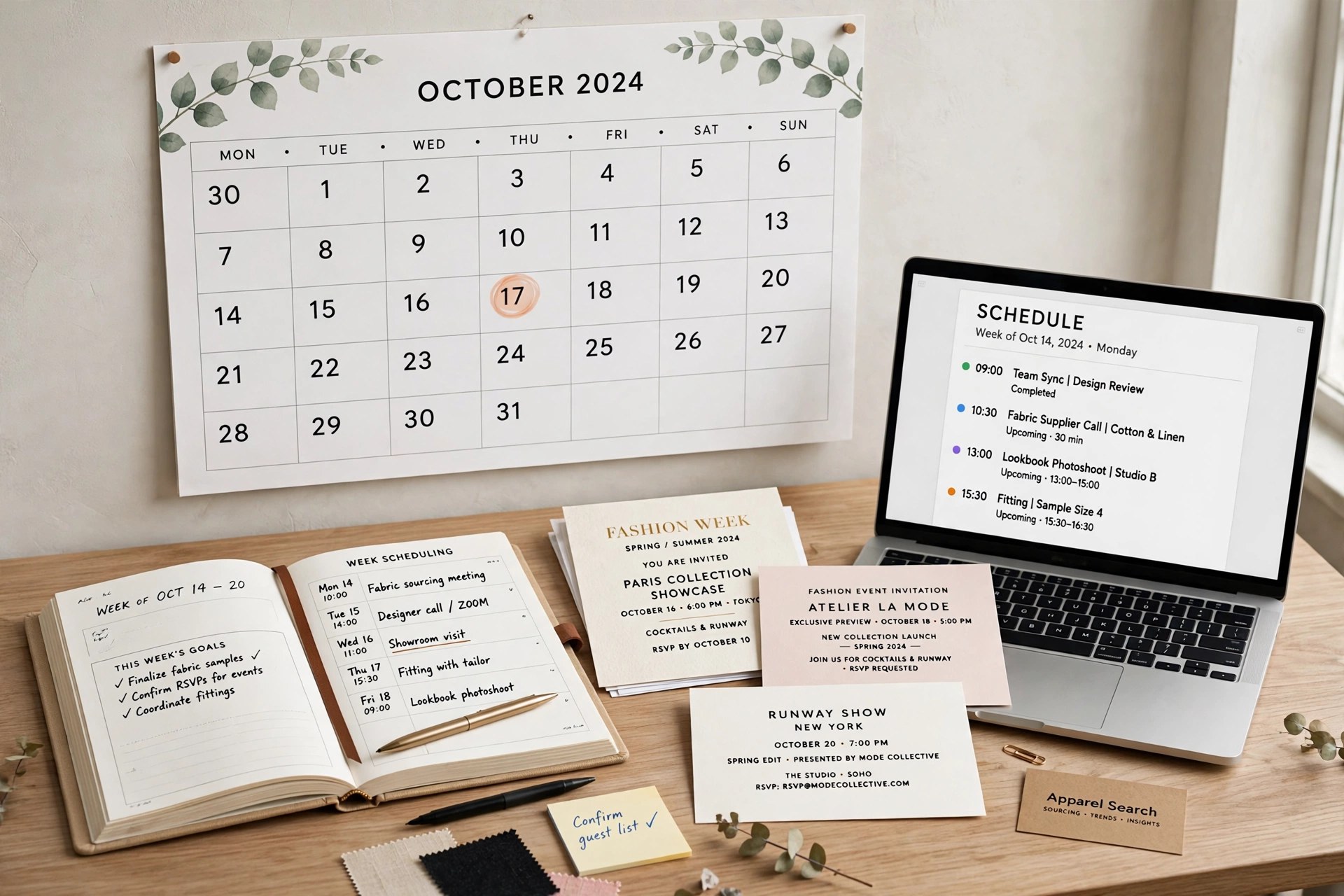
A calendar is a system of organising days, and a fashion calendar applies that system to the industry's events: fashion weeks, apparel trade shows, school runway shows, market weeks, sample sales and trunk shows. Fashion runs on dates more than outsiders realise — collections are shown months before they sell, buyers order seasons ahead, and production follows time-and-action calendars — so the calendar is not decoration. It is the industry's operating schedule.
Fashion Calendar — Explore & Resources
The Events on the Calendar
A fashion show is an event put on by a designer to showcase an upcoming line of clothing and accessories during Fashion Week, with models walking the catwalk in the collection; shows debut every season, particularly for spring/summer and fall/winter. A fashion week is the industry event, lasting approximately one week, in which designers, brands and houses display their latest collections in runway shows to buyers and the media — events that influence trends for the current and upcoming seasons. New York, Milan and Paris Fashion Weeks top the hot list year after year, but the international calendar stays busy all year round across borders.
Trade fairs are the commercial counterpart: exhibitions where fashion companies showcase products and services, meet partners and customers, study rivals and examine market trends. Market week is the period when clothing, footwear and accessory buyers travel to a location to plan the season's purchases. Sample sales clear excess merchandise at a fraction of retail price — sometimes samples used by agencies to sell lines to vendors — and trunk shows present merchandise directly to store personnel or customers at a retail location or venue such as a hotel room, often with orders taken for later manufacture and delivery.
Calendar Resources
The Fashion Calendar itself is the industry's premier scheduling resource: founded in 1945 by publisher Ruth Finley as a bi-weekly publication, it became the foremost planning tool for designers, press, retailers and public relations teams, and on October 1, 2014 the Council of Fashion Designers of America (CFDA) acquired it, adding customisable filters, scheduling tools and archival information. Its important-dates page is linked below.
Other working resources include Fashion Week Online's fashion week dates, the NYC fashion calendar from NYCGo, Vogue Italia's fashion calendar, and the trade-show calendar of UBM Fashion — producer of shows such as MAGIC, COTERIE, PROJECT, FN PLATFORM and CHILDREN'S CLUB. Apparel Search's own fashion industry calendar and trade show calendar of events gather dates in one place, and the related summary pages below split the subject into fashion week calendars, events and schedules for readers who need one slice of the year rather than all of it.
Common Questions
What is a fashion calendar?
The organised schedule of fashion industry events — fashion weeks, trade shows, market weeks, sample sales, trunk shows and school shows — used by designers, buyers, press and retailers to plan the year.
What is the CFDA Fashion Calendar?
The industry's premier event resource, founded in 1945 by Ruth Finley and acquired by the Council of Fashion Designers of America in 2014. It is a subscription scheduling service for shows and fashion events.
What is the difference between fashion week, market week and a trunk show?
Fashion week is the runway-show season where designers present collections to buyers and media. Market week is when buyers travel to order for the season. A trunk show presents one vendor's merchandise directly to store staff or customers at a venue, with orders taken for later delivery.