Women's Sundress Guide
A sundress is one specific dress — a casual, sleeveless, loose summer style with a wide neckline and thin straps, made to be thrown on and lived in.
Shop Women's Sundresses Now
Shop Women's Sundresses on Amazon Shop Women's Sundresses on eBayThe Amazon and eBay links on this page are affiliate links. If you make a purchase through them, Apparel Search may earn a commission.
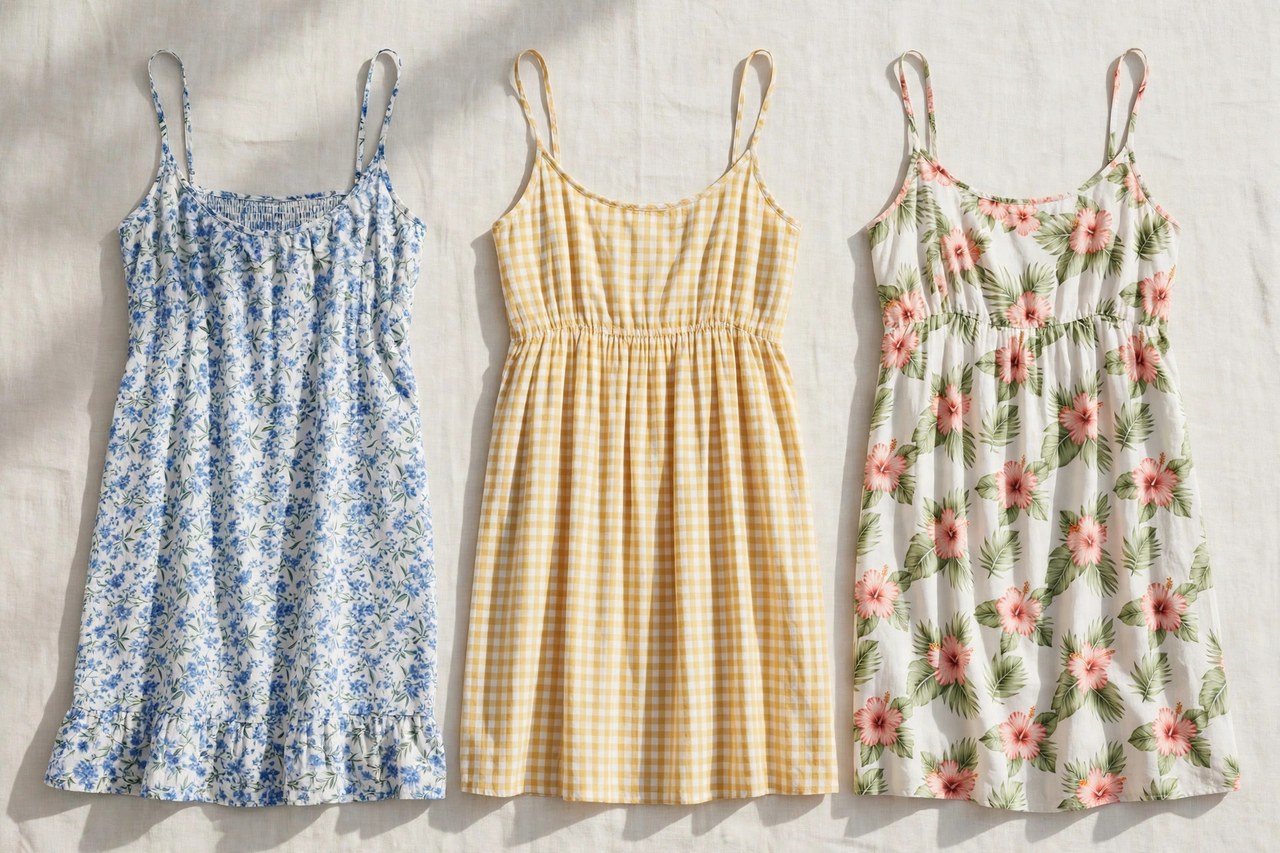
A sundress is a specific garment, not a season. A sundress is precisely this: an informal or casual dress intended to be worn in warm weather, typically in a lightweight fabric, usually loose-fitting, and commonly a bodice-style, sleeveless dress with a wide neckline and thin shoulder straps, sometimes backless. That cluster of details — sleeveless, strapped, loose, casual — is the whole identity of the style, and it is narrower than the summer dress category it lives inside.
Every sundress is a summer dress, but most summer dresses are not sundresses: a belted shirtdress or a sleeved midi belongs to the broader category, not to this one. This guide stays with the sundress itself — its classic construction, the fabrics it favors, how its deliberately unstructured fit is supposed to work, and how to wear a dress whose charm is that it asks almost nothing of you on a hot day.
The Classic Sundress Shape
The traditional sundress is built around exposure and ease. The bodice is light and often simply constructed — a straight or slightly shaped top, a smocked or elasticized back panel, or a tie front — held up by thin spaghetti or tie straps rather than sleeves or a structured shoulder. The wide neckline, whether scoop, square or sweetheart, leaves the neck, shoulders and upper back open to the air, and many versions are partly or fully backless, finished with ties or elastic instead of a zipper.
Below the bodice, the skirt releases into an A-line or gathered shape that moves freely and touches the body almost nowhere. Lengths run from short to full maxi, and the maxi sundress with a smocked bodice is one of the most enduring warm-weather garments precisely because it combines maximum airflow with zero decisions. Details stay simple: a ruffle at the hem, a tiered skirt, patch pockets if you are lucky. Hardware, boning and tailoring belong to other dresses; the sundress succeeds by leaving them out.
Fabrics: Cotton First, Then Linen and Friends
The sundress fabric family is cotton first, then linen, silk and other lightweight, comfortable fabrics, and cotton still leads for good reason: it breathes, washes easily, holds a print well and feels familiar against sun-warmed skin. Cotton voile and gauze make the airiest versions; cotton poplin gives a crisper skirt. Linen sundresses wrinkle honestly and cool beautifully, and linen-cotton blends split the difference for shoppers who want the cooling without the creases.
Rayon and viscose sundresses drape more fluidly than cotton and pack small for travel, though they ask for gentler washing. Silk sundresses exist at the dressier end, usually as slips of printed fabric for evenings rather than park afternoons. Whatever the fiber, judge the fabric in your hand: hold it up to the light, because a sundress is worn over very little, and a fabric that is charmingly light in a photo can be genuinely see-through in sunshine. A cotton lining in the bodice solves it.
Fit: Loose on Purpose
A sundress should fit at exactly two places: the straps should stay on your shoulders, and the bodice should feel secure without squeezing. Everywhere else, looseness is the design. If a sundress needs constant adjusting, the bodice is the wrong size or shape for you; smocked backs and adjustable tie straps forgive the most, which is why they dominate the category. Check the bodice sitting and standing, and raise your arms — a well-cut sundress bodice stays put through ordinary movement.
Underneath is the practical question every sundress shopper solves once. Thin straps and open backs rule out many standard bras, so consider how you will wear the dress before you buy it: strapless or adhesive options, a bodice with enough structure to go without, or a style with wider straps that conceal a regular bra. None of these is the wrong answer, but discovering the problem at home is avoidable. Length deserves the same honesty — a breezy short sundress is wonderful until a windy day or a tall flight of stairs, and a mid-length version keeps the ease without the vigilance.
Wearing and Caring for a Sundress
The sundress is a one-piece outfit, so styling is mostly about the edges: flat sandals or espadrilles, a wide-brimmed hat, and sunglasses — pair a sundress with a trendy pair of women's sunglasses, and the combination remains the uniform of a summer afternoon. A denim jacket or light cardigan over the shoulders extends a sundress into the evening and into air conditioning, and a woven tote or straw bag suits its texture better than structured leather.
Care follows the fabric, but two sundress-specific habits help. Wash straps and smocking gently — a mesh bag protects thin straps and ties from tangling and stretching in the machine — and dry the dress in shade to keep prints bright. Store sundresses folded or hung by the skirt loops rather than by their straps, which creep longer under the dress's own weight over a winter. Looked after that simply, a cotton sundress softens gracefully, and the slight fade of a well-worn one is part of its record of good summers.
Related Women's Guides
Photos

More to Explore on Apparel Search
Women’s Clothes Guide by Letter: Women's Apparel Directory N · Women's Clothes Directory O · Women's Clothing Directory P · Women's Apparel Directory Q · Women's Fashion Directory R · Women's Clothes Directory T
Looking for Women's Clothing Stores?
This guide helps you choose women's sundresses. To browse where to buy, visit our women's clothing store directory, where you can find retailers that carry them.