Women's Straw Hats Guide
A straw hat is a brimmed hat woven from straw or straw-like plant fibers — built to shade the head and face from the sun while staying light and breathable.
Shop Women's Straw Hats Now
Shop Women's Straw Hats on Amazon Shop Women's Straw Hats on eBayThe Amazon and eBay links on this page are affiliate links. If you make a purchase through them, Apparel Search may earn a commission.
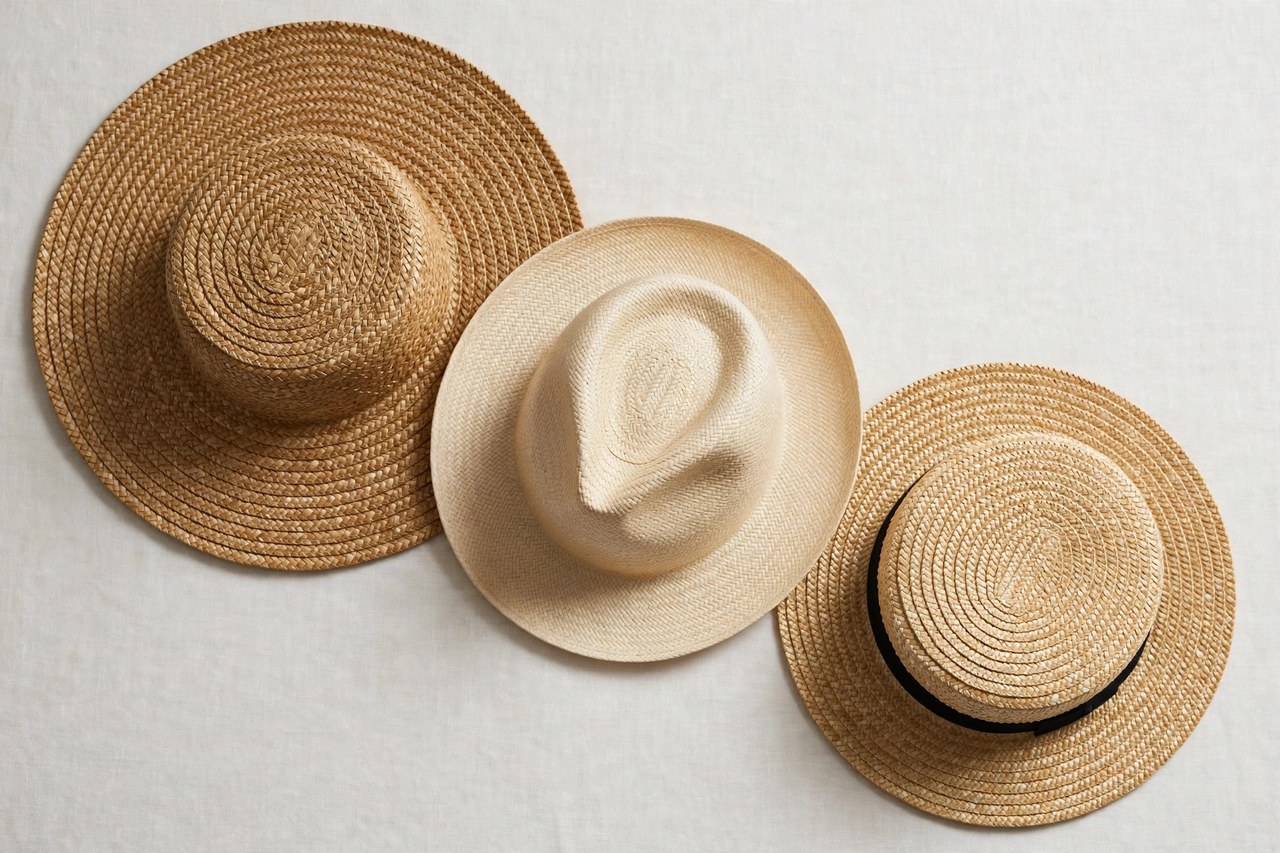
A straw hat is a brimmed hat woven from straw or straw-like materials, designed first to protect the head from the sun and used just as much as a decorative fashion element. Straw itself is the dried stalks of grain, used for thatching, packing and weaving — and hat straws extend the idea to several plants whose fibers weave into a light, stiff, breathable shell that no felt or fabric summer hat quite matches for coolness.
This guide covers straw hats as headwear: the real materials behind the word straw, including genuine Panama weaving and modern paper braids, women's styles from cowgirl hats to big bowknot sun hats, how brim width and weave density translate into sun protection, and the storage habits that keep a crushable-looking hat in shape for years. A good straw hat is equipment and ornament in a single object.
What 'Straw' Means on a Hat Label
True Panama hats are woven in Ecuador from toquilla palm fiber, fine enough at the top grades to feel almost like linen, and priced accordingly; the finer and tighter the weave, the smoother the hat and the better its shade. Wheat and rye straw braids are sewn in concentric rows to build classic boater and sun hat shapes. Raffia, from a palm, weaves into softer, more flexible hats with a rustic texture, and seagrass and milan straw fill out the traditional range.
Modern summer hats add paper braid — tightly twisted paper yarn woven or sewn like straw — and synthetic straws, which are lighter, cheaper, often foldable, and surprisingly effective, though they lack the hand and longevity of natural fiber. None of these is a deception if the label names it honestly; the buying question is what you need. For a hat worn daily in hard sun, a fine natural weave earns its price. For travel and the beach bag, a good paper or synthetic straw that springs back from packing is the smarter tool.
Styles: From Wide Brim to Cowgirl
The popular ladies' styles are led by wide brim sun hats, which are the protective flagship, shading face, ears and neck with brims of four inches and more, often finished with a bow or band — the big bowknot straw hat is the dressy member of this family. Panama hats bring a structured crown and a medium brim that suits town wear. Cowgirl and western rolled-up straw hats trade on a shaped crown and curled brim, built sturdier for outdoor work and wear.
Around those anchors sit the boater with its flat crown and flat brim, the foldable summer straw hat engineered to roll or flatten for a suitcase, and the wide brim beach sun cap and visor hybrids that shade the face while leaving the crown open. Choose by exposure and occasion: maximum brim for gardening and beach days, a Panama or boater for town and events, a foldable for travel, and a western shape where durability matters more than delicacy.
Sun Protection, Fit and Sizing
A straw hat's protection depends on weave density and brim width together. A loose, open weave is decorative shade — sunlight passes between the fibers — while a tight weave with a rated UPF blocks most ultraviolet before it reaches skin. Brims of at least three inches shade the face meaningfully; wider brims extend cover to ears, neck and shoulders. A dark underbrim reduces glare reflected up from water and pavement, a small feature worth seeking for beach and boat wear.
Fit should be secure without pressure: hats are sized by head circumference, and a straw hat that must be held in wind is the wrong size or needs its inner drawstring or sizing tape adjusted. Many women's straw hats include an adjustable inner band or ribbon — use it, because straw does not stretch to forgive a guess. The crown should sit without touching the top of the head in stiff styles, leaving the air gap that makes straw cool. Try the hat with the hairstyle you will actually wear under it.
Care and Storage That Keep the Shape
Straw's enemies are crushing, soaking and being grabbed by the crown. Handle a structured hat by the brim, keep it out of prolonged rain — a damp straw hat should dry slowly in its natural shape, stuffed lightly with tissue, never on a heater — and store it on a hook, a shelf or in a hat box rather than at the bottom of a pile. Foldable styles are the honorable exception, built to be packed, and even they recover best with a night out of the suitcase before wearing.
Clean with a soft brush following the weave's direction, and wipe marks with a barely damp cloth; deep cleaning natural straw is a milliner's job. Keep ribbons and bows freshened by steaming lightly rather than ironing the straw itself. Retire a hat whose weave has cracked across the brim's edge, because the break only travels. Treated with ordinary respect, a quality straw hat is a multi-summer companion, and its slight softening with age is part of its charm rather than a defect.
Related Women's Guides
Photos

Looking for Women's Clothing Stores?
This guide helps you choose women's straw hats. To browse where to buy, visit our women's clothing store directory, where you can find retailers that carry them.