Women's Hats Guide
Fedora, cloche, sun hat, beanie, beret and more: hat styles explained, plus how hats are sized, the materials they are made from, and how to keep them in shape.
Shop Women's Hats Now
Shop Women's Hats on Amazon Shop Women's Hats on eBayThe Amazon and eBay links on this page are affiliate links. If you make a purchase through them, Apparel Search may earn a commission.
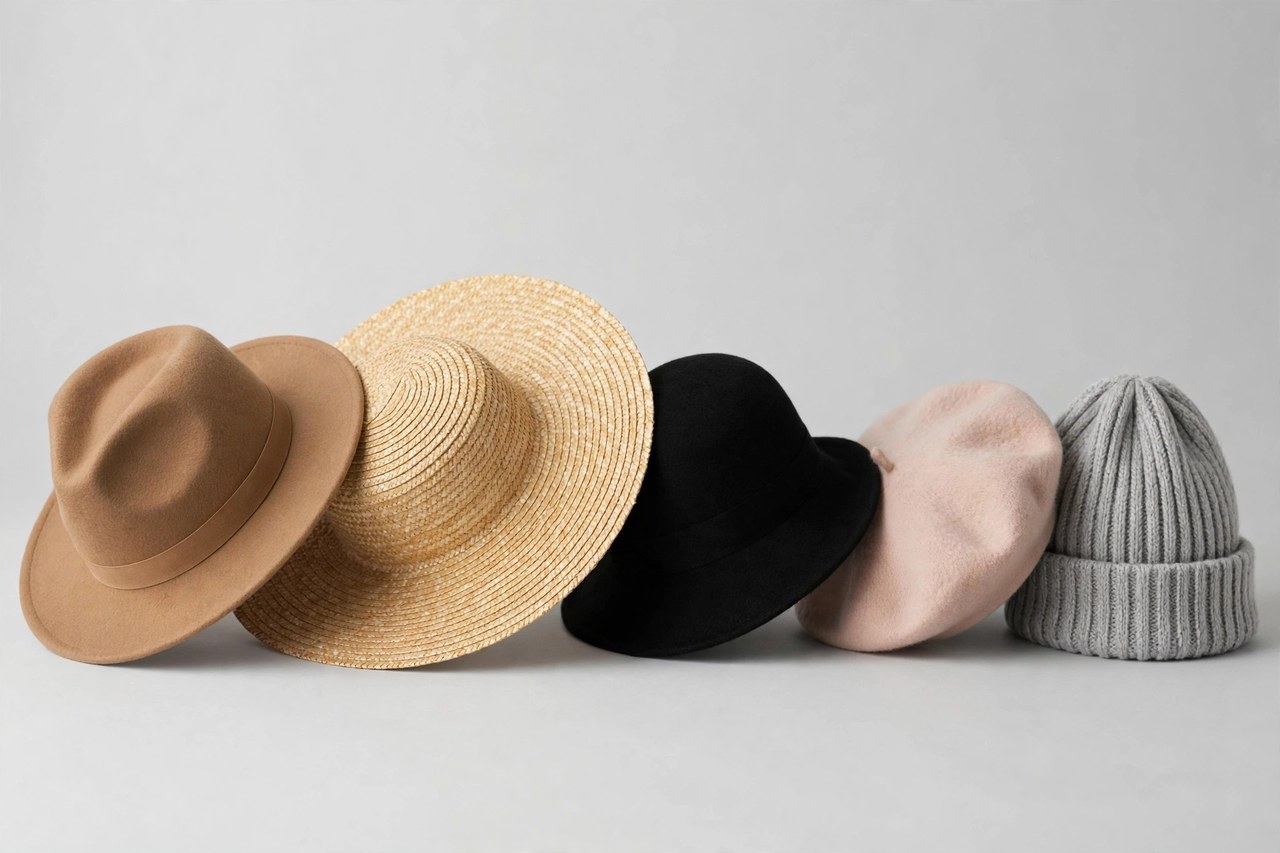
A hat is the structured member of the headwear family: a shaped covering for the head, with a crown that fits over it and, in most styles, a brim around it. The reasons are plain — women wear hats for fashion and for protection against the elements, and also for ceremonial reasons, religious reasons and safety. A hat is the rare accessory that can be pure ornament at a wedding and pure equipment in a snowstorm.
This guide covers hats themselves: the styles, the sizing and the materials. For everything else worn on the head — bands, wraps, turbans and fascinators — see our headwear umbrella guide. If you arrive knowing only that you want a hat, the style tour below is the place to find its name.
The Classic Styles
The fedora is the pinched-crown, medium-brim classic, in felt for winter and straw for summer. The cloche is the close, bell-shaped hat of the 1920s, pulled low over the brow. The beret is the soft, flat French disc, worn tipped to one side. The sun hat trades on a wide, floppy or stiffened brim whose whole job is shade, and the bucket hat brings a soft, downward-sloping brim with a distinctly casual, 1990s energy.
The cold-weather bench is just as deep: the knitted beanie (the slouchy knit favourite), the newsboy cap with its soft paneled crown and short peak, bomber and trapper hats with ear flaps, and cowboy and western hats — think of a sequin-studded cowboy hat for a summer outing. Add baseball caps, visors and rain hats, and the list runs from the rodeo to the school run without pausing.
Sizing and Fit
Hats are the one accessory where size is a measurement, not a mood. Wrap a tape around the head just above the eyebrows and ears, where the hat will sit: most women measure between about 21 and 23 inches, which maps to small, medium and large in ready-made ranges and to numbered sizes in millinery. Between sizes, size up — hat reducers and sizing tape inside the sweatband close a small gap neatly.
Fit should be snug enough to stay on in a breeze, loose enough to leave no line on the forehead after ten minutes. A hat that must be jammed on will give you a headache and stretch out of shape; a hat that perches will leave with the first gust. Walk, nod and bend in the shop. Straw and knits forgive a little; blocked felt forgives almost nothing, which is why it holds its shape for decades.
Materials: Felt, Straw and Knit
Wool and fur felt make the classic winter hat: warm, water-shedding, and blockable into crisp crowns and brims. Straw — from fine Panama weaves to coarse raffia and sewn paper braid — makes the summer hat: light, breathable and shade-giving, but unhappy when soaked or crushed. Knit and fleece make the informal hats, beanies above all, trading structure for warmth and stretch.
Between them sit the modern synthetics and blends: crushable, packable travel hats in treated fabrics, UPF-rated sun hats with chin cords, and waterproof rain hats that fold into a coat pocket. Choose the material by the hat's job and season first; colour and trim are the fun decision that comes after the practical one is settled.
Care and Storage
Handle a hat by its brim, near the crown, never by the pinch of the crown itself — repeated pinching cracks felt and straw exactly where your fingers land. Brush felt with a soft hat brush in the direction of the nap, keep straw out of the rain, and let any wet hat dry slowly, away from radiators, stuffed lightly with tissue to hold its shape.
Store hats on a stand, a hook, or in a box with the brim supported and the crown filled; a hat left upside-down on its crown flattens the brim, and a hat left on a crowded shelf arrives at winter misshapen. Knits wash cool and dry flat. Treat a good felt or Panama hat like the tailored garment it is, and it will outlast most of the coats you wear it with.
More H Accessory Guides
Photos

References & Further Reading
Looking for Women's Clothing Stores?
This guide helps you choose women's hats, from fedoras and cloches to beanies and sun hats. To browse where to buy, visit our women's clothing store directory, where you can find retailers that carry them.