Women's Headwear Guide
Headwear is the umbrella for everything worn on the head: hats and caps, bands and wraps, bonnets and fascinators. How the category organises, and how to choose by purpose, season and face.
Shop Women's Headwear Now
Shop Women's Headwear on Amazon Shop Women's Headwear on eBayThe Amazon and eBay links on this page are affiliate links. If you make a purchase through them, Apparel Search may earn a commission.
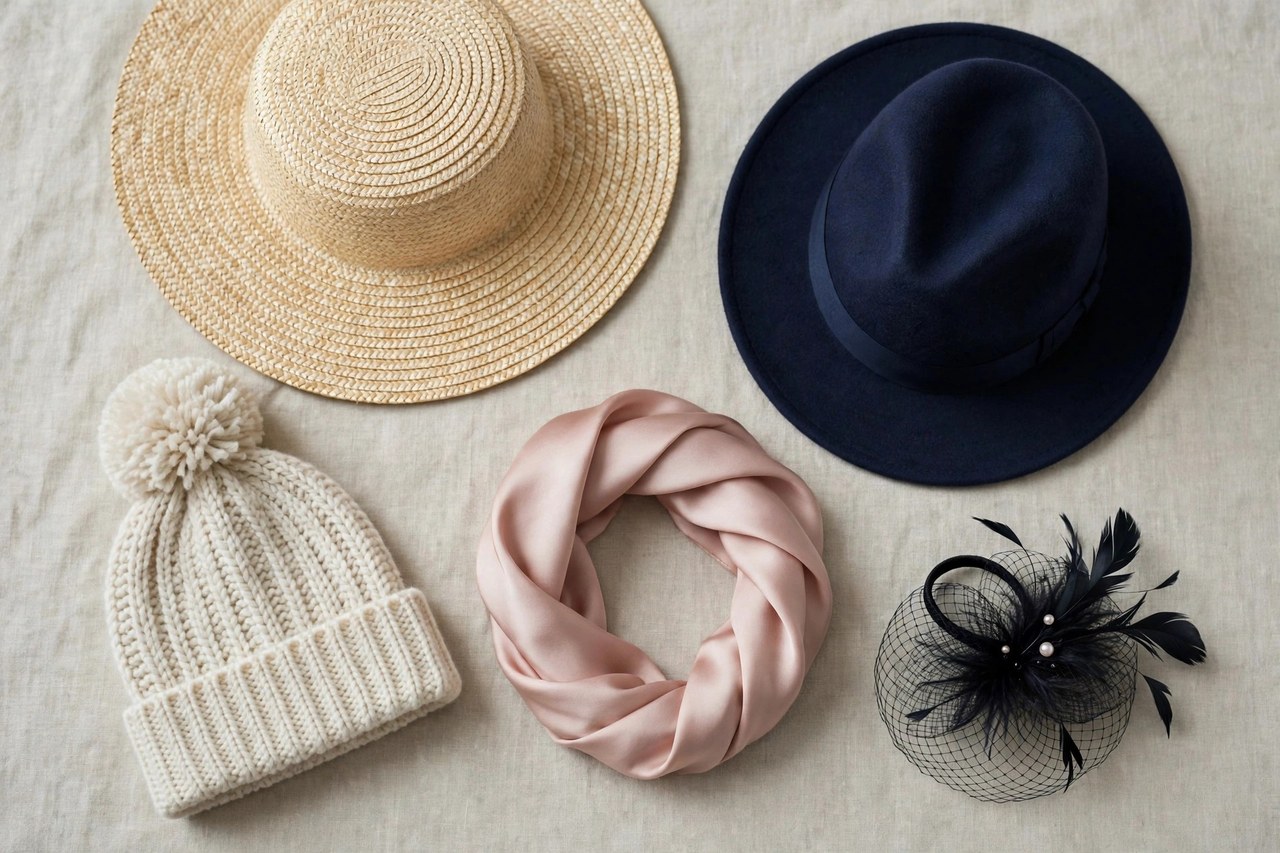
Headwear is the umbrella term for this whole corner of the wardrobe. In plain terms, headwear is simply clothing worn on one's head — and that plain definition covers a remarkably wide family. Caps, hats, hoods, crowns, bonnets, helmets and turbans all count as headwear, alongside the bands, wraps, scarves and fascinators this guide concentrates on. If it is worn on the head, it lives here.
That breadth is why Apparel Search splits the family into specialist guides. This page is the map: how the category organises itself, and how to choose. For structured brims and crowns, go to our hats guide; for the lightest member of the family, the band, go to our headbands guide. Everything else — wraps, turbans, earmuffs, fascinators and ceremonial pieces — is covered here as part of the whole.
How the Category Organises
Headwear sorts most clearly by the reason it is worn: decorative, protective, religious, sporting and medical purposes, with ceremonial use beside them. A fascinator exists purely to decorate. A sun hat and a helmet exist to protect, though only one of them is fashion. A turban or headscarf may be religious, cultural, practical or all three, and a chemo cap or wig is headwear doing quiet, essential medical work.
Within those purposes, form does the second sort. Brims and crowns make a hat. Bands circle the head without covering it. Wraps and scarves are fabric shaped by tying and tucking rather than by a maker. Soft caps — beanies, berets, bonnets — cover without structure, while fascinators and crowns sit on top of the hair as pure ornament, attached with a comb or band.
Choosing by Purpose First
Start with the job, because each job has non-negotiables. For sun protection, you need a brim that shades the face, ears and neck, ideally in a UPF-rated fabric, and coverage matters more than charm. For warmth, you need a covered crown, covered ears and an insulating, wind-resistant fabric — a decorative band will not do a beanie's work in January, however pretty it is.
For occasions, the rules reverse: a fascinator or pillbox is chosen to finish an outfit and satisfy a dress code, from weddings to race days, and comfort is measured in hours rather than weather. For sport, look for secure fit, sweat management and, for caps, a brim that shades without blocking vision. Naming the purpose first shrinks a huge category to a shortlist in seconds.
Season, Fabric and Care
Headwear is the most seasonal clothing most women own. Summer belongs to straw, raffia, cotton and linen — open weaves and light colours that let heat escape. Winter belongs to wool, felt, fleece, cashmere and faux-fur trims, in knits and blocked felts that hold warmth in. The shoulder seasons are where wraps and turbans earn their place: enough coverage for a cool morning, none of a hat's commitment.
Care follows the fabric. Knits and cotton caps usually wash gently and dry flat; blocked felt and straw should never be soaked — brush them, spot-clean them, and store them stuffed with tissue on a stand or in a box so the brim keeps its line. Silk wraps wash like silk scarves, cool and brief. Headwear stored crushed rarely recovers its shape, so give the good pieces air and room.
Face Shape, Hair and Proportion
The old rule still works: contrast your face shape rather than echoing it. A round face takes height and angles — a higher crown, an asymmetric brim, a wrap tied tall. A long face takes width — a low, wide brim or a band worn across the forehead. A square jaw softens under floppy brims and soft wraps, and a heart-shaped face balances a wide forehead with medium brims and chin-length interest.
Hair is the other half of fit. Volume underneath changes how every hat sits, so try headwear with your hair styled as you will actually wear it. Fine hair needs grip — textured linings, combs, elasticated bands — while thick or curly hair needs room, and a satin-lined wrap or cap protects the hair itself from friction and dryness. Proportional, comfortable and secure beats dramatic and slipping, every time.
More Head & Accessory Guides
Photos


Looking for Women's Clothing Stores?
This guide helps you choose women's headwear, from hats and caps to wraps and fascinators. To browse where to buy, visit our women's clothing store directory, where you can find retailers that carry them.