Women's Decorated Headwear
Fascinators, jeweled headbands and veiled hats finish an outfit like punctuation — here is how to choose and wear them well.
Shop Women's Decorated Headwear Now
Shop Women's Decorated Headwear on Amazon Shop Women's Decorated Headwear on eBayThe Amazon and eBay links on this page are affiliate links. If you make a purchase through them, Apparel Search may earn a commission.
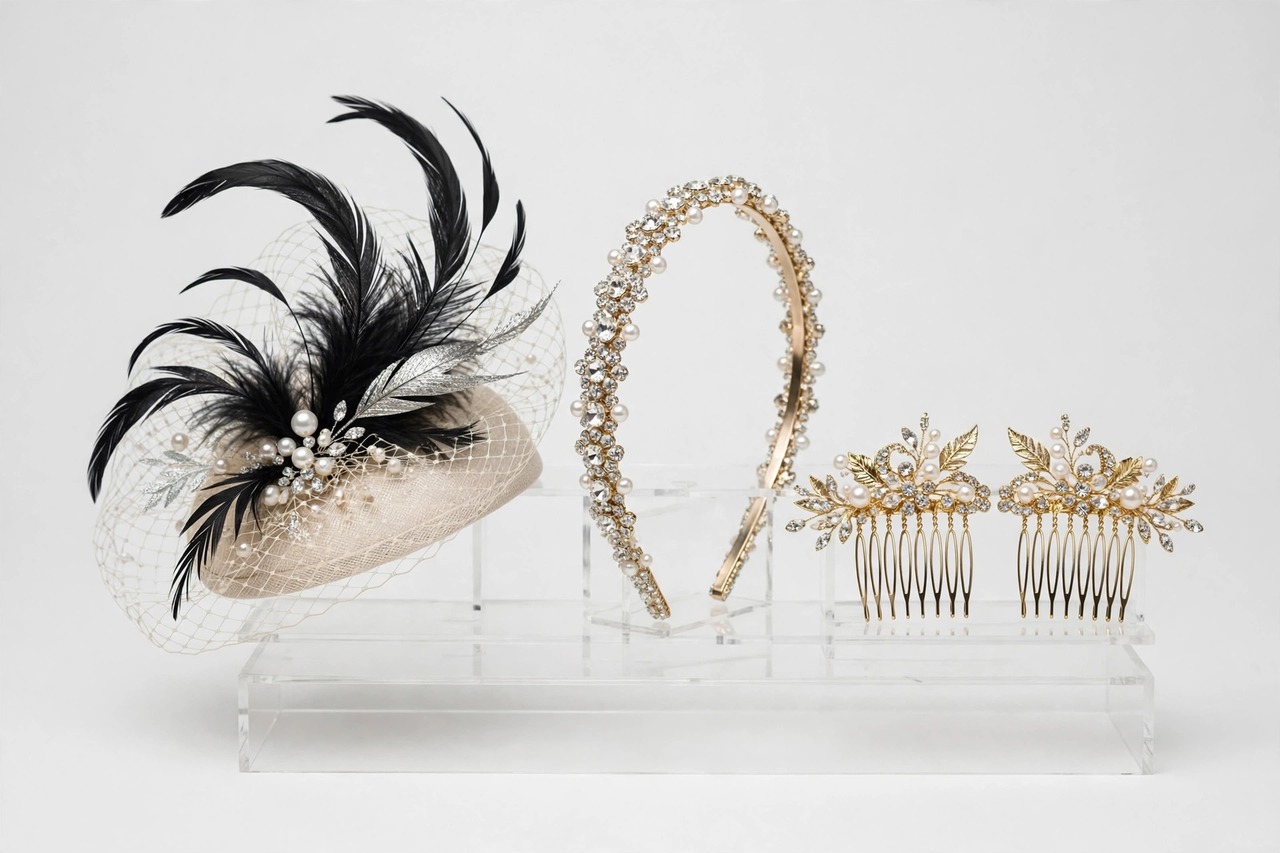
Decorated headwear is the smallest part of an outfit with the largest effect. A fascinator can make a simple dress wedding-ready, a jeweled headband can turn holiday hair into an occasion look, and a veiled hat carries a formality nothing else quite matches. These pieces are jewelry for the head: chosen for sparkle, shape and silhouette rather than warmth or shade, and worn to be noticed.
This guide sorts the main types, matches them to occasions, and covers the practical skills that separate a piece that stays put all day from one that ends up carried in a handbag by dessert.
The Main Types: Fascinators, Headbands, Combs and Veils
Fascinators are sculptural pieces — feathers, sinamay loops, flowers, netting — mounted on a comb, clip or thin headband and worn to one side of the head. They range from a modest feather spray to full statement constructions. Headbands are the easiest entry point: padded and jeweled, knotted and beaded, or slim and metallic, they sit like ordinary headbands and suit everything from guest dresses to evening separates. Decorative combs and clips slide into updos and half-up styles; a well-made comb with wired, movable detail can be shaped to the head and doubles as the anchor for a veil.
Veils and blushers add the traditional note. A blusher is the short face veil attached to a fascinator or hat, worn just to the eyes or chin for weddings and formal daytime events; birdcage veils in fine netting are the classic form. Embellished hats — wide-brim hats with jeweled bands, pillboxes with brooches, cocktail hats with veiling — offer the most structure and presence, and suit the most formal dress codes of all.
Matching the Piece to the Occasion
Weddings are the home ground of decorated headwear. Guests do well with fascinators and jeweled headbands in colors drawn from the outfit; tradition suggests avoiding solid white or ivory pieces that read bridal. Race days and garden parties invite the boldest shapes — bigger fascinators and embellished wide-brims are practically a dress code there, and some enclosures have formal hat requirements worth checking before you shop. Holiday and evening events favor sparkle over size: crystal combs, beaded bands and metallic clips catch low light beautifully and photograph well.
Scale the piece to the event's formality and the outfit's neckline. A high, detailed neckline wants a smaller, sleeker headpiece; a plain, open neckline can carry a dramatic fascinator. Coordinate metals and motifs rather than matching everything exactly: a gold jeweled comb echoes gold earrings without demanding a matching set.
Wearing It Securely, With Hair and Outfit
Most decorated headwear is worn asymmetrically, angled over one side of the part, tilted slightly forward — fascinators are designed to be seen from the front three-quarter view, and wearing one flat on top like a plate is the most common beginner mistake. Tradition places it on the right side, but the better rule is to wear it on the side opposite your part for the most flattering line, and to style hair first, then place the piece into finished hair, not the other way around.
Security is engineering. Headband-mounted pieces need a band that grips without pinching; comb-mounted pieces need hair with some texture or light backcombing to bite into; add crossed bobby pins in the hair color for anything tall or feathered, especially outdoors. Test the full arrangement with a head shake and a hug before you leave. Hairstyles that cooperate include low buns, chignons, smooth waves and sleek ponytails; very silky, freshly washed hair holds clips worst, so day-old hair or a little texture spray makes everything stay.
Care and Storage
Decorated headwear is fragile in predictable ways: feathers crush and collect dust, netting snags, crystals loosen, and sinamay warps with moisture. Store pieces in their original boxes or in a hat box with acid-free tissue supporting the shape, never stacked under other items. Keep them away from humidity and direct sun, which fades dyes and dries feathers.
Clean gently and rarely. Dust feathers with a cool hairdryer on its lowest setting or a soft brush, always in the direction of the barbs. Spot-clean fabric pieces with a barely damp cloth, and re-glue a loose stone promptly with a dot of jewelry adhesive before it is lost. With boxed storage and gentle handling, a good fascinator or jeweled comb lasts through many seasons of events — which is fortunate, because the right piece tends to become a signature.
Related Women's Guides
Photos

More to Explore on Apparel Search
Looking for Women's Clothing Stores?
This guide helps you choose women's decorated headwear by style, fabric and fit. To browse where to buy, visit our women's clothing store directory, where you can find retailers that carry them.