Women's Cowgirl Hats Guide
More than a finishing touch — a western hat is sun protection, personal style, and a piece of etiquette all in one brim.
Shop Women's Cowgirl Hats Now
Shop Women's Cowgirl Hats on Amazon Shop Women's Cowgirl Hats on eBayThe Amazon and eBay links on this page are affiliate links. If you make a purchase through them, Apparel Search may earn a commission.
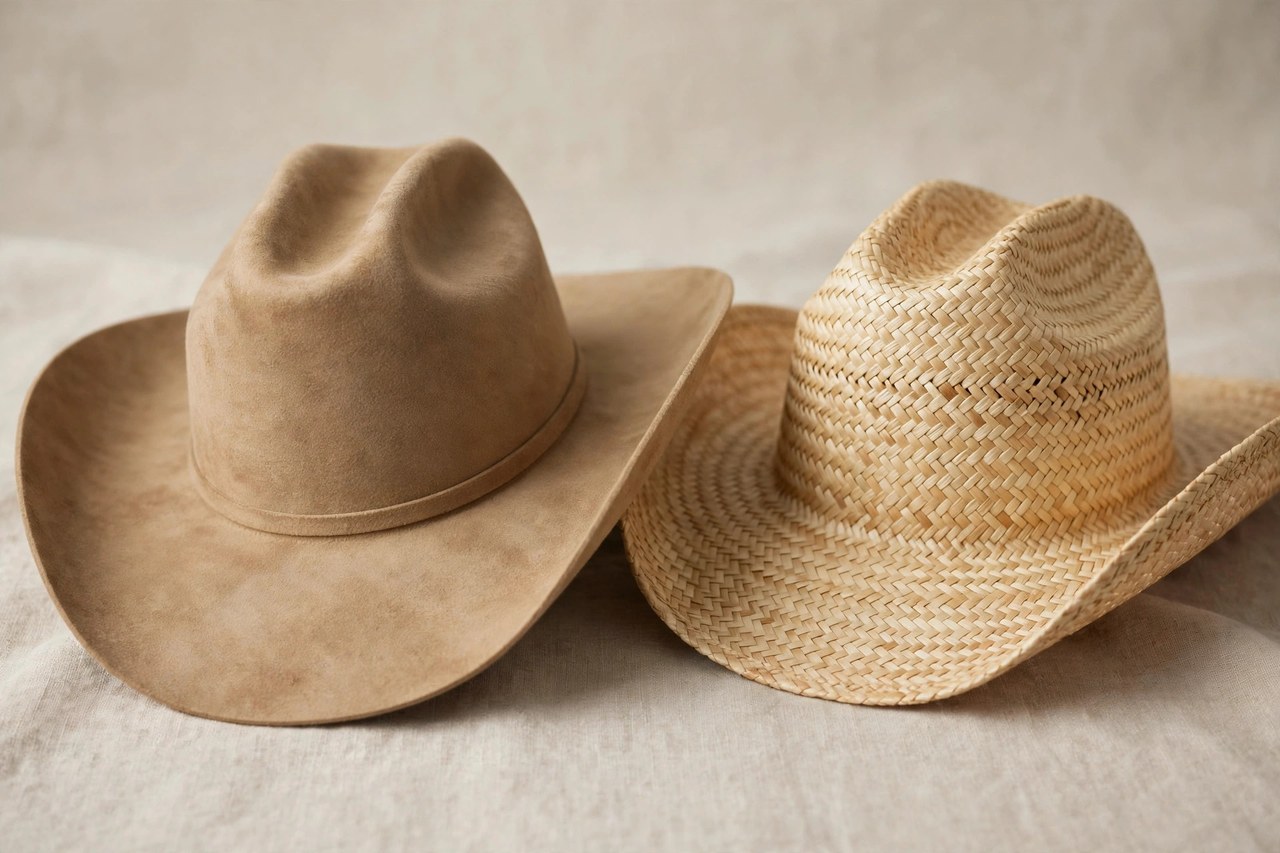
The cowgirl hat evolved on open range, where a wide brim was working equipment: shade for the eyes and neck, a shield against rain, and even an emergency water scoop or fan for a campfire. Today's women's cowgirl hats keep that practical DNA while ranging from authentic working hats to purely decorative fashion pieces in bright colors and embellished bands. Two decisions shape every purchase. The first is material — felt for cool weather and formal western wear, straw for summer heat. The second is shape, meaning the crown crease and brim curve that give each hat its personality. Get those two right and the hat looks like it belongs on you rather than borrowed for a costume. This guide covers materials, shapes, sizing, the unwritten rules of wearing one, and the care that keeps a good hat handsome for decades.
Felt Versus Straw: The Seasonal Rule
Traditional western etiquette assigns felt hats to the cooler months and straw hats to summer, roughly from autumn through spring for felt and the warm season for straw, though local custom and weather matter more than the calendar. Felt hats are made from wool felt at the affordable end and fur felt — usually rabbit, beaver blends, or pure beaver — at the premium end. Fur felt is denser, smoother, more water-resistant, and holds its shape far longer; quality is often marked with an X rating, though X counts are not standardized between makers, so use them only to compare within one brand. Wool felt is a sensible starter but softens and droops sooner in rain. Straw hats are woven from palm leaf, shantung, bangora, or paper-based fibers. Palm leaf straw is the true workhorse: inexpensive, rugged, and famously tolerant of being soaked and reshaped. Fine shantung looks dressier. Either way, straw breathes through its weave, which is exactly why it rules July.
Crown Shapes and Brim Styles
The crown crease is a hat's signature. The cattleman crease — a single center dent with a crease on each side — is the classic, tidy, all-purpose shape. The pinch front or teardrop crown narrows toward the face and reads slightly more fashion-forward and feminine. The Gus crease, with its high front sloping back, has an old-time, rugged character, while a flat-topped or telescope crown suits a vintage gambler style. Brims usually run from about three to four and a half inches wide. Wider brims give more sun protection and more drama; narrower brims look neater and catch less wind. Brims are shaped with a curve down at the front and back or snapped up at the sides, and the front dip is what keeps a western hat from looking like a costume — it shades the eyes and sets the attitude.
Sizing and Getting the Fit Right
Western hats are sold in fitted sizes, in elastic sweatband one-size styles, or in small-medium-large fashion sizing, and the fitted route always fits best. Measure around your head where the hat will sit, just above the eyebrows and ears, and match that measurement to the maker's chart rather than assuming your size in other hats transfers. A cowgirl hat should sit level, snug enough to stay on in a breeze and when you tip your head, but never so tight it leaves a red line or a headache — a headache means the oval shape is wrong for you as often as the size is. Heads are long-oval or round-oval, and good hatters stock both. If a hat is slightly loose, foam sizing tape or a strip of felt tucked behind the sweatband is the traditional, invisible fix.
Hat Etiquette and Wearing One Well
Western hat etiquette is mostly courtesy, and knowing the basics makes you look like a regular rather than a guest. Traditionally, hats come off indoors at a table, during meals, and in someone's home unless your host insists otherwise; they stay on in barns, arenas, lobbies, and at outdoor events. Handle your hat by the brim near the crown, never by pinching the crown crease, which breaks down the shape and oils the felt. Set a hat down on its crown, upside down, or on a hat rack — resting it brim-down on a flat surface warps the brim, and old superstition adds that brim-down lets the luck run out. Never touch or adjust someone else's hat without asking; a fitted western hat is personal in a way a baseball cap is not.
Shaping, Cleaning, and Storage
Felt and straw cowboy hats are shaped with steam. A kettle's gentle steam softens felt so you can deepen a crease or re-curve a brim, then the shape sets as it cools and dries; work slowly, keep the hat moving, and never use direct high heat. Straw palm hats can be briefly wetted for reshaping, while fine straws should only be steamed lightly. For cleaning, brush felt regularly with a soft hat brush, always in the direction of the nap, to lift dust before it settles in. Blot rain promptly and let a wet hat dry naturally on its crown away from heat; a soaked felt hat dried on a radiator can shrink and warp. Remove light stains with a clean sponge or hat-specific cleaner, and leave serious restoration to a hatter, who can also re-block a tired hat back to its original shape. Store hats on a rack, a wall peg, or in a hat box, out of direct sun, which fades felt unevenly. Kept this way, a quality fur felt hat is a decades-long purchase, not a seasonal one.
Related Women's Guides
Photos

More to Explore on Apparel Search
Looking for Women's Clothing Stores?
This guide helps you choose women's cowgirl hats by style, material and fit. To browse where to buy, visit our women's clothing store directory, where you can find retailers that carry them.