Women's Western Style Hats Guide
Women's western style hats are cowboy and cowgirl hats: shaped crowns with wide brims, in wool felt, fur felt, straw and leather, finished with hat bands, made to shade the face and neck and shed weather.
Shop Women's Western Style Hats Now
Shop Women's Western Style Hats on Amazon Shop Women's Western Style Hats on eBayThe Amazon and eBay links on this page are affiliate links. If you make a purchase through them, Apparel Search may earn a commission.
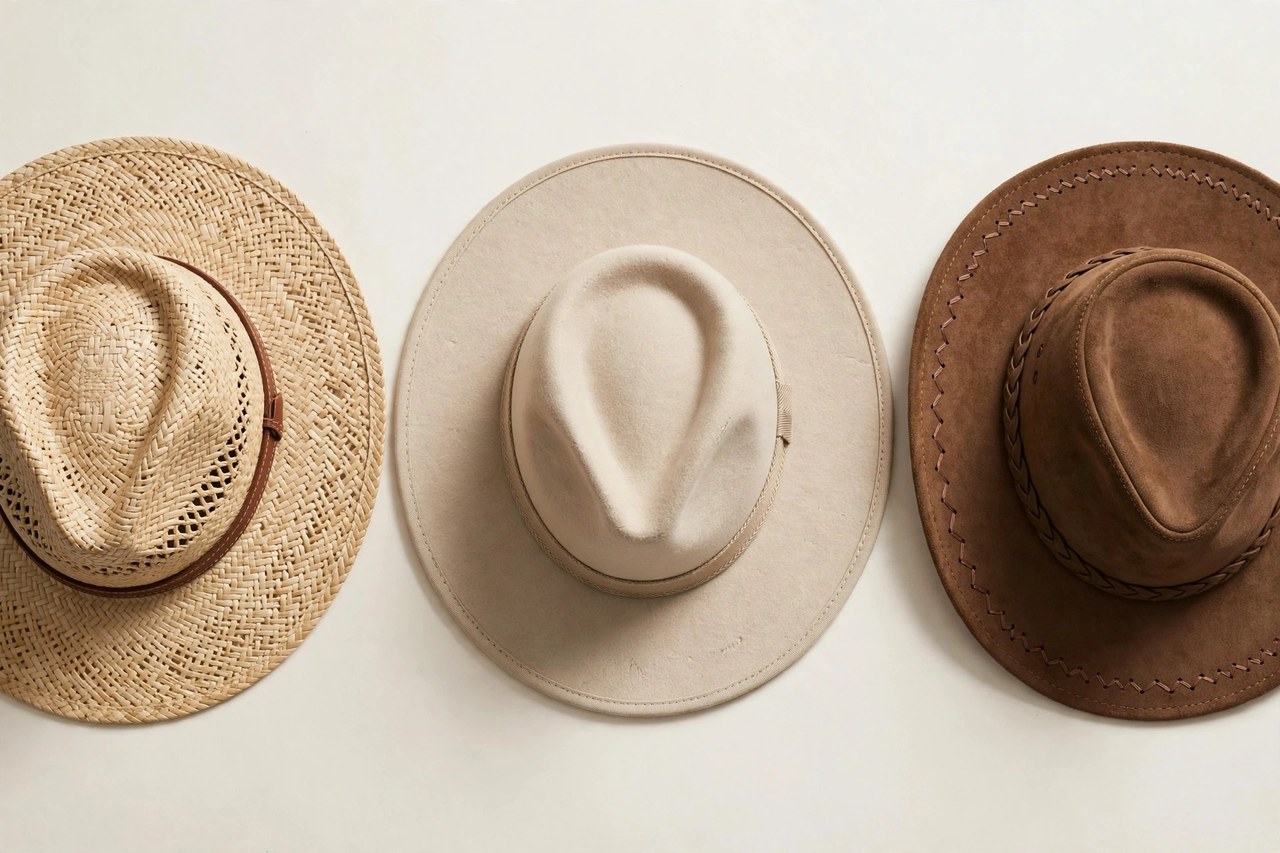
Women's western style hats are cowboy and cowgirl hats: shaped crowns with wide brims, in wool felt, fur felt, straw and leather, finished with hat bands, made to shade the face and neck and shed weather. A western hat is graded by its material and shaped by its crease, so this guide covers felt and straw grades, the common crown creases and brim shapes, head sizing in a hat that must stay on outdoors, and care for felt and straw.
This guide covers western style hats in the order a careful buyer needs it: what the product is made from, how it is constructed, how it should fit, how to choose it for real use, and how to care for it so it lasts. The focus here is on measurable details, named materials and checks you can perform in a shop or on a parcel's arrival, rather than general fashion language.
Materials and Western Construction
Western clothing is built from the working West's materials: leather for boots, hats and belts; wool felt and straw for hats; denim, canvas and snap-front shirting for clothes; and silver, turquoise and tooled leather for its ornament. The materials are heavy because the work was heavy, and fashion versions lighten them at the cost of the function they quote.
Construction carries the tradition's signatures: boot shafts stitched with decorative patterns that originally stiffened the leather, hat crowns creased by hand, shirts with shaped yokes and snap fastenings. Felt quality is graded by beaver content (the X markings on sweatbands historically suggested grade, though no industry standard enforces them) — judge by the felt's density and finish in hand, not the X count alone. In every category, the genuine working version is plainer, heavier and more repairable than the novelty version — and wears its ornament in the workmanship.
Fit in the Western Idiom
Western fit is close and functional: boots snug at the instep, hats firm enough to stay on in weather and motion, shirts fitted so they do not billow or catch, jeans worn at the waist they were patterned for. Fashion westernwear that fits loosely everywhere has lost the silhouette the style depends on.
Size by measurement against the maker's chart in each category — hat sizes in inches, boot sizes on their own lasts, shirting by chest and sleeve — because western makers kept older sizing conventions longer than high-street brands did, and your usual size is a starting guess, not an answer.
Buying Western With a Working Eye
Choose western style hats in a fixed order: the genuine construction for the piece (leather, felt, denim weight), fit in the western idiom, the level of ornament that suits where it will be worn, and only then fashion detail. In practice, rank these checks in the order your own use demands — frequency of wear first, then weather, washing facilities and budget — because that order differs by wardrobe, and it is the real reason two careful buyers can correctly choose differently from the same rail.
Judge price by material honesty: full leather, real felt, heavy denim and stitched work cost money and last; synthetic 'western-style' pieces cost less and date faster. One genuine piece anchors an outfit better than a full set of imitations.
Care for Leather, Felt and Denim
Leather goods condition and rest like all quality leather; felt hats brush and store on their crowns; straw is replaced rather than repaired. Heavy denim washes cold and rarely, inside out, to keep its colour and the creases it has earned.
Store western pieces as the equipment they imitate: boots with shapers, hats boxed or on stands out of light, belts hung rather than coiled tight. Silver and turquoise ornament wipes clean and stores dry — tarnish is expected, verdigris from damp storage is damage.
Common Questions
Should I choose felt or straw for a western hat?
Felt is the cool-weather, longer-lived hat: it sheds rain, holds its shape when cared for, and suits formal western wear. Straw is the summer working hat — lighter, ventilated and cheaper to replace. Many riders own both and let season and occasion decide.
How should a cowboy hat fit?
Firm enough to stay on in wind and at a trot, without a headache after an hour: it should sit level, just above the eyebrows, gripping the whole head rather than pinching front and back. Measure your head circumference and use the maker's chart — western hats size in inches or eighths, not dress sizes.
How do I care for a felt western hat?
Brush it with a hat brush in the direction of the nap, store it upside down on its crown or on a hat stand so the brim does not flatten, and keep it dry-dirty rather than washed. Steam, applied carefully, is how a felt hat is reshaped — by a hatter for anything beyond a brim tweak.
Related Women's Guides
Photos

More to Explore on Apparel Search
Looking for Women's Clothing Stores?
This guide helps you choose women's western style hats. To browse where to buy, visit our women's clothing store directory, where you can find retailers that carry them.