Women's Headbands Guide
The band is the lightest way to dress hair: padded and knotted fashion bands, jeweled evening pieces, and sweat-wicking athletic bands. Styles, hair types, and wearing one without slippage or headaches.
Shop Women's Headbands Now
Shop Women's Headbands on Amazon Shop Women's Headbands on eBayThe Amazon and eBay links on this page are affiliate links. If you make a purchase through them, Apparel Search may earn a commission.
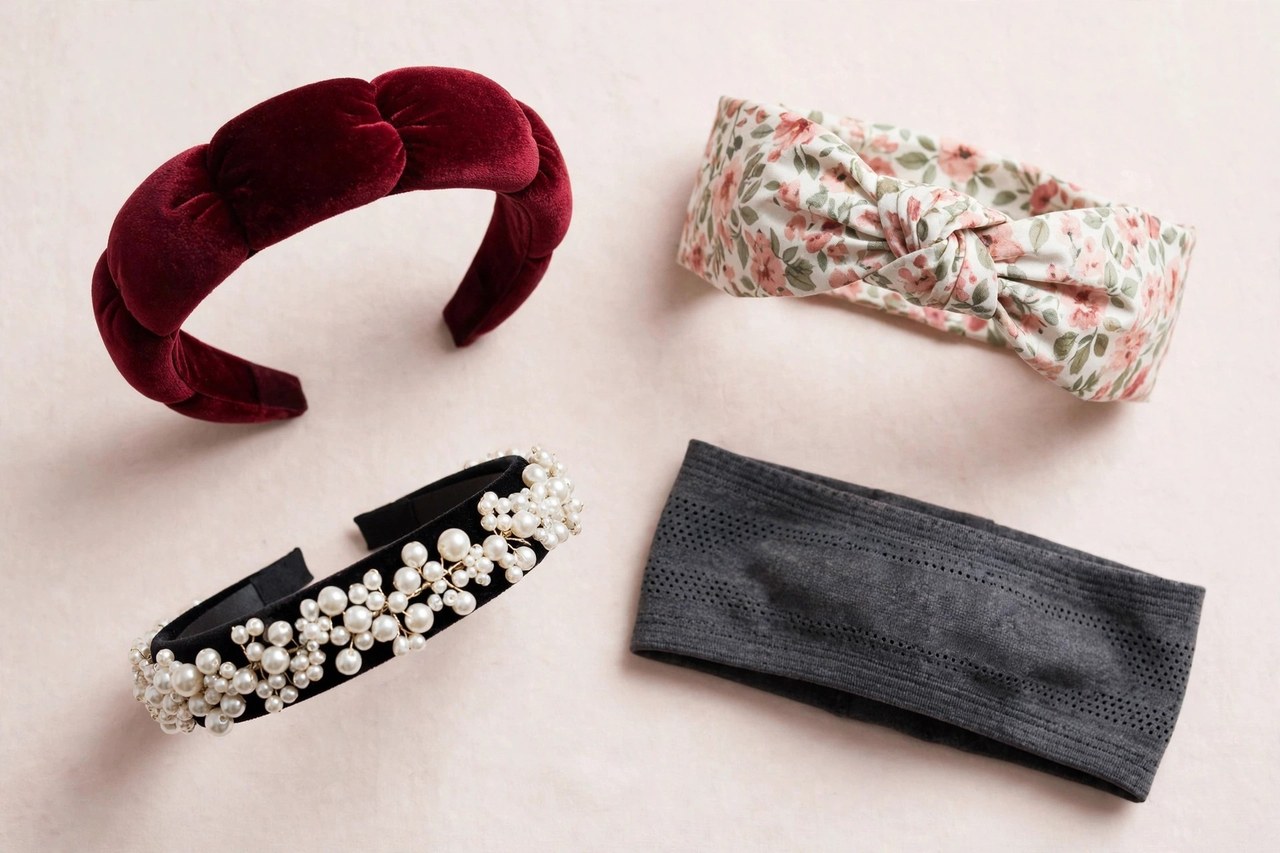
A headband does the smallest job in headwear and does it constantly: it holds hair back from the face and finishes a hairstyle in one gesture. The key distinction: some women's headbands are simply fashion accessories, and others have a purpose, and the best modern designs go beyond the basic hair-taming need to become a fashionable statement item in their own right. The padded band worn with a plain sweater is jewellery for hair.
Headbands sit inside the wider headwear family covered in our headwear guide, and beside the hats in our hats guide — the band is what you wear on the days a hat is too much. This guide covers the fashion styles, the athletic styles, and the two complaints every wearer knows: bands that slip, and bands that hurt.
Fashion Styles: Padded, Knotted and Jeweled
The padded headband — a deep, cushioned band in velvet, satin or leather-look fabric — is the modern statement style, adding height and polish to loose hair or a ponytail. The knotted band softens the same idea with a central knot or twist, usually in printed cotton, gingham or jersey, and suits everyday and weekend dressing. Wide fabric bands and wraps cover more hair and read almost as a turban: the kicking-back-on-the-weekend head wrap lives here.
For evenings and occasions, jeweled, beaded and pearl bands do a tiara's work at a fraction of the formality, and thin metal and tortoiseshell bands give a barely-there line that simply keeps hair tidy at school, work or anywhere a neat finish matters. Prices span a wide range: basic bands are among the cheapest accessories in fashion, and designer bands in silk and crystal are priced like the jewellery they imitate.
Athletic Headbands: A Working Tool
The athletic headband is equipment, and its jobs are precise: to keep the hair in place, prevent sweat from dripping into the face, and add padding where a helmet or guard presses. A wide assortment uses sweat-wicking fabric to help the wearer stay focused, dry and comfortable — through running, tennis, yoga, training and team sports.
Athletic bands divide into wide terry and performance-knit bands, which absorb and wick the most sweat, and thin elastic grips and tie bands, which prioritise hold under movement. Silicone gripper strips inside the band are the modern answer to mid-run slippage. Choose width by sweat and sport: the hotter the workout, the wider and more absorbent the band should be, and wash athletic bands with the kit, not with the fashion accessories.
Choosing for Your Hair Type
Fine, straight hair is the slipperiest base: it needs texture to grip — velvet, grosgrain or silicone-lined bands, and bands worn a finger's width behind the hairline rather than on it. Thick hair needs the opposite: stretch, width and a band strong enough to compress without springing off, which is why wide fabric and elasticated styles suit it best.
Curly and textured hair is best served by satin-lined and wide soft bands, which hold without friction-snagging or flattening curl pattern at the edges; avoid thin hard bands that saw at the hairline. For short hair and fringes, a band is a styling tool as much as a holder — it sweeps a growing-out fringe back or adds a finished line to a pixie cut, and thin bands do this most delicately.
Wearing Without Slippage or Headaches
Slippage is usually a placement and prep problem. Bands grip best on dry, unconditioned-at-the-roots hair; a little texture — dry shampoo, a braid underneath, bobby pins crossed just behind the ears — anchors a fashion band for a full day. If a band walks backwards, it is usually too smooth, too loose, or pushed too far forward: reseat it just behind the hairline and let the widest part sit above the ears.
Headaches come from pressure concentrated behind the ears, where most rigid bands end. Choose flexible or fabric-covered ends, try the band on for ten minutes rather than ten seconds, and alternate band days with softer wraps if you wear one daily. A band should be forgotten once it is on. If you are aware of it at noon, it is the wrong band, however well it matched the outfit at breakfast.
More Head & Hair Guides
Photos


More to Explore on Apparel Search
Looking for Women's Clothing Stores?
This guide helps you choose women's headbands, from padded fashion bands to athletic sweatbands. To browse where to buy, visit our women's clothing store directory, where you can find retailers that carry them.