Women's Handbags Guide
The umbrella guide to handbags: the types from tote to clutch, choosing a bag by what you actually carry, materials and hardware, and caring for leather so it lasts.
Shop Women's Handbags Now
Shop Women's Handbags on Amazon Shop Women's Handbags on eBayThe Amazon and eBay links on this page are affiliate links. If you make a purchase through them, Apparel Search may earn a commission.
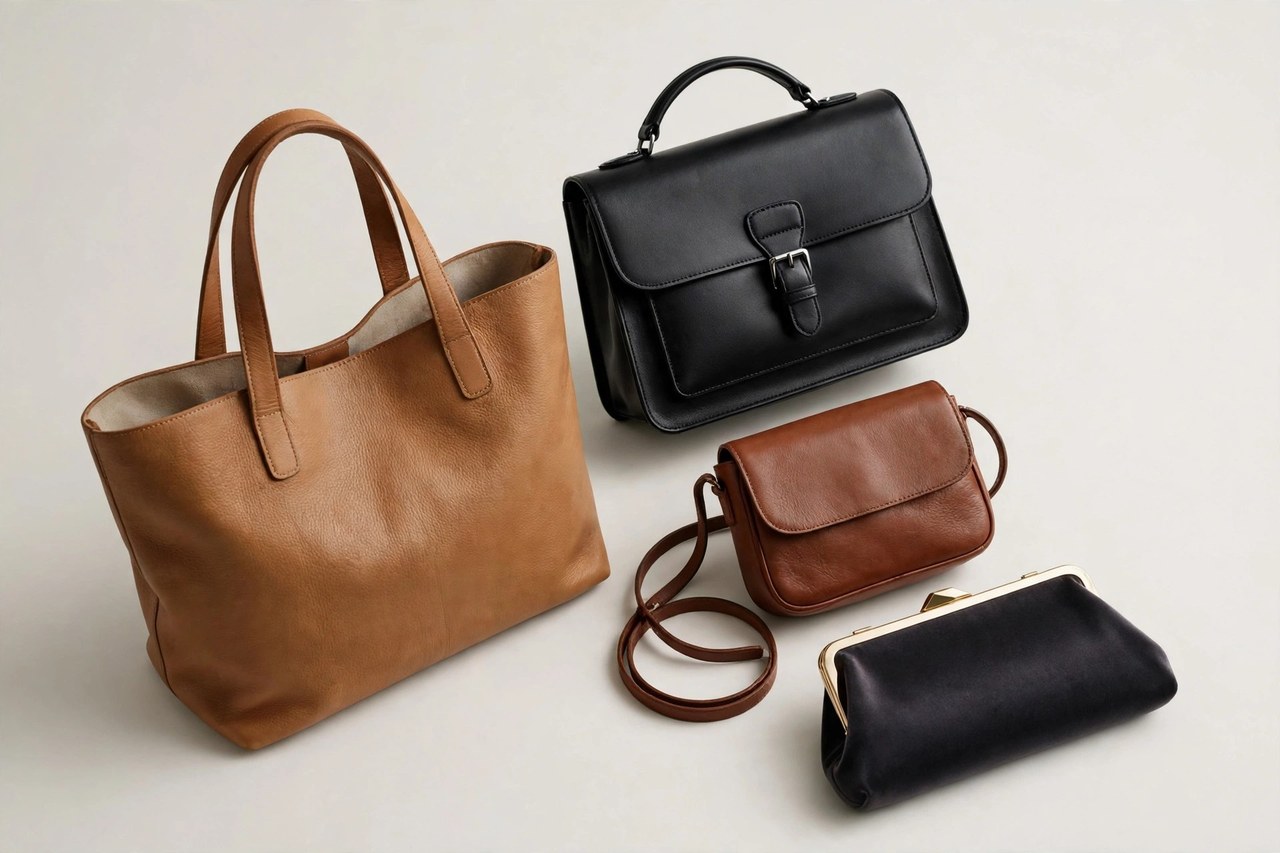
A handbag is a fashion accessory that holds other accessories — essentially a larger accessory that holds objects beyond currency, such as personal items. American English uses purse and handbag interchangeably, and the older name pocketbook survives regionally; all three words mean the carried bag this guide covers. It is loved because it is awesome at holding things and can be trendy as well.
This is the umbrella guide to the whole category. One member gets its own page — the slouchy crescent in our hobo handbags guide — because its shape and story deserve the room. Everything else, from the work tote to the evening clutch, is mapped here: the types, the choosing, the materials and the care.
The Types, From Tote to Clutch
The family is a complete shopping vocabulary: clutches, hobos, mini-bags, novelty bags, oversized bags, satchels, seatbelt bags, shoulder bags, special occasion bags, sports bags, totes, vegetarian bags, wallets and wristlets. The working core of most wardrobes is smaller: the tote, a large open or zip-top carrier; the satchel, structured with top handles; and the shoulder bag, carried on one shoulder by a medium strap.
The hands-free answer is the crossbody, worn diagonally so the bag rests at the hip and the hands stay empty — the traveller's and shopper's favourite. At the small end, the clutch is carried in the hand for evenings, the wristlet adds a loop strap for security, and the mini-bag carries the phone-and-card minimum as a deliberate fashion statement. Every other style on the list is a variation on these shapes, their size, or their straps.
For the named specialty types in depth — top-handle, frame and doctor bags among the structured shapes; drawstring, crescent, envelope clutch, minaudière and camera bags beyond them — our handbag types and styles guide defines each type, its closures and capacity, and the occasions it suits.
Choosing by What You Carry
A handbag succeeds or fails on an ordinary Tuesday, so start with the load. Consider the two classic cases: the woman who must carry a tablet or documents for work, and the woman who needs only somewhere to store her phone, cash and lipstick. The first needs a tote or structured satchel that swallows A4 and tech without bulging; the second is free to choose almost anything, and a crossbody or mini will serve her better than a cavern she must excavate.
Then check the mechanics: a closure you trust (zips for crowds and commuting, open tops only where nothing can wander), interior pockets for phone and keys so the bag's contents stay findable, and weight empty — a heavy leather bag is heavier still loaded, and your shoulder keeps the accounts. Finally, there is a purse to match every outfit, from casual to evening, so let use choose the size and let taste choose the colour.
Materials and Hardware
Leather remains the benchmark: full-grain for longevity and patina, saffiano and other treated leathers for scratch resistance, suede for beauty at the price of vigilance. Canvas, nylon and woven fabrics trade luxury for lightness and weatherproofing — the practical commuter and travel choice — while straw, raffia and knit mark the summer and handmade end of the market, and vegetarian and vegan ranges now reproduce the leather look in coated and plant-based materials.
Hardware is where quality shows first. Zips should run smoothly in both directions, clasps should close with a positive click, and rings and feet should be metal rather than painted plastic where the price suggests they ought to be. Check stitching at the strap attachments — the stress points that fail — and lining for pockets and finish. A well-made mid-priced bag outlasts a flimsy famous one, which is the least-kept secret in the category.
Care, Storage and Rotation
Leather wants three things: rest, shade and occasional conditioning. Empty the bag when you rotate it, wipe the interior, condition the leather a few times a year, and keep it away from radiators and direct sun, which dry and fade it. Rain spots dry naturally; ink and dye transfer from dark denim are the enemies worth actively avoiding, especially on pale bags.
Store bags stuffed with tissue, standing upright, in their dust bags, with chains and straps tucked inside so they cannot dent the leather. Never hang a bag by its handles for months — the straps stretch and the attachments strain. Rotating between two or three bags, rather than running one into the ground, is the single habit that most extends a handbag collection's life, and it spreads the cost of the good leather over far more carries.
More Bag & Accessory Guides
Photos

More to Explore on Apparel Search
- Leather Handbags
- Clutch Handbags
- Designer Handbags
- Knit Handbags
- Women's Fashion
- Purses
- Handbag Stores
- Wholesale Handbags
- Coach Handbags
- Handbag News
- Patchwork Handbags
- Handbags for your body type
- Best Handbags
- Handbags Styles
- leather bags
- fashion bags
- Fashion Accessories
- Fashion Accessories Guide
- Fashion Accessory Stores
- Women's Fashion Accessory Wholesalers
- Fashion Designer Directory
Women’s Clothes Guide by Letter: Women's Clothing Directory G · Women's Fashion Directory I · Women's Apparel Directory J
Looking for Women's Clothing Stores?
This guide helps you choose women's handbags, from everyday totes to evening clutches. To browse where to buy, visit our women's clothing store directory, where you can find retailers that carry them.