Women's Purses Guide
A purse is the everyday carry made personal: the bag that holds a woman's money, phone and essentials, in styles from the roomy tote to the evening clutch.
Shop Women's Purses Now
Shop Women's Purses on Amazon Shop Women's Purses on eBayThe Amazon and eBay links on this page are affiliate links. If you make a purchase through them, Apparel Search may earn a commission.
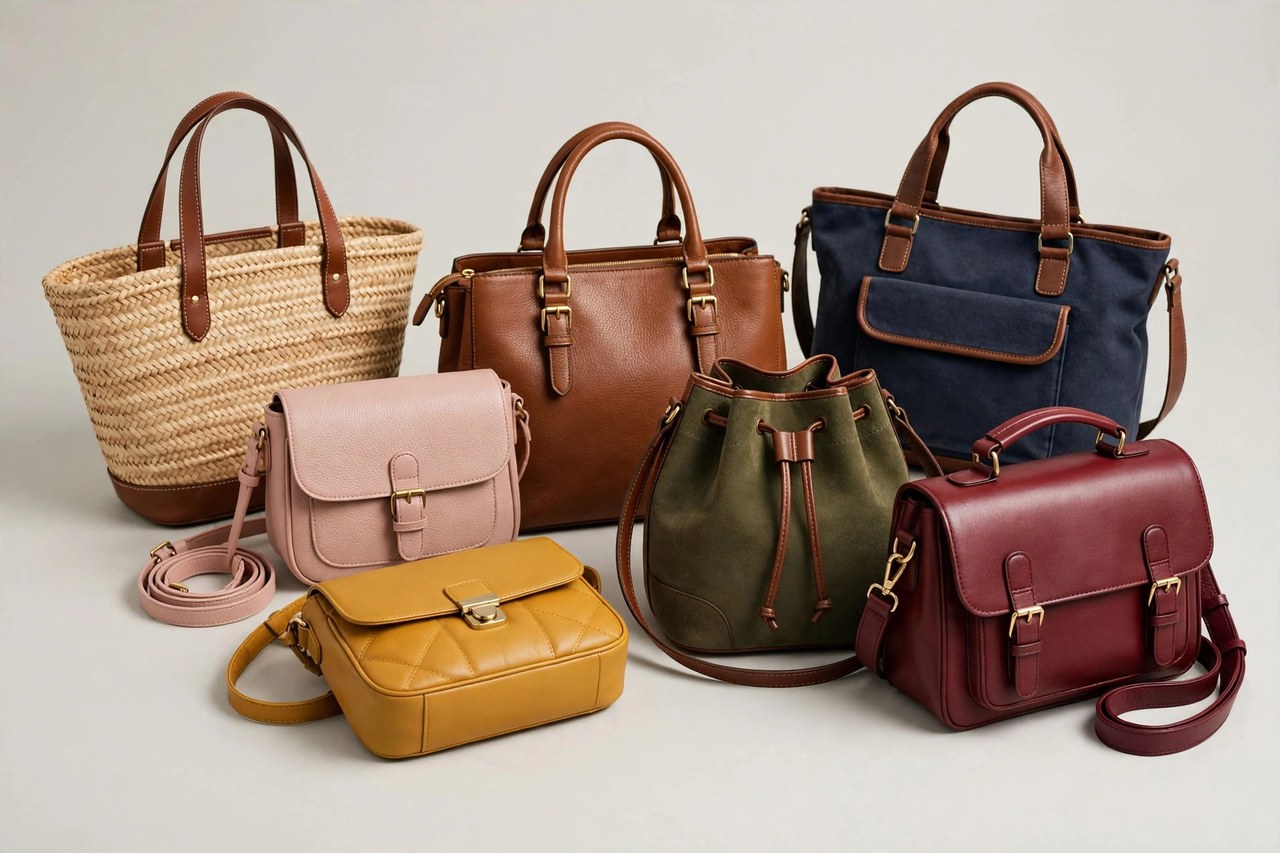
A purse is a bag carried by a woman for her money and personal essentials — wallet, phone, keys, cards and cosmetics. The word is the older one: purses were originally the little pouches that held coins, and in American usage purse became the everyday name for the whole category, while in British usage a purse is the small wallet-like item and the bag itself is the handbag. Shoppers will meet both terms, often on the same shop floor.
This guide uses purse in its everyday American sense: the terms and the wallet confusion to avoid when shopping, the main styles and what each carries well, the materials and hardware that decide lifespan, and how to choose by use.
Purse, Handbag, and the Words on the Tag
In most American stores, purse and handbag are used interchangeably for the carried bag, with handbag sounding slightly dressier and purse slightly more everyday; makers choose one or the other for tone rather than meaning. The practical trap is international shopping: a listing from a British or European seller that says purse may mean the small coin-and-card wallet, not a bag at all. Check dimensions on every listing, always — a purse described by inches cannot be misunderstood in any dialect, and the measurements are the one specification no seller phrases ambiguously.
Two more terms are worth fixing now: a wallet is the folded card-and-cash holder that lives inside the purse, and a wristlet is a wallet-sized pouch with a loop strap — the smallest member of the family, carrying phone, cards and keys for a short errand or an evening. Knowing which object a name refers to is most of purse shopping; the rest is leather, hardware and honest sizing.
The Styles: Tote, Satchel, Crossbody, Clutch, Hobo
The tote is the open-topped carryall: two handles, maximum volume, minimum structure — the work, shopping and everything-bag, best with an internal pouch or organizer because its openness is also its chaos. The satchel is the structured classic: a defined shape, a top handle, often a flap or frame closure and a detachable shoulder strap, the purse that sits upright on a desk and reads as polished at any hour. The crossbody hangs from a long strap worn diagonally, keeping hands free and the bag secure against the body; in small sizes it is the travel and errand purse, in medium sizes the everyday answer for women who walk, commute or shop with their hands.
The clutch is the handle-less evening purse, sized for phone, cards, keys and a lipstick and nothing more — its discipline is its elegance. The hobo is the soft, slouchy shoulder bag with a crescent dip at the top, loved for comfort and capacity. Beyond them: the bucket bag, the backpack purse and the belt bag. Choose by the day first — hands free or hands carrying, laptop or lipstick — and the shortlist writes itself.
Materials and Hardware
Materials decide weight, weather behavior and lifespan. Full-grain and top-grain leather are the durable standards, softening and gaining character with age; saffiano and coated leathers, with their crosshatch texture, resist scratches and rain and keep a structured purse looking new longest. Suede is beautiful and the most water-vulnerable leather in the category. Nylon and technical fabrics make the lightest everyday and travel purses and shrug off weather entirely. Canvas, straw and woven materials are the seasonal specialists. Whatever the material, judge the making: even stitching, finished and painted edges, and a lining that is attached rather than floating loose.
Hardware is the purse's machinery, and it fails before leather does. Zippers should run smoothly one-handed and be metal rather than molded plastic on a daily-use purse. Clasps and magnetic closures should engage positively — a snap that barely holds will dump the contents in a car footwell. Strap rings and handle attachments should be stitched and riveted through reinforced panels, because every pound carried hangs from those few points. Pick a loaded purse up by its handles in the shop: it announces its build quality in that single lift.
Choosing by Use, and Care
Choose by honest inventory. Lay out what you actually carry daily and match it to a purse with a little room to spare, not a lot, because surplus space fills with weight your shoulder pays for. Match the strap to the life: a long, adjustable, wider strap for walking and commuting, top handles for the car-and-desk day. Interior organization — a zip pocket for valuables, slip pockets for phone and cards, a light-colored lining — saves more daily minutes than any other feature. And weigh the empty purse in the shop before committing.
Care is short and seasonal. Empty and shake out the purse weekly, wipe leather with a soft cloth, condition smooth leather a few times a year, and keep suede brushed and dry. Store purses stuffed lightly with tissue, in dust bags, standing upright rather than hanging by their straps. Keep pens and cosmetics in pouches — interiors are ruined by leaks, not wear. A good purse kept this way is a five-to-ten-year companion.
Related Women's Guides
Photos

Looking for Women's Clothing Stores?
This guide helps you choose women's purses. To browse where to buy, visit our women's clothing store directory, where you can find retailers that carry them.