Women's Wallets Guide
Women's wallets are small leather or fabric goods for carrying cards, cash and ID: bifold, continental, zip-around, clutch and card-case styles in leather, coated canvas and synthetics, with RFID-shielded versions.
Shop Women's Wallets Now
Shop Women's Wallets on Amazon Shop Women's Wallets on eBayThe Amazon and eBay links on this page are affiliate links. If you make a purchase through them, Apparel Search may earn a commission.
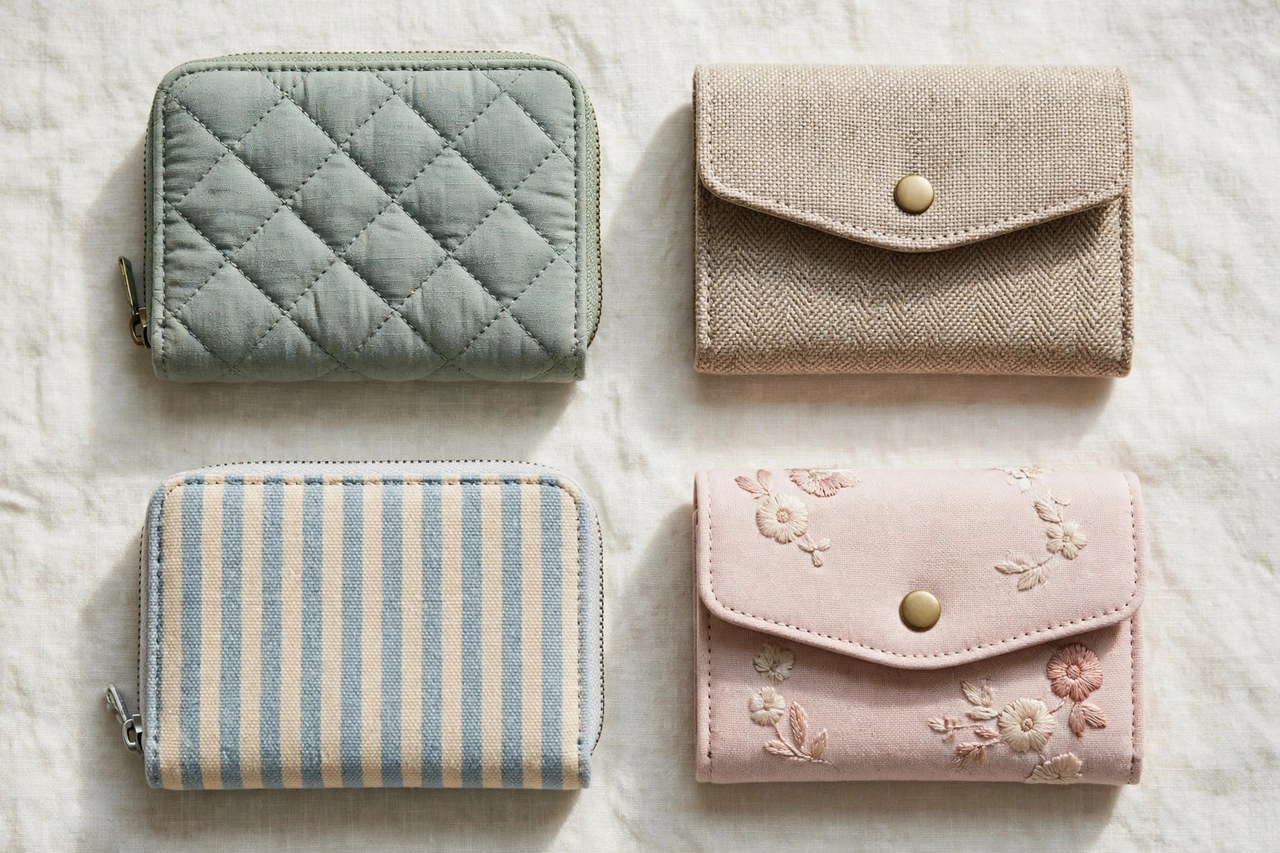
Women's wallets are small leather or fabric goods for carrying cards, cash and ID: bifold, continental, zip-around, clutch and card-case styles in leather, coated canvas and synthetics, with RFID-shielded versions. A wallet is a daily-use mechanism, so this guide covers capacity layouts and how they wear, leather grades in small goods, zip and clasp hardware, RFID shielding claims, and sizing a wallet to the bag it will live in.
This guide covers wallets in the order a careful buyer needs it: what the product is made from, how it is constructed, how it should fit, how to choose it for real use, and how to care for it so it lasts. The focus here is on measurable details, named materials and checks you can perform in a shop or on a parcel's arrival, rather than general fashion language.
Leather and Small-Goods Construction
Small leather goods concentrate a maker's standards into the fewest square inches: full-grain leather at the top, then top-grain and corrected grains, split leather and bonded material at the bottom — and in fashion goods, coated canvas and synthetics that trade leather's ageing for lightness and print. Edges are painted, turned or left raw, and each choice shows.
Stitching and hardware decide working life: dense, even saddle-style stitching outlasts loose machine rows, and zips, clasps and frames in metal outlast plastic copies of themselves. Leather quality shows fastest in a wallet because it is flexed and handled daily: full-grain leather creases and shines with use, while coated split leathers and bonded materials crack at the fold within a year or two. Flex the piece, work every closure, and read the edges — in small goods there is nowhere for poor making to hide.
Capacity and Carry
Fit an accessory to its actual load: count the cards, notes and objects it must carry daily, then choose the format that carries them without strain — overstuffing stretches slots, warps shapes and breaks zips faster than any other misuse. A layout that matches your habits (quick card access, notes kept flat, a place for coins) is a fit question, not a style one.
Then fit it to its home: the bags it will move between, the pockets it must enter, the hand it is carried in. Dimensions are printed in every serious listing — measure your current piece and compare, because small goods are bought by eye more and regretted by measurement more than any other category.
Choosing Small Goods That Last
Choose wallets in a fixed order: capacity layout against your real carry, material grade, hardware and stitching quality, and only then colour and branding. In practice, rank these checks in the order your own use demands — frequency of wear first, then weather, washing facilities and budget — because that order differs by wardrobe, and it is the real reason two careful buyers can correctly choose differently from the same rail.
Judge price by leather grade and finishing: full-grain leather with turned or painted edges and metal hardware is a five-to-ten-year object; bonded leather and glued construction are one-to-two-year objects, and are fairly priced only when sold as such.
Leather Care and Rotation
Wipe leather goods down, condition lightly once or twice a year, and keep them from the twin killers of small leather: water soaking and heat drying. Empty and rest a daily piece occasionally — even a wallet benefits from a day unloaded and out of a pocket.
Store small goods shaped, not crushed, away from light that fades aniline leather and from plastic that traps moisture against it. Metal hardware polishes with a dry cloth; zips run better for a trace of zip wax when they begin to drag.
Common Questions
How do I choose between a continental and a bifold wallet?
A continental (long) wallet carries notes flat and holds the most cards, cheques and a phone in clutch styles, but needs a larger bag. A bifold is compact and quick but folds notes and carries less. Match the wallet to your real daily carry — count your cards before choosing, not after.
Do I need an RFID-blocking wallet?
RFID shielding blocks skimming readers from contactless cards at very close range. The real-world risk is low and most contactless cards are hard to exploit, but shielding costs little and some wallets include it in the lining. Treat it as a bonus feature, never the reason to pay more.
How long should a good leather wallet last?
A full-grain leather wallet with sound stitching typically lasts five to ten years of daily use; zips and clasps usually fail before leather does. Clean leather yearly, keep it out of back pockets (sitting bends and cracks it), and do not overstuff card slots — stretched slots never recover.
Related Women's Guides
Photos

More to Explore on Apparel Search
Looking for Women's Clothing Stores?
This guide helps you choose women's wallets. To browse where to buy, visit our women's clothing store directory, where you can find retailers that carry them.