Women's Leather Wallet Guide
A wallet is the leather good a woman handles most — opened a dozen times a day — so its leather, stitching and layout matter out of all proportion to its size.
Shop Women's Leather Wallets Now
Shop Women's Leather Wallets on Amazon Shop Women's Leather Wallets on eBayThe Amazon and eBay links on this page are affiliate links. If you make a purchase through them, Apparel Search may earn a commission.
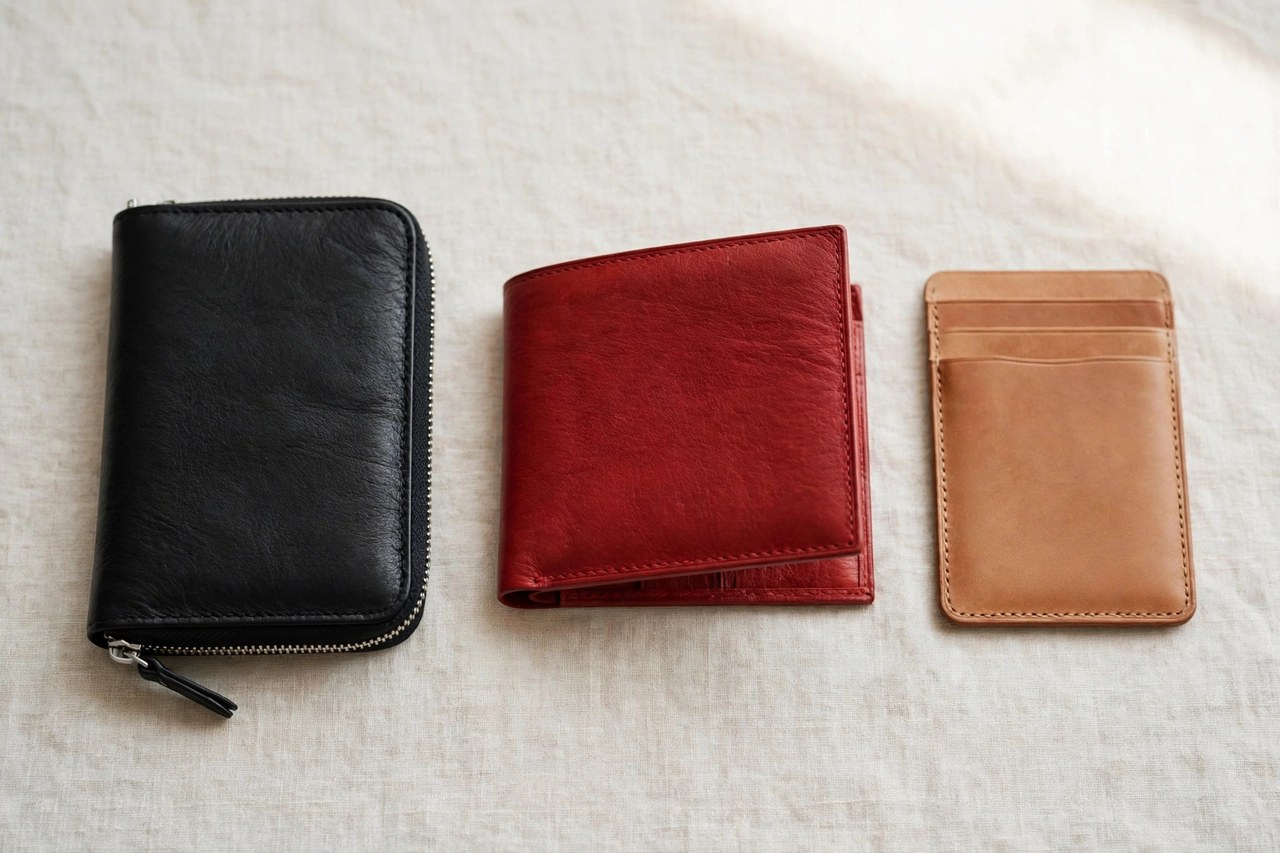
The wallet is the smallest member of the leather bags family and the hardest used: it is flexed, sat on, stuffed into pockets and bags, and opened more often than every other leather good combined. This guide covers women's leather wallet styles and layouts — and how to judge one in the hand. For its near relations, see the leather purse guide (the wallet-purse's close cousin) and the leather handbags guide.
Because a wallet is small, it is where the best leather costs the least extra — a full-grain wallet is an affordable luxury, and the grade difference shows within a year of use.
Wallet Styles and Layouts
The continental wallet is the long, flat classic: notes unfolded, a row of card slots, a zipped coin section, closing with a snap or flap — the style that doubles as a small clutch. The zip-around encloses everything behind a zip and is the most secure and the bulkiest. Bifolds and trifolds fold the long wallet down to pocket size at the cost of creased notes and thicker cards stacks. The French purse is a compact snap wallet with a frame coin section, and the minimalist card case carries four to eight cards and folded notes only — the right answer when the bag is small or the day is simple.
Count your cards honestly before choosing: a wallet with sixteen slots carried with six cards is dead bulk; one with six slots carried with sixteen cards splits its seams. Look for slots cut slightly wide — leather relaxes, and a slot that is tight on day one is right on day thirty, while a slot that is right on day one may be loose in a year.
Leather and Lining
Wallet leather should be thin but dense: top-grain or full-grain cowhide and goatskin (naturally slim and abrasion-resistant) are the standards; lambskin feels wonderful and wears fastest, so it suits an evening wallet rather than an everyday one. Vegetable-tanned leather makes the stiffest, longest-lasting bifolds and ages beautifully. The fold is the failure point of every wallet — flex the display piece: the leather should crease without cracking, whitening or surface flaking.
Linings matter more than they look: a fabric lining protects card magnetic strips and chips from leather's natural oils and stops notes sliding out, and an RFID-shielded lining blocks skimming of contactless cards — a feature worth having if your cards are contactless. Zips on coin sections should be metal; plastic zips in wallets fail early and are not worth repairing.
Care
A wallet's enemies are overstuffing (which stretches slots and splits the fold), water (let a soaked wallet dry slowly, emptied, at room temperature) and back-pocket sitting, which bends cards and breaks the wallet's spine. Condition the outside lightly once or twice a year, wipe the interior with a dry cloth, and retire receipts weekly. Cared for this way, a good leather wallet lasts five to ten years of daily handling.
Travel changes the specification: a travel wallet adds a passport pocket and room for documents, usually in the long continental format, and in unfamiliar places the zip-around's total enclosure earns its bulk. At home, the discipline that keeps a wallet thin — and its leather unstretched — is a weekly clear-out: receipts, expired cards and loose coins are what actually kill wallets, distending slots and cracking folds long before the leather itself wears out. A wallet carried at half its possible load will outlast the same wallet stuffed full by years, which is the cheapest care advice in this whole leather section.
More Leather Guides
Photos


More to Explore on Apparel Search
Looking for Women's Clothing Stores?
This guide helps you choose women's leather wallets, purses and handbags. To browse where to buy, visit our women's clothing store directory, where you can find retailers that carry them.