Leather Handbags Guide
Handbags are the bags designed to be carried in the hand or on the arm — and in leather, the style, size and structure decide everything about how one works.
Shop Women's Leather Handbags Now
Shop Women's Leather Handbags on Amazon Shop Women's Leather Handbags on eBayThe Amazon and eBay links on this page are affiliate links. If you make a purchase through them, Apparel Search may earn a commission.
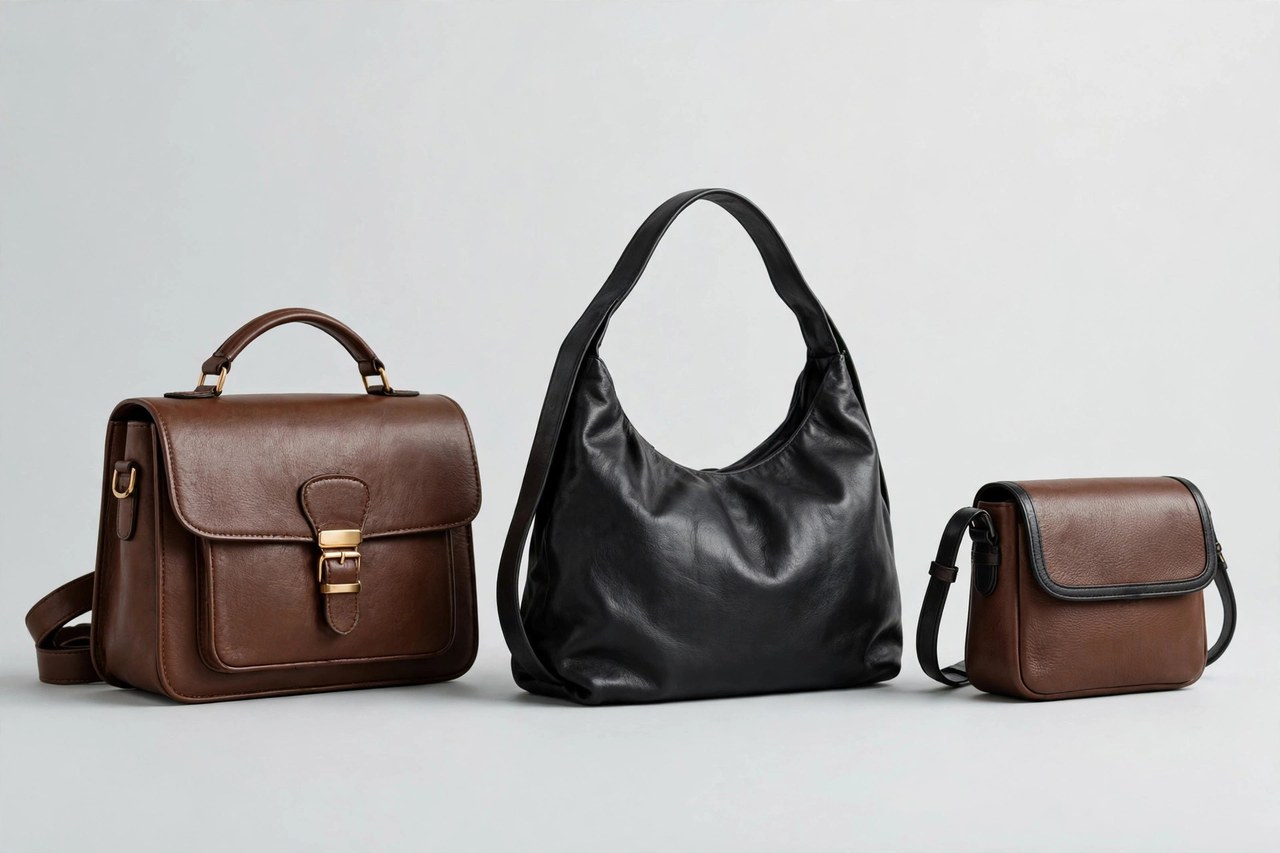
A handbag is a bag made to be carried by hand, on the wrist or in the crook of the arm — the category between the purely practical tote and the purely decorative clutch. This guide covers leather handbags by style and structure: how to read a handbag's construction, which sizes actually get used, and where the money in a leather handbag goes. For the whole bag family see our leather bags guide; for two of its members in depth, the leather purse and the leather satchel.
Leather dominates the handbag category for a reason: no other common material takes a handle's daily pulling, a base's daily setting-down, and a decade of opening and closing as gracefully.
Handbag Styles in Leather
The satchel is structured, with a flat base, top handles and usually a flap or zip top — the most formal everyday handbag, covered in its own guide. The hobo is its opposite: soft, single-strapped, crescent-shaped, informal. The bowler and doctor's bag are rounded, framed shapes with vintage bones. Crossbody handbags shrink the form and add a long strap; top-handle bags with a detachable shoulder strap are the convertible compromise most women actually live with.
Size follows use, not fashion. A daily handbag must swallow a phone, wallet, keys, glasses case and a small cosmetic pouch with the zip still closing flat; test any handbag loaded, not empty, because leather adds its own weight — a large full-grain bag can be heavy before anything goes in it.
Construction: Where the Money Goes
Open the bag. A quality leather handbag is lined — in suede, cotton twill or microfiber — with finished seams, an interior zip pocket and slip pockets that are themselves stitched, not glued. The base should be reinforced or have metal feet. Zippers should be metal and run smoothly one-handed; magnetic snaps should actually hold. Handles attach with stitching plus rivets or reinforcement patches inside, because a handle sewn only to an outer panel will eventually pull through.
Then look at the edges and the back of the leather where you can see it: consistent color, no loose fibers, edges inked or folded. These are the details that decide whether a leather handbag is a five-year bag or a fifteen-year bag, and they matter more than a logo.
Buying and Keeping
Choose structure for work (a satchel or framed tote keeps papers and a laptop uncreased), softness for weekends, and one dark neutral — black, deep brown or oxblood — before any color, because a leather handbag is carried against every outfit you own. Care is the standard leather routine: condition occasionally, store stuffed and dust-bagged, keep out of sun and away from radiators, and wipe spills promptly — leather is forgiving of almost everything except neglect and ink.
Color is a strategy decision in a handbag, because it is carried against everything you wear. Black is the default for a reason, but deep browns, oxblood and tan often work harder across a wardrobe — warming black outfits, grounding pale ones — and they show the leather's grain and quality better than black does. A second handbag in a lighter or brighter color is the classic spring move. Whatever the color, choose with your actual life in mind: the commute, the load, the weather. A handbag bought for the photograph and not for the carrying is the one that stays in the closet while an older, better-judged bag does the work.
More Leather Guides
Photos

Looking for Women's Clothing Stores?
This guide helps you choose women's leather handbags and the stores that stock them. To browse where to buy, visit our women's clothing store directory, where you can find retailers that carry them.