Women's Leather Bags Guide
A leather bag is the hardest-working accessory a woman owns — carried daily, loaded heavily, and expected to look better in year five than in year one.
Shop Women's Leather Bags Now
Shop Women's Leather Bags on Amazon Shop Women's Leather Bags on eBayThe Amazon and eBay links on this page are affiliate links. If you make a purchase through them, Apparel Search may earn a commission.
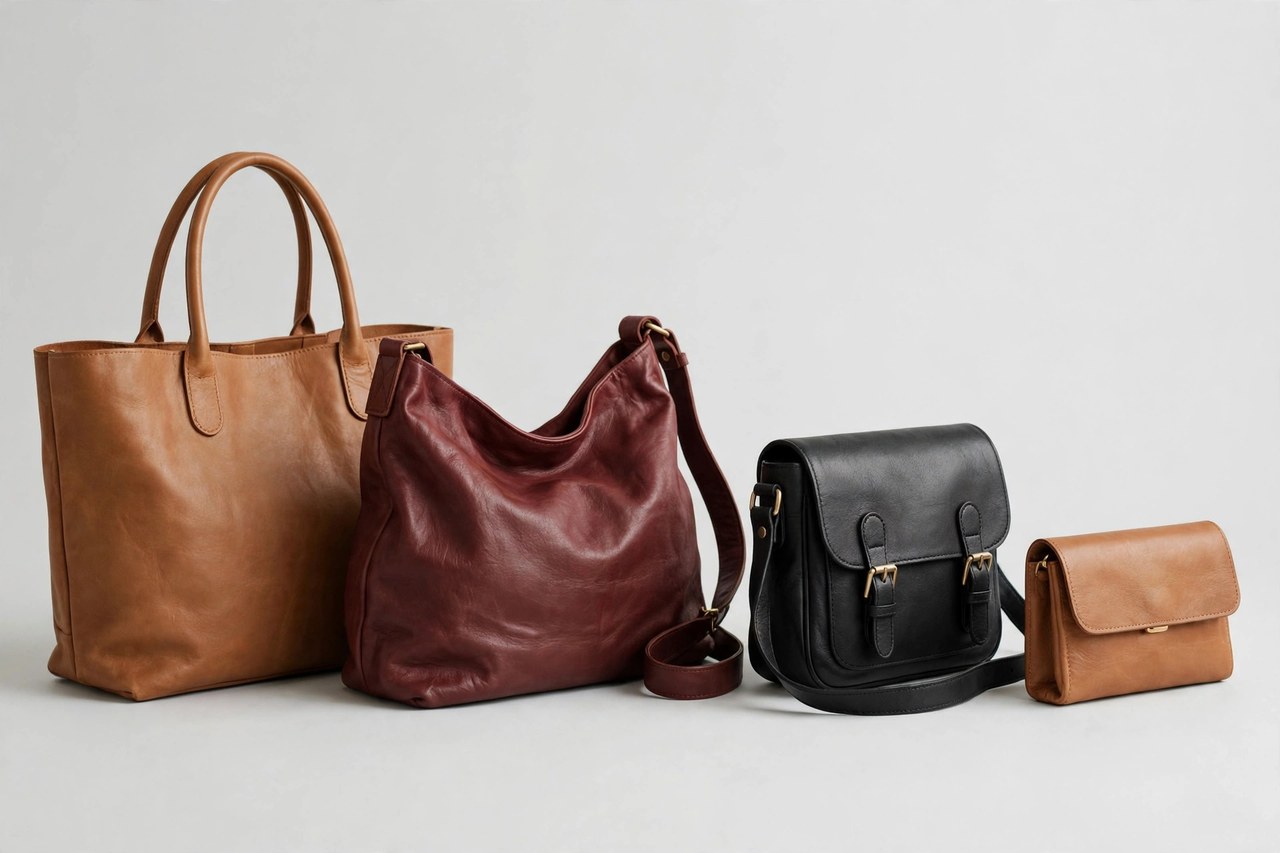
A bag is simply a container for carrying things — but in leather it becomes the most durable accessory in the wardrobe. This page is the umbrella guide to women's leather bags: the styles, the leathers they are made from, and how a leather bag is put together. Its close relations have their own guides: leather handbags by style, the leather purse, the structured leather satchel and leather wallets — all linked below.
Leather suits bags better than any synthetic because it carries weight without tearing at the stitch holes, scuffs can be conditioned away instead of peeling, and the handles and corners that fail first on other bags are exactly where a good hide is strongest.
The Bag Styles
The tote is the open workhorse — two handles, a big unstructured or semi-structured body, sized for laptops, files and everything else. The hobo slouches into a crescent on one strap and needs soft, draping leather. The crossbody trades capacity for hands-free security and is usually cut in lighter leather to keep the strap comfortable. Shoulder bags and bucket bags sit between tote and crossbody; the backpack distributes weight across both shoulders and wants reinforced straps and base; the clutch and wristlet are evening-sized and often use the most decorative leathers — embossed, metallic or patent.
Whatever the style, judge a leather bag by the same four points: the hide, the stitching (count the stitches — more, evenly spaced stitches per inch means a stronger seam), the hardware (solid metal, smoothly finished), and the edges (painted, folded or burnished edges last; raw, fuzzy edges do not).
Which Leather for Which Bag
Structured bags — satchels, framed totes, briefcase styles — are traditionally vegetable-tanned cowhide: firm, burnishable, and able to hold a shape for decades. Soft bags — hobos, slouchy totes, drawstring buckets — use chrome-tanned cowhide or lambskin for drape. Pebbled leather is the practical favorite for everyday bags because its texture hides scratches; saffiano (a cross-hatched, wax-finished leather) resists water and scuffs and is common in work totes. Suede bags are beautiful and the least practical — save them for dry days and light loads.
Full-grain leather is the top choice at any price it appears; top-grain is the realistic standard for most quality bags. Be wary of a bag sold simply as “genuine leather” at a very low price — it is a lower split grade, and in a bag, which lives by its seams and handles, grade shows quickly.
Care for Leather Bags
Empty and stuff a bag with tissue when it rests so it keeps its shape, store it in its dust bag away from light and heat, and condition the leather once or twice a year. Rotate bags when you can — leather fatigues under daily load like any material. Keep pens and cosmetics in pouches inside, because ink and oils migrate into linings and through to the hide. A good leather bag, looked after this way, is a buy-it-once purchase.
Loading matters as much as leather. A bag carried daily at its limit stretches handles and strains seams at their anchor points, so size the bag to the load with room to spare, and distribute weight rather than letting it pool in one corner. Put the heaviest items against the body side, keep sharp objects — keys, pens, tools — in interior pockets or pouches, and use a bag organizer if you swap bags often: it protects the lining and makes the changeover take seconds. Finally, give a favorite bag rest days. Leather carried seven days a week ages faster than two bags alternated — which is the practical argument for owning a second leather bag in a different color.
More Leather Guides
Photos

More to Explore on Apparel Search
Looking for Women's Clothing Stores?
This guide helps you choose women's leather bags in every style and grade. To browse where to buy, visit our women's clothing store directory, where you can find retailers that carry them.