Women's Leather Apparel Guide
Leather apparel is every garment made from a tanned hide — and the hide itself, its grade and its finish, decides how a piece looks, feels and ages.
Shop Women's Leather Apparel Now
Shop Women's Leather Apparel on Amazon Shop Women's Leather Apparel on eBayThe Amazon and eBay links on this page are affiliate links. If you make a purchase through them, Apparel Search may earn a commission.
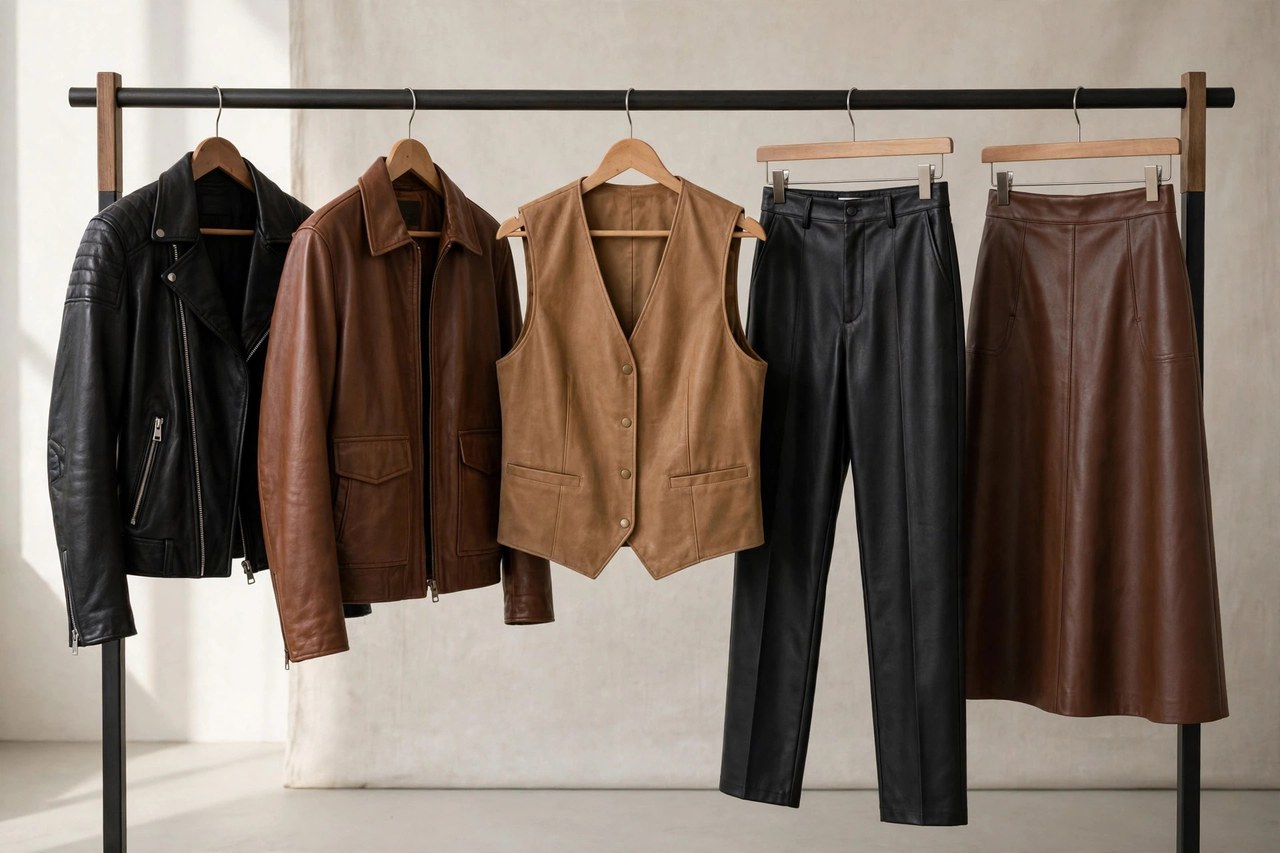
Leather apparel means clothing made from leather — animal hide that has been tanned so it will not rot, then finished, dyed and sewn into garments. This page is the material-first guide to the whole leather department: what leather is, how the grades differ, how tanning works, and how to care for any leather piece you own. The garment-by-garment guides — jackets, boots, pants, bags and the rest — are linked below and at the foot of the page.
Almost all apparel leather comes from cattle hide, with lambskin, goatskin, pigskin and deerskin used where softness or texture matters. A single hide is thick enough to be split into layers, and which layer a garment is cut from is the first thing that determines its quality and price.
The Grades of Leather
Full-grain leather is the top layer of the hide with its tight, natural grain surface left intact. It is the strongest, most breathable and most expensive grade, and it develops a patina rather than wearing out. Top-grain leather is that same top layer lightly sanded and finished to remove marks; it is slightly less durable but more uniform, and it is the workhorse grade of good jackets and handbags. Below those sit genuine leather — a legal grade name, not a promise — made from the lower split of the hide and usually given an artificial grain, and bonded leather, ground hide fibers reconstituted with binder, the weakest of the family.
Some names describe finishes rather than grades. Suede is the flesh side of a split, brushed to a nap; nubuck is top-grain buffed on the grain side to a velvet touch; patent leather is coated to a gloss; pebbled leather is embossed or shrunk to a texture; and aniline and semi-aniline leathers are dyed through with little or no surface pigment, so the natural grain shows — beautiful, and the least forgiving of stains.
Tanning: Vegetable vs Chrome
Raw hide becomes leather in the tannery. Vegetable tanning, the older method, soaks hides in plant tannins for weeks; it produces firm, warm-toned leather that darkens with age and is favored for belts, satchels, soles and structured bags. Chrome tanning, which uses chromium salts, takes days instead of weeks and yields softer, more supple, more color-consistent leather — the great majority of apparel leather is chrome-tanned, because garments need drape that vegetable-tanned hide rarely gives.
After tanning, garment leather is milled (tumbled to soften it), dyed, and finished. Lambskin is the softest common apparel hide and the most delicate; cowhide is tougher and heavier; goatskin splits the difference with a distinctive pebbled grain; pigskin is durable and breathable, often used for linings and gloves.
Caring for Leather Apparel
Leather care rests on three habits. Condition: hides dry out over time, so a quality conditioner once or twice a year keeps fibers supple — always test on a hidden spot first. Store dry and breathing: keep leather in a cool, ventilated place on padded hangers or stuffed with tissue, never sealed in plastic, and keep it out of prolonged direct sunlight, which fades and cracks it. Handle water correctly: if a piece gets wet, let it air-dry slowly at room temperature, never with a hair dryer or radiator, then condition lightly once dry.
Clean with a soft, slightly damp cloth for surface dust, use cleaners made for your leather type (suede gets a brush and eraser, never cream), and take structured or lined pieces to a specialist leather cleaner rather than a general dry cleaner. Treated this way, a full-grain leather garment is one of the few things in a wardrobe that genuinely improves with age.
More Leather Guides
Looking for Women's Clothing Stores?
This guide helps you choose women's leather apparel of every grade and garment type. To browse where to buy, visit our women's clothing store directory, where you can find retailers that carry them.