Women's Leather Clothing Guide
Leather clothing is the wardrobe itself — jackets, pants, skirts, dresses' worth of garments cut from hide — and each one asks something different of the material.
Shop Women's Leather Clothing Now
Shop Women's Leather Clothing on Amazon Shop Women's Leather Clothing on eBayThe Amazon and eBay links on this page are affiliate links. If you make a purchase through them, Apparel Search may earn a commission.
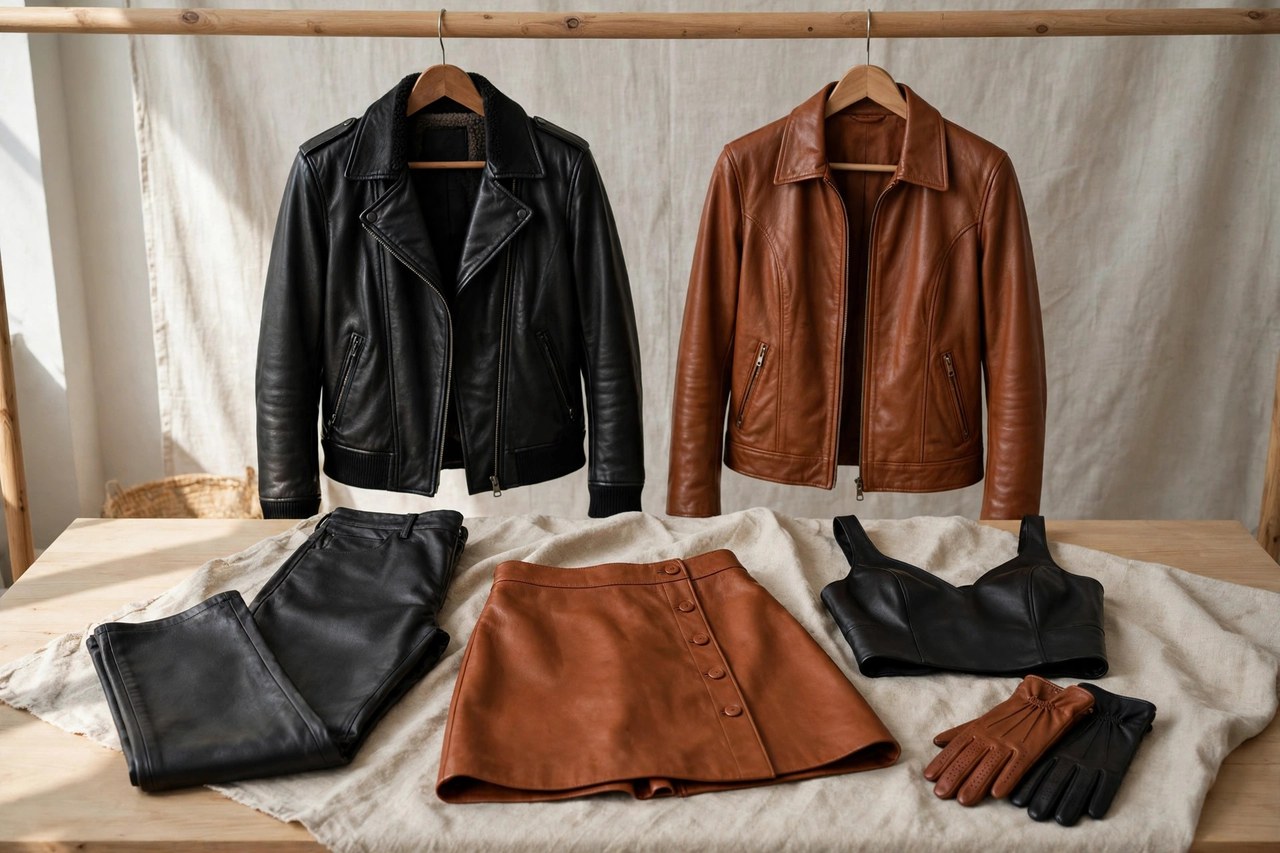
Where the leather apparel guide on this site starts from the material, this page starts from the wardrobe: leather clothing, garment by garment. Leather is unusual among clothing materials because the same substance can be a rigid biker jacket, a fluid skirt or a glove that fits like skin — the differences come from the hide chosen, its thickness, and how it is cut and lined. Knowing which leather each garment needs is most of knowing how to buy leather clothing well.
A practical leather wardrobe is usually built slowly. Leather costs more per piece than almost any fabric, lasts far longer, and molds itself to the wearer — so the classic advice holds: buy the best grade you can afford, in the most timeless cut, and let the piece earn its place over years.
The Leather Wardrobe, Garment by Garment
The jacket is the anchor — moto, blazer, bomber and trench silhouettes in mid-weight cowhide or lambskin — and it has its own guide below. Pants and skirts need thinner, softer hides (usually lambskin or thin cowhide splits) plus stretch panels or careful patterning, because a leather bottom has to sit, bend and walk. Shirts, tops and vests use the lightest garment leathers, often perforated or combined with knit panels for movement. Gloves are cut from the thinnest, most uniform skins of all. Outerwear beyond jackets — full leather coats and trenches — uses heavier hides and full linings, and is the most investment-heavy end of the wardrobe.
Bags and footwear are leather clothing's close relations and have their own guides in this section: boots and shoes in structured upper leather, sandals and sneakers in softer cuts, and the bags family from totes to wallets.
Choosing Leather Clothing That Fits
Leather fits differently from cloth. It has almost no mechanical stretch across the grain, but it relaxes and molds with wear — a new leather garment should fit snugly, never uncomfortably tight, because it will ease by roughly half a size in the wearing-in, and it will not shrink back. Seams should sit where the pattern intends them to; leather cannot be let out, and alterations are specialist work, so buy the size that fits your largest measurement and have the rest assessed by a leather tailor.
Check the lining as carefully as the hide. A full lining in a breathable fabric makes leather trousers and skirts comfortable and protects the leather from body oils; unlined pieces should have cleanly finished seams. Hardware — zippers, snaps, buckles — should be metal and substantial, because replacing hardware in leather is far harder than in cloth.
Building and Keeping the Wardrobe
Start with one anchor piece (usually the jacket), then add in neutral colors that work with what you own: black first for most wardrobes, then a brown or cognac. Store leather clothing hanging on wide, padded hangers so shoulders keep their shape, give pieces a day's rest between wearings, and condition once or twice a year. With that minimal routine, the leather wardrobe is measured in decades — which is the entire point of buying it.
One garment deserves its own word because it concentrates all the others' questions: the leather dress. Usually a sheath or shirt dress in lambskin, it needs the softest hide in the wardrobe, a full lining, and a pattern that lets its wearer sit, stride and raise her arms — which is why the best leather dresses include a walking vent, stretch panels, or a touch of elastane in the hide itself. In black it is the little black dress's serious sister; in a color, it is a complete outfit with nothing added but shoes. If a leather wardrobe grows to a third or fourth piece, the dress is where it becomes a collection.
More Leather Guides
More to Explore on Apparel Search
Looking for Women's Clothing Stores?
This guide helps you choose women's leather clothing, from jackets to gloves. To browse where to buy, visit our women's clothing store directory, where you can find retailers that carry them.