Women's Leather Vests Guide
A vest is a jacket without sleeves — and in leather, losing the sleeves keeps all the attitude while making the most layerable piece in the wardrobe.
Shop Women's Leather Vests Now
Shop Women's Leather Vests on Amazon Shop Women's Leather Vests on eBayThe Amazon and eBay links on this page are affiliate links. If you make a purchase through them, Apparel Search may earn a commission.
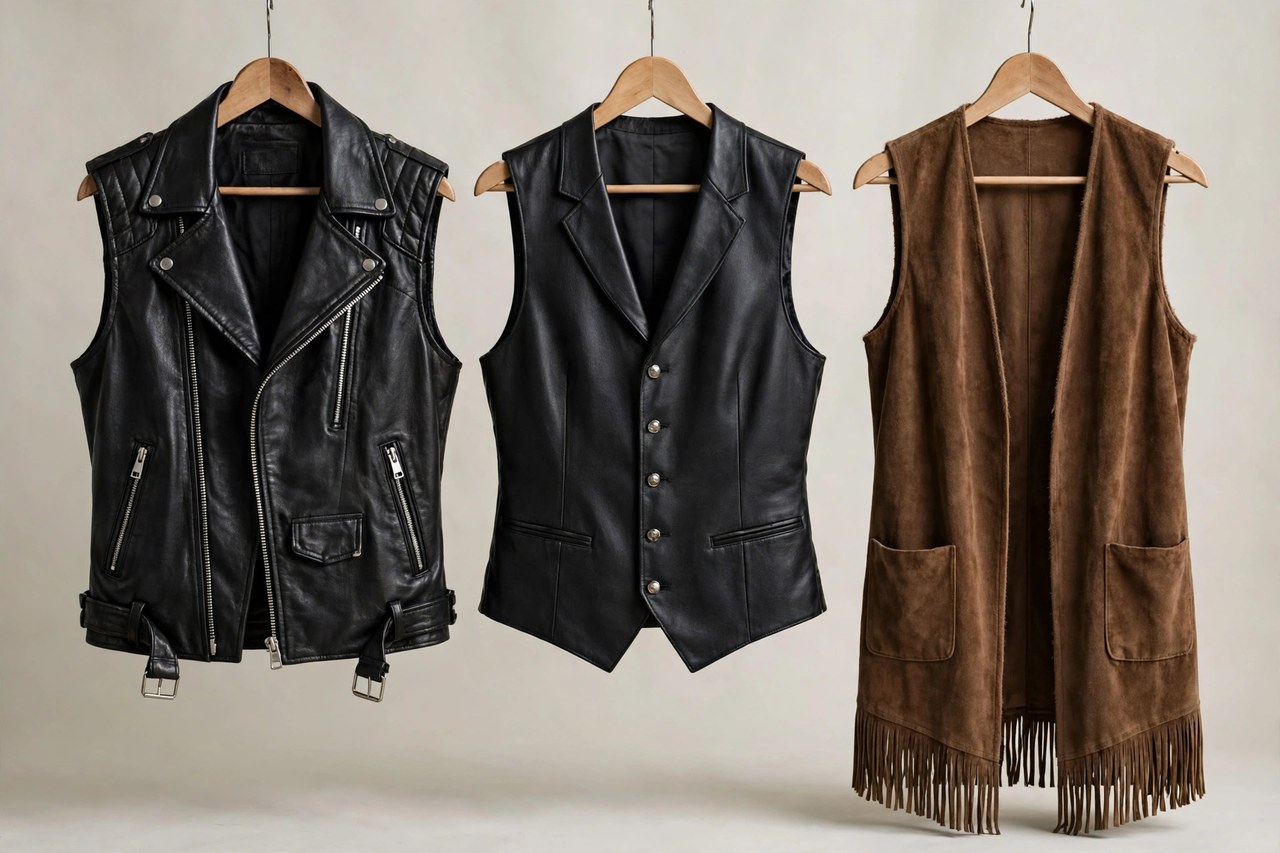
What is a jacket without sleeves? A vest — and in leather it is one of the hardest-working layering pieces a woman can own. The leather vest adds the material's structure, sheen and edge to an outfit without the warmth or bulk of a jacket, fits over everything from a t-shirt to a sweater, and carries more heritage per square inch — biker, western, tailored — than almost any garment. This guide covers the styles and how to wear them.
Women's vests as a category run from the quilted outdoor vest to the formal waistcoat; in leather, four families dominate.
The Four Leather Vest Families
The biker vest (or cut) is the moto jacket sleeveless: heavy cowhide, zips or laced sides, worn over shirts and hoodies — the laced side panel is not decoration, it is the fit adjustment. The tailored waistcoat is the sharp one: fitted, buttoned, often with a fabric back and adjuster strap, made to be the leather third of a three-piece look or the whole top under a jacket. The western vest is suede or tooled leather, fringed or concho-buttoned, from the ranch tradition. And the longline vest — hip to knee length, open-fronted — is the fashion layer, worn over dresses and knits as a moving column of leather.
Between them, the choice is register: the waistcoat dresses things up, the biker dresses them down-tough, the longline dresses them long, and the western declares its theme outright.
Leather, Fit and Layering
Vest leathers track their families: heavy cowhide for biker cuts, mid-weight garment cowhide or lambskin for tailored and longline styles, suede for western and soft longline. Because a vest opens at the armhole, its inside shows — a lined vest (or a vest finished with bound edges) looks and wears a class better than a raw one.
Fit a vest close through the body with room at the armhole for the layer beneath; it should button or zip without pulling when worn over its intended partner, which for most vests is a fine knit, shirt or long-sleeved top. Layering is the vest's whole talent: over a white shirt for contrast, over a dress to give it structure, over a turtleneck in winter as the mid-layer under a coat, or as the only leather in the outfit, doing the leather-fashion work of a jacket at half the commitment.
Care
Vests ask for standard leather care: a wide hanger (a vest's shoulders are its shape), conditioning once or twice a year, suede brushed rather than creamed, and storage out of sun. Laced-side vests should be stored with the lacing loosened evenly rather than pulled to one side, which warps the panels. A leather vest, kept decently, is as close to immortal as clothing gets.
The vest's history explains its forms: the waistcoat began as a long, sleeved garment in the seventeenth century and shed its sleeves and its length over two hundred years of tailoring, arriving at the modern vest as a pure torso layer — which is exactly what the biker cut re-invented independently for the road. A women's leather vest collection that lasts usually holds two: one tailored, in black, that behaves like clothing; and one character piece — suede western, longline or biker — that behaves like a signature. Between them they cover most of the layering a wardrobe asks for.
More Leather Guides
Photos

Looking for Women's Clothing Stores?
This guide helps you choose women's leather vests in biker, tailored and longline styles. To browse where to buy, visit our women's clothing store directory, where you can find retailers that carry them.