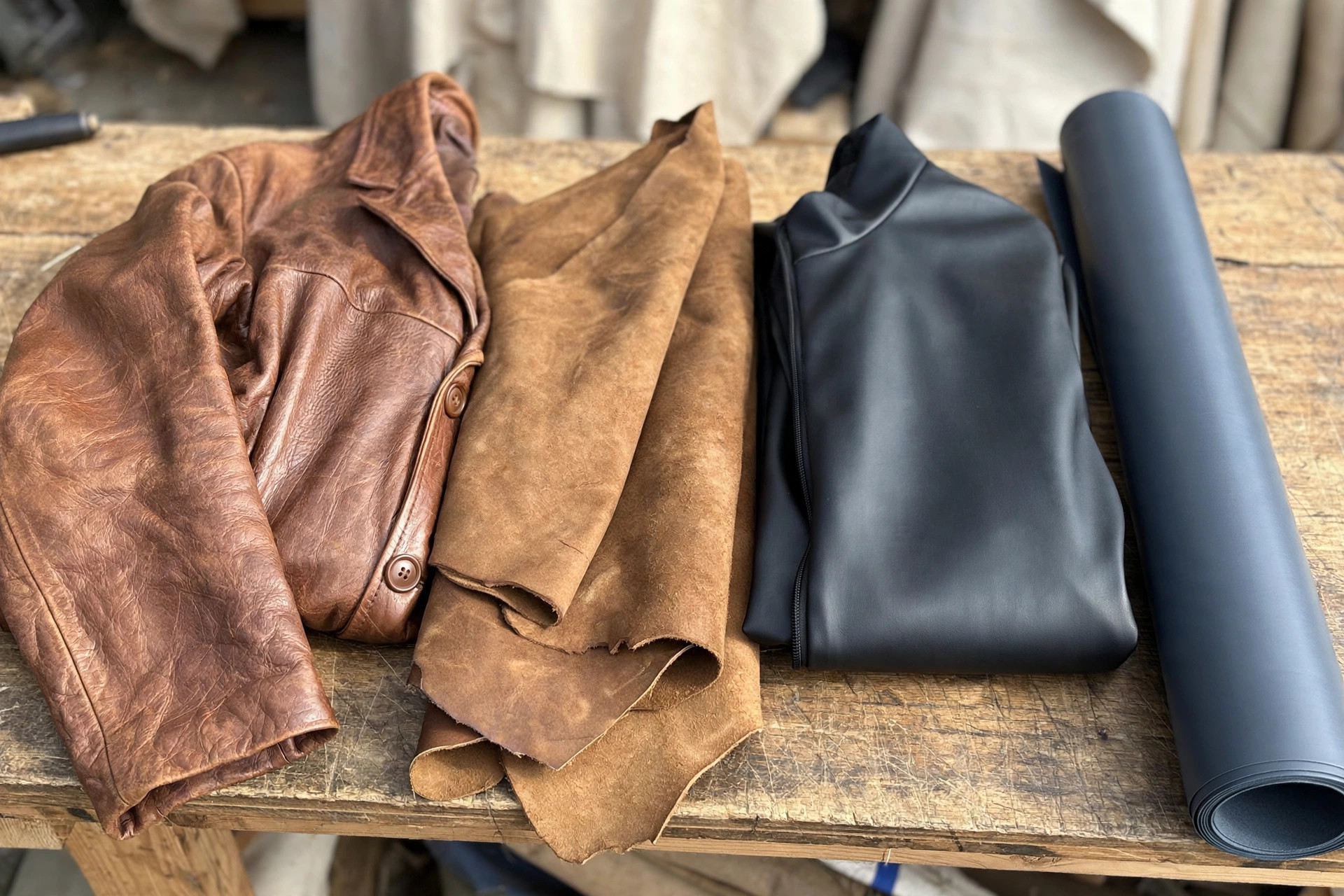
Leather is a material; faux leather is a category of imitations. Genuine leather is animal hide - usually cowhide for apparel and bags - tanned to preserve it. Faux leather (also sold as vegan leather, pleather, or by brand names) is a manufactured sheet, traditionally a plastic coating such as polyurethane or PVC over a fabric backing, and more recently bio-based versions made partly from materials like cactus, mushroom or fruit waste. The two can look nearly identical on a rack; they differ in how they breathe, age, fail and are cared for.
This page compares them without a sales pitch in either direction: leather's longevity and patina are real, and so are faux leather's price, consistency and animal-free appeal. Which wins depends on the garment, the budget and how long you intend to keep it.
What Genuine Leather Is
Leather begins as hide, preserved by tanning - vegetable tanning with plant extracts, or the faster chrome tanning used for most apparel leather. Quality is graded by the layer of hide used: full-grain leather keeps the complete outer surface and is the strongest and most characterful; corrected and split leathers trade some of that character for price. Leather is a fiber network, which is why it breathes somewhat, molds to the body, stretches slightly, and develops patina - a deepening of color and sheen where it is handled and worn. A good leather jacket or bag is a decades-long purchase, repairable by any leather workshop. The garment range is covered in the men's leather clothing guide and the women's leather clothing guide.
What Faux Leather Is
Faux leather is built, not grown: a coating - most often polyurethane (PU), sometimes PVC - applied to a woven or microfiber backing, embossed with a grain pattern and colored. PU versions are softer, lighter and more leather-like in hand than PVC, which is stiffer and mostly used in upholstery. Because it is manufactured, faux leather is uniform - no scars, no variation, any color, and a lower, predictable price - and it involves no animal hide, which for many buyers is the deciding benefit. Its structural limit is the coating itself: over years the surface can crack and peel as the coating ages and flexes, a failure mode leather does not have, and that damage cannot be repaired the way leather can. Newer bio-based materials aim to improve both the feel and the footprint, though most still contain some synthetic binder.
Side by Side
| Feature | Genuine leather | Faux leather |
|---|---|---|
| Composition | Tanned animal hide (usually cowhide) | PU or PVC coating on fabric backing; some bio-based versions |
| Feel & breathability | Warm hand; breathes somewhat; molds to the body | Cooler, plasticky hand in cheap grades; breathes little |
| Aging | Develops patina; improves with care | Coating can crack and peel with age and flexing |
| Durability | Decades with care; repairable | Typically a few years of regular use; not repairable once peeling |
| Water behavior | Spots and stiffens if soaked; recovers with conditioning | Surface sheds water; rain-friendly |
| Care | Condition periodically; keep from prolonged soaking | Wipe clean; no conditioning; keep from heat sources |
| Price | High | Low to moderate |
| Consistency | Natural variation, scars, character marks | Perfectly uniform color and grain |
How to tell them apart in hand: leather smells of hide, feels warm, and shows irregular pores and slight color variation at creases and edges; faux leather smells neutral or chemical, feels cooler and smoother, and shows a perfectly repeating grain with cleanly finished, fabric-backed edges.
How to Choose
- Choose leather for a jacket, bag or boots you intend to keep for many years and wear often - cost per wear favors leather quickly, and it can be repaired, reconditioned and resoled through its life.
- Choose faux leather for trend pieces, tight budgets, rain-exposed items, and when avoiding animal products is the priority - with the expectation of a shorter service life.
- Mind the middle labels: "genuine leather" printed on a product is a legal grade term, not a quality promise - it can mean lower-grade split leather. Full-grain and top-grain are the quality signals; for faux, PU over microfiber is the premium end.
- For furniture and car interiors the same trade-off applies at larger scale, with heavy-use seating favoring leather's durability and faux leather's easy cleaning winning in family and wet-duty settings.
Common Questions
- How long does faux leather last compared with real leather?
- Under regular use, faux leather garments typically last a few years before the coating begins to crack or peel, especially at flex points. A quality leather garment, conditioned occasionally and kept dry, commonly lasts decades - the difference in lifespan is the central trade-off between the two.
- Is faux leather waterproof?
- Its surface sheds water well, so faux leather handles rain better than untreated leather, which can spot and stiffen. It is not a technical waterproof material - seams and the fabric backing can still take in water - but for everyday wet weather it is the lower-maintenance choice.
- Can peeling faux leather be repaired?
- Not durably. Once the coating separates from the backing, patches and fillers are cosmetic and temporary. This is the key contrast with leather, whose surface is the material itself and can be cleaned, conditioned, re-dyed and repaired throughout its life.
- Is 'vegan leather' the same as faux leather?
- In most products, yes - vegan leather is a marketing name for faux leather that contains no animal material. It covers traditional PU and PVC versions as well as newer bio-based materials made partly from plant sources. The label describes what it is not made from, so check the material details for what it actually is.
Fashion Comparisons: The Full Series
This page is part of the Apparel Search fashion comparisons series, which puts two similar garments, fabrics or materials side by side. Browse the full series below.