Men's Leather Clothing Guide
Leather clothing is the umbrella category of this letter - every garment cut from tanned hide, from the jackets and pants that get their own guides here to the belts, boots, gloves, hats and shoes listed beside them. The material's definition anchors the whole family: leather is a durable and flexible material created by tanning animal rawhide and skin, often cattle hide, produced at scales from cottage industry to heavy industry - and clothing is among its oldest uses, since the earliest garments likely included leather and fur draped, wrapped or tied around the body.
Shop Men's Leather Clothing Now
Shop Men's Leather Clothing on Amazon Shop Men's Leather Clothing on eBayThe Amazon and eBay links on this page are affiliate links. If you make a purchase through them, Apparel Search may earn a commission.
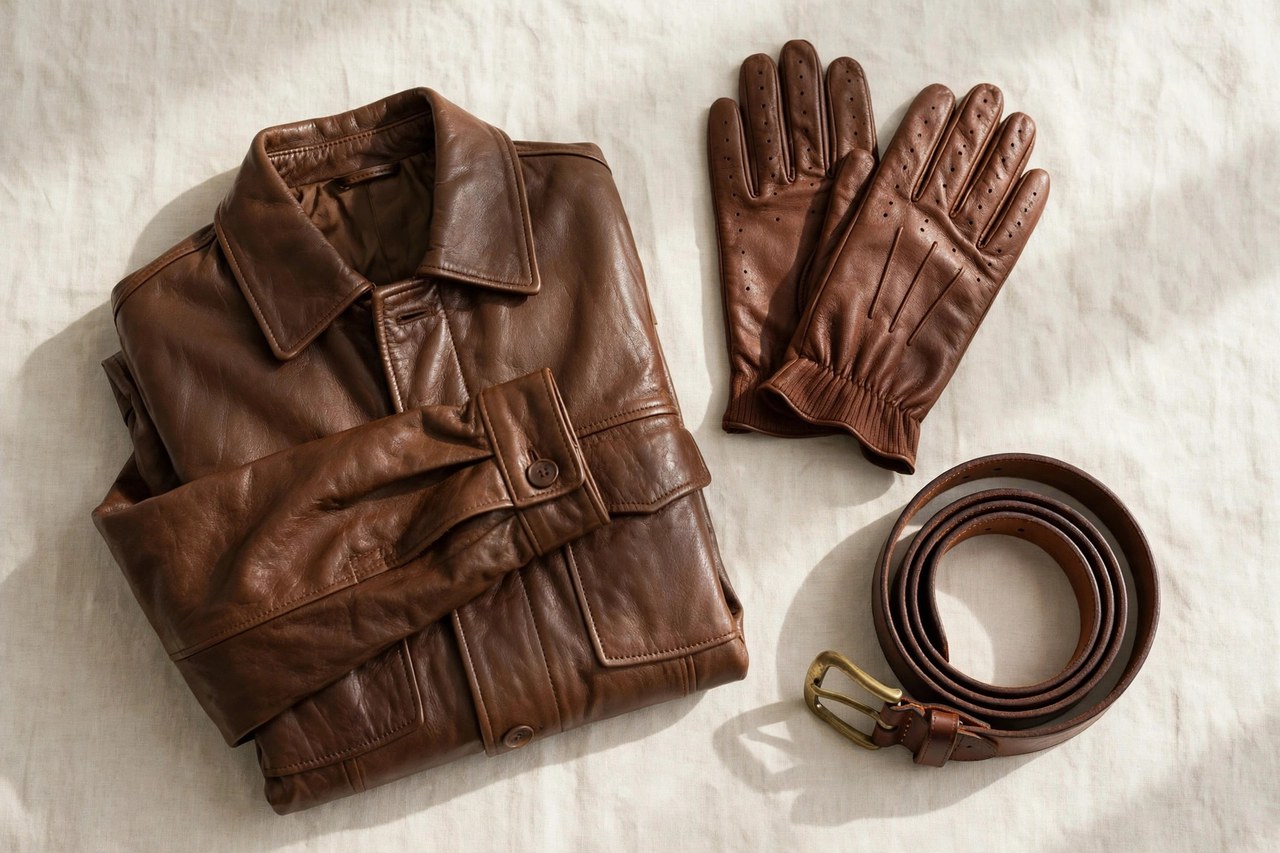
Leather clothing is the umbrella category of this letter - every garment cut from tanned hide, from the jackets and pants that get their own guides here to the belts, boots, gloves, hats and shoes listed beside them. The material's definition anchors the whole family: leather is a durable and flexible material created by tanning animal rawhide and skin, often cattle hide, produced at scales from cottage industry to heavy industry - and clothing is among its oldest uses, since the earliest garments likely included leather and fur draped, wrapped or tied around the body. This guide covers the styles worth knowing, the fit points that decide comfort, the fabrics and construction that separate a good buy from a regret, and the simple care that makes the garment last.
The Grain Vocabulary, Once for the Whole Letter
The grain vocabulary sorts the whole category, so learn it once. Full-grain leather keeps the hide's complete natural surface - tightest, strongest, most breathable, and the only grade that develops true patina. Top-grain is lightly sanded to remove marks, then finished: more uniform, slightly less durable, the workhorse of mid-priced garments. Split leather comes from the lower layers after the top is separated - suede is a split's flesh side, raised and soft - and corrected-grain and embossed leathers are splits or lower grades resurfaced and stamped to imitate better hide. Buckskin and sheepskin bring softness for gloves and jackets, patent leather brings the lacquered shine, and each finish asks its own care. In garments, judge the panel matching: a good maker cuts the visible panels from the hide's best, most even sections, keeps grain and color consistent across a jacket's front, and reserves looser flank leather for places the eye and the stress never go.
The grain vocabulary above is the short course. The Apparel Search Leather Guide gives the material its full treatment: grades ranked and explained, types of leather by hide, chrome and vegetable tanning, faux leather alternatives, leather care, and the tests that tell real leather from fake.
The durable buying order is job, specification, budget - in that sequence. Decide what the garment must do, translate that into fiber, weight, construction and size numbers, and only then shop price. Read labels as specifications, inspect the garment inside out where finishing is unposed, and prefer the maker who publishes measurements to the one who publishes adjectives. A garment that matches your measurements, climate and laundry will be worn; one that misses any of the three becomes expensive storage.
Snug Now, Personal Later
Leather clothing fits closer than cloth at purchase and then becomes personal: hide gives where the body presses - elbows, knees, waist, seat - and holds where it does not, so a new leather garment should be snug without restricting the reach, bend and sit you will actually do in it. It will not shrink to a smaller size, and it cannot be let out - there is no seam allowance worth the name - so buy the body you have. Jackets should close without the front panels straining at the zip, pants should sit at the waist without a belt doing structural work, and gloves, covered in their own guide, should start almost tight. Across the category, remember that leather is warm and windproof but only moderately breathable: it is a cool- and cold-weather wardrobe, and summer weight means thin lambskin or another material entirely.
Measure yourself once a year and keep the numbers - chest, waist, inseam, foot, head - because bodies drift gradually while size habits never do. Shop from measurements, try garments under real conditions (over layers, in your own shoes, late in the day for footwear), and be honest about alterations: lengths and small waist changes tailor beautifully; shoulders, rises and patterns are the garment you bought forever.
One Care System for the Leather Wardrobe
One care system serves the whole leather wardrobe, with garment-specific notes in each guide here. Keep leather dry in storage - a cool, ventilated place, never sealed in plastic, which traps moisture and invites mildew - and on padded or broad hangers for jackets, since hide takes the shape of whatever holds it. Condition two or three times a year with a product made for garment leather, wipe spills at once with a damp cloth, and let rain-wet leather dry slowly at room temperature. Professional leather cleaning is a specialist trade, distinct from ordinary dry cleaning; send good pieces to a cleaner who does leather daily. Stored and conditioned this way, leather clothing is measured in decades - the menswear market's jackets, pants, vests, gloves and belts from a generation ago are still in service, which no synthetic category can claim.
Five minutes when a garment comes off - shake it out, hang or fold it correctly, note the stain and the loose button - prevents most of the damage later blamed on quality. Keep a small kit where the clothes live: brush, lint roller, conditioner suited to your leathers, black, navy and grey thread. Clothing rarely dies at once; it fades by small neglects, and small attentions reverse the process at the same pace.
Weighing the real thing against the imitation? Leather vs faux leather compares durability, aging, breathability, care and price.
Common Questions
What are the main types of leather grain?
Full-grain, top-grain, split and corrected-grain, with finishes like suede, buckskin and patent built on them. Full-grain keeps the hide's natural surface intact and is the strongest and best-aging; top-grain is lightly sanded and finished for uniformity; splits are the lower layers of the hide - suede is a split, brushed soft; corrected-grain leather is resurfaced and embossed to imitate a better grade. A full guide to leather grain types is linked below.
Is leather clothing worth the higher price?
Costed per year, usually yes. Leather is durable and flexible, resists wind and abrasion, conforms to the wearer's body, and can be conditioned, repaired and - in footwear - resoled for decades, where coated synthetics crack at the flex points within a few seasons. The condition is care: a leather garment kept dry, conditioned and rested rewards the price, while one stored damp in plastic can be ruined in a single season at any price.
How should leather clothing be stored?
Cool, dry and breathing. Hang jackets and coats on broad or padded hangers so the shoulders keep their shape, store pants hung by the waistband or folded over a padded bar, and keep everything out of sealed plastic - leather needs air exchange, and trapped moisture grows mildew on the surface. A breathable garment bag and a little distance from direct heat and sunlight are the whole system; cedar nearby does no harm.
More in Men's Clothes Guide L
Clothing, Leather, and the Grain Types
Clothing is generally thought of as a fiber and textile material worn on the body; according to archaeologists and anthropologists, the earliest clothing likely consisted of fur, leather, leaves or grass that were draped, wrapped or tied around the body. Leather is a durable and flexible material created by tanning animal rawhide and skin, often cattle hide, and different processes produce different finishes for many applications — upholstery, footwear, automotive products, accessories and clothing. Learn about the different types of leather grain relevant to clothes, footwear and fashion accessories — full-grain, top-grain, split leather, corrected grain and other types such as buckskin, patent and suede — and noted that the menswear market often has leather jackets, pants, vests, chaps, gloves, belts and other types of apparel made of leather. That grain article and the full leather family links are below.
More to Explore on Apparel Search
- Fashion
- Clothing Retail Stores
- Fashion News
- Fashion Designers
- Popular Brands
- Men's Clothing Stores
- Men's Clothing Wholesalers
- Men's Fashion
- Men's Leather Clothing Wholesalers
- Men's Leather Boots
- Men's Leather Gloves
- Men's Leather Hats
- Men's Leather Pants
- Men's Leather Shoes
- Men's Clothes Guide H-P
- Men's Clothes Guide Q-Z
Looking for Men's Clothing Stores?
This guide explains men's leather clothing. To browse where to buy, visit our men's clothing store directory, where you can find retailers that carry them.