Men's Leather Gloves Guide
A glove is a garment covering the whole hand, with separate sheaths or openings for each finger and the thumb. Gloves are made of cloth, knitted or felted wool, leather, rubber, latex and even metal mail, but leather is the dress and driving standard: a natural product with special characteristics that make it comfortable to wear, giving it great strength and flexibility, with every piece carrying its own individual variations.
Shop Men's Leather Gloves Now
Shop Men's Leather Gloves on Amazon Shop Men's Leather Gloves on eBayThe Amazon and eBay links on this page are affiliate links. If you make a purchase through them, Apparel Search may earn a commission.
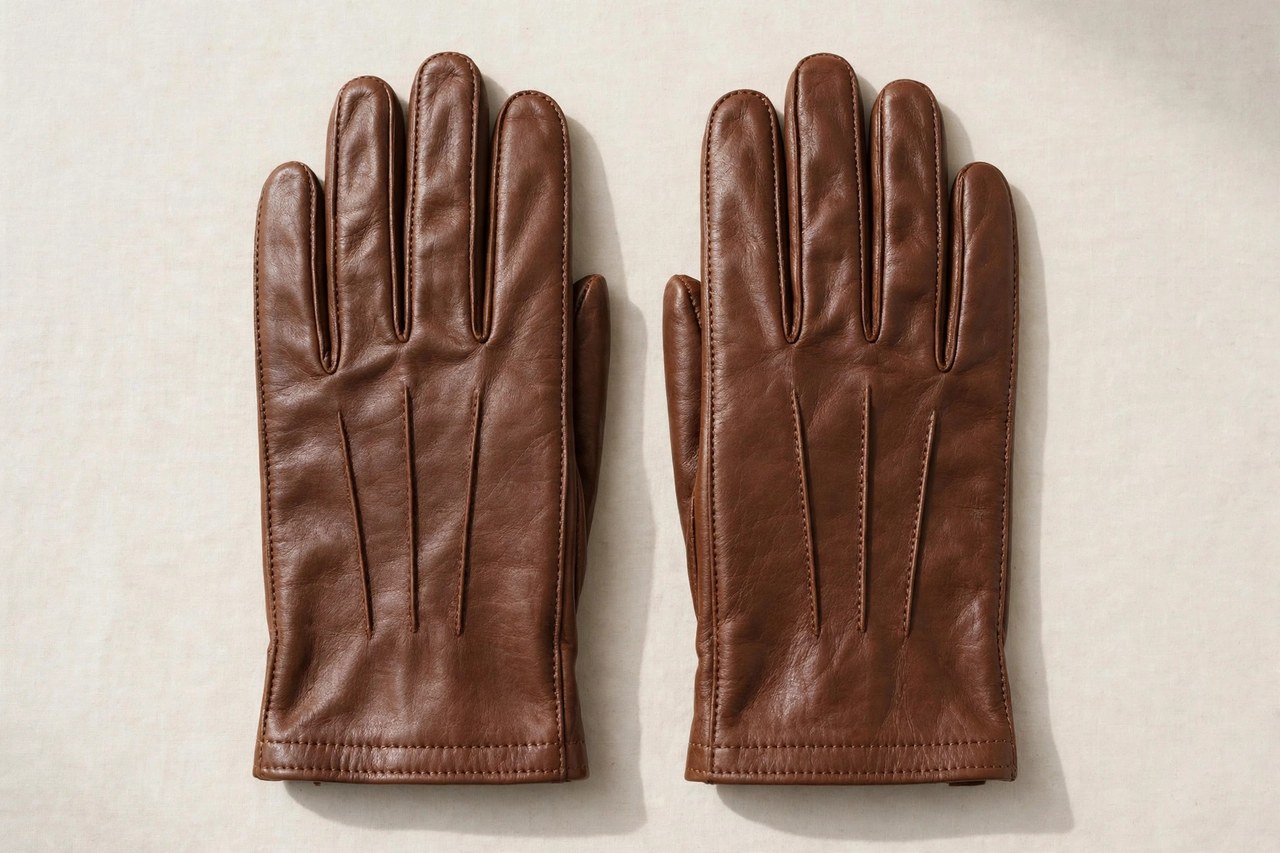
A glove is a garment covering the whole hand, with separate sheaths or openings for each finger and the thumb. Gloves are made of cloth, knitted or felted wool, leather, rubber, latex and even metal mail, but leather is the dress and driving standard: a natural product with special characteristics that make it comfortable to wear, giving it great strength and flexibility, with every piece carrying its own individual variations. This guide covers the styles worth knowing, the fit points that decide comfort, the fabrics and construction that separate a good buy from a regret, and the simple care that makes the garment last.
Tranks, Fourchettes and Quirks: Glove Anatomy
The dress glove's anatomy is the vocabulary that separates a fine glove from a loose one. A pair is built from one pair of tranks - the main hand sections - one pair of thumbs, four whole fourchettes and four half fourchettes (the narrow strips between the fingers), two gussets and six quirks, the small diamond pieces at the finger bases that let the hand close without tearing the seams; linings, where fitted, are themselves cut as tranks, thumbs and fourchettes. On the outside, styles sort by closure and detail - strap and roller, eyelets, studs, sockets and domes - and by leather: smooth capeskin and deerskin for dress wear, peccary for the finest texture, sheepskin and lined leathers for winter. Pique stitching, where the seams overlap on the outside, gives the smoothest interior; hand-sewn points on the back are decoration with a pedigree. Lining is the warmth decision: unlined for driving and mild days, wool or cashmere knit for winter dress, fleece and shearling where the cold is serious.
Accessories reward material honesty: solid metal over plated base metal, full-grain leather over bonded scraps, stitching over glue wherever fabric or hide is joined. Work every moving part through its full travel before paying - clasps, hinges, springs, adjusters - because small hardware fails before large materials do. And budget the care with the purchase: conditioner, the right cloth, a dry drawer; an accessory you can maintain will outlast a finer one you cannot.
Snug Now: The Breaking-In Fit
Leather gloves are sized by hand measurement, and they should begin almost uncomfortably snug. Measure around the knuckles of the dominant hand, excluding the thumb - that circumference in inches is the size - then expect this fit: as leather gloves are worn and used, especially if they fit snugly, they conform to the wearer's hand, the leather becoming more malleable, softer and more supple. That process has a name: breaking-in. The signs of a glove becoming yours are equally specific - creases and wrinkles appear on the palm side, generally corresponding to the hinge joints of the hand, and gentle wear shows first at the palm and fingertips where the hand works hardest. A glove that starts loose never gains this fit; it simply stays loose, cold and clumsy, so when between sizes in dress gloves, take the smaller.
Accessories have exact fits and exact measures: belt length to the middle hole of a belt you own, hat size as head circumference, a watch case within the wrist's width. Makers' accessory charts vary more than apparel charts, so measure and use the chart rather than ordering a habitual letter - ninety seconds with a tape prevents the most avoidable returns in menswear.
Keep Them Dry: The One Rule
Leather's one vulnerability is water and rough handling: because the leather is natural and delicate, take precaution not to damage it - constant handling of damp or wet surfaces will discolor lighter-colored gloves and stiffen the leather of any glove, and everyday tasks done unthinkingly stain and scuff them. Build the habits around that: remove gloves by pulling each finger loose rather than yanking from the cuff, smooth them flat after wear, and store them paired, flat and dry, away from heat. Condition sparingly with a glove-appropriate product when the leather feels dry, and keep light colors away from newspaper print, wet steering wheels and soaked railings. Rested and kept dry, a good pair of leather gloves breaks in within weeks and then serves for years in that personally molded state.
Store accessories deliberately: leather away from sun and plastic, metal dry, belts rolled or hung by the buckle rather than folded at the same crease forever. Condition leather a few times a year, polish metal with the cloth meant for its finish, and repair hardware early - a loose screw today is a lost cufflink or a failed clasp next month. Rotate daily pieces in pairs and both will outlast a single workhorse.
Common Questions
How should leather gloves fit when new?
Almost too tight. Sized by the circumference of your knuckles in inches, a dress glove should pull on snugly with no slack at the fingertips, because leather conforms to the wearer's hand in use - the breaking-in process, in which the leather becomes more malleable, softer and more supple, with creases forming at the hand's hinge joints. A glove that is comfortable-loose on day one will only get looser; a snug glove becomes a second skin.
What are fourchettes and quirks in a glove?
The small components that let a glove move like a hand. Fourchettes are the narrow strips of leather sewn between the fingers - a traditional dress glove uses four whole and four half fourchettes - and quirks are the small diamond-shaped pieces set at the bases of the fingers, six in the classic construction, which give the web between fingers its ease. Together with the tranks (the main hand pieces), thumbs and gussets, they are the classic anatomy, and their presence and stitching are a reliable sign of a traditionally made glove.
Can leather gloves get wet?
Occasionally, unavoidably - but make it rare, and never work in wet gloves. One warning stands: constant handling of damp or wet surfaces discolors lighter-colored gloves and stiffens any leather glove. If a pair does get wet, let it dry slowly at room temperature, flat and away from heat, then condition lightly once dry. Repeated soaking is what shortens a glove's life, not a single rainstorm.
More in Men's Clothes Guide L
The Anatomy and Breaking-In of a Leather Glove
A glove is a garment covering the whole hand, with separate sheaths or openings for each finger and the thumb, made of materials including cloth, knitted or felted wool, leather, rubber, latex, neoprene and metal mail; gloves of Kevlar protect the wearer from cuts. Leather is a natural product with special characteristics that make it comfortable to wear, and give it great strength and flexibility; because it is natural, with its own unique variations, every piece has its own individual characteristics. As leather gloves are worn and used — especially if they fit snugly — they conform to the wearer’s hand, the leather becoming more malleable, softer and more supple: the process known as breaking-in the glove. Over time wear spots may appear on parts of the palm and fingertips, and creases and wrinkles appear on the palm side, generally corresponding to the hinge joints of the wearer’s hands. The component parts of a leather dress glove are one pair of tranks, one pair of thumbs, four whole fourchettes, four half fourchettes, two gussets and six quirks, with roller pieces, straps, rollers, eyelets, studs, sockets and domes depending on the style — and linings themselves consist of tranks, thumbs and fourchettes. Finally, a warning: because the leather is natural as well as delicate, the wearer must take precaution not to damage it — the constant handling of damp or wet surfaces will discolor lighter-colored gloves and stiffen the leather of any glove. The glove definition, the glove factory and the leather grain article are linked below.
Looking for Men's Clothing Stores?
This guide explains men's leather gloves. To browse where to buy, visit our men's clothing store directory, where you can find retailers that carry them.