Men's Gloves Guide
A men's glove is a garment covering the whole hand, with a separate sheath or opening for each finger and the thumb, made for warmth, for fashion, or for a specific job. The family divides by its finger architecture: true gloves sheath every finger; fingerless gloves open at the fingers for dexterity; and mittens - which cover the hand without separate finger sheaths - are not gloves at all, and are warmer for it, because fingers in contact share their heat and present less surface to lose it through. Nearly every hand covering a man owns, from a dress leather glove to a disposable nitrile, is a variation on those three decisions.
Shop Men's Gloves Now
Shop Men's Gloves on Amazon Shop Men's Gloves on eBayThe Amazon and eBay links on this page are affiliate links. If you make a purchase through them, Apparel Search may earn a commission.
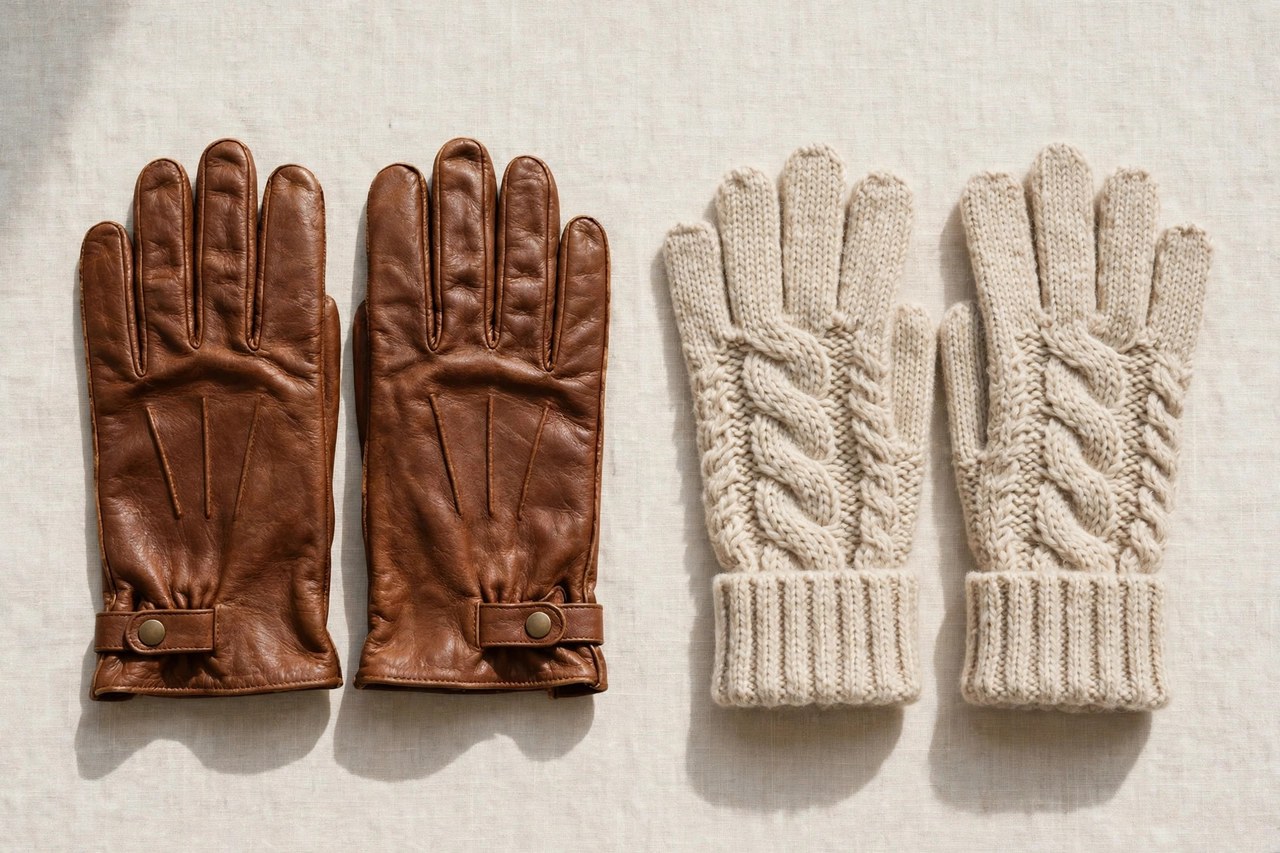
A men's glove is a garment covering the whole hand, with a separate sheath or opening for each finger and the thumb, made for warmth, for fashion, or for a specific job. The family divides by its finger architecture: true gloves sheath every finger; fingerless gloves open at the fingers for dexterity; and mittens - which cover the hand without separate finger sheaths - are not gloves at all, and are warmer for it, because fingers in contact share their heat and present less surface to lose it through. Nearly every hand covering a man owns, from a dress leather glove to a disposable nitrile, is a variation on those three decisions. This guide covers the styles worth knowing, the fit points that decide comfort, the fabrics and construction that separate a good buy from a regret, and the simple care that makes the garment last.
Styles and Construction
Shop gloves by job, because each job specifies its own construction. Dress gloves are fitted leather - the tanned hide of an animal, hair removed, though synthetics now imitate it well - cut close, often lined in silk, cashmere or fine wool. Winter gloves trade fit for insulation and shell weatherproofing. Work gloves armor the palm in leather or synthetics against friction and abrasion; the work and hunting guides linked below take those families further. Sport writes its own rules: baseball and batting gloves pad and grip, boxing gloves protect, and the golf glove - this letter's specialist - is a second-skin grip instrument sold singly. Disposable latex, nitrile and vinyl gloves are hygiene equipment, worn by health professionals as contamination protection and discarded, not maintained. The common thread is that a glove is judged at its contact points: palm material, finger seams and closure.
Accessories reward material honesty: solid metal over plated base metal, full-grain leather over bonded scraps, stitching over glue wherever fabric or hide is joined. Work every moving part through its full travel before paying - clasps, hinges, springs, adjusters - because small hardware fails before large materials do. And budget the care with the purchase: conditioner, the right cloth, a dry drawer; an accessory you can maintain will outlast a finer one you cannot.
Fit and Sizing
Glove sizing is hand measurement, not shoe-size habit: measure around the knuckles of the dominant hand, excluding the thumb, and match the inches to the maker's chart, because a glove's whole function depends on the sheath meeting the finger. Dress and golf gloves should fit with no slack at the fingertips and no strain across the knuckles when the fist closes; winter gloves want a small air margin, since trapped air is insulation and a crushed lining is not; work gloves want the palm seated so tools cannot twist inside them. Leather stretches a fraction with wear and molds to the hand - buy dress leather snug - while knitted gloves forgive a size in either direction and lined gloves forgive nothing.
Accessories have exact fits and exact measures: belt length to the middle hole of a belt you own, hat size as head circumference, a watch case within the wrist's width. Makers' accessory charts vary more than apparel charts, so measure and use the chart rather than ordering a habitual letter - ninety seconds with a tape prevents the most avoidable returns in menswear.
Wearing and Care
Care follows the material's nature. Leather gloves: wear them, rest them, keep them away from radiators and direct heat, clean with a damp cloth and the mildest soap, condition sparingly, and store flat or on a hand-shaped form so the fingers keep their set - never wrung, never machine-washed. Knitted gloves wash cool and dry flat. Work gloves are brushed off, dried slowly and retired when the palm thins, because a worn-through work glove is a false promise. Disposables are single-use by design. Rotate winter pairs so linings dry fully between wears, and the pair that is rested, not the pair that is newest, is the warm one.
Store accessories deliberately: leather away from sun and plastic, metal dry, belts rolled or hung by the buckle rather than folded at the same crease forever. Condition leather a few times a year, polish metal with the cloth meant for its finish, and repair hardware early - a loose screw today is a lost cufflink or a failed clasp next month. Rotate daily pieces in pairs and both will outlast a single workhorse.
Common Questions
What is the difference between gloves and mittens?
Architecture and warmth. Gloves give each finger and the thumb its own sheath, preserving dexterity; mittens cover the hand or fist without separate finger openings. Made of the same material, mittens are warmer, because the fingers maintain their warmth in contact with each other and the reduced surface area loses less heat. Choose gloves when the hands must work, mittens when the only job is staying warm.
What are gauntlets, and are they fingerless gloves?
The terms overlap untidily. Fingerless gloves with one large opening rather than individual finger openings are sometimes called gauntlets, though gauntlets are not necessarily fingerless - historically the gauntlet is the long, flared cuff extending up the forearm, on armored, riding, welding and dress gloves alike. When shopping, read the construction, not the name: finger coverage, cuff length and palm material are the facts that decide the glove.
How should leather gloves fit when new?
Snugly - closer than feels polite in the shop. Leather gives with wear and molds itself to the hand, so a dress glove that starts merely comfortable will finish loose, with slack fingertips that spoil both the look and the grip. New leather should feel like a firm handshake: no pain, no strained seams when the fist closes, fingertips reaching the ends of the sheaths, and no spare material anywhere.
More in Men's Clothes Guide G
Gloves, Mittens and Gauntlets
A glove is a garment covering the whole hand, designed for warmth, fashion or a specific purpose, with separate sheaths or openings for each finger and the thumb; if there is an opening for the fingers but no covering sheath for each finger fully, they are fingerless gloves; and gloves which cover the entire hand or fist without separate finger openings are mittens — warmer than other styles of the same material because fingers maintain their warmth better in contact with each other, reduced surface area reducing heat loss. Fingerless gloves with one large opening are sometimes called gauntlets, though gauntlets are not necessarily fingerless. The jobs range widely — protection against cold, heat, friction, abrasion, chemicals and disease; latex, nitrile and vinyl disposables worn by health care professionals; baseball, batting, golf and boxing gloves — and a leather glove is a fitted covering of tanned hide, hair removed, increasingly synthetic in recent years. Related guides run from work, leather and hunting gloves to the glove manufacturers and the blog’s glove articles.
More to Explore on Apparel Search
Looking for Men's Clothing Stores?
This guide explains men's gloves. To browse where to buy, visit our men's clothing store directory, where you can find retailers that carry them.