Men's Work Gloves Guide
Men's work gloves protect hands from the specific hazards of a job - abrasion, cuts, punctures, heat, cold, chemicals or vibration. There is no universal work glove: a leather driver's glove, a cut-resistant knit and a chemical gauntlet solve different problems, and the right pair is the one matched to your task's real risks while still letting you do the work.
Shop Men's Work Gloves Now
Shop Men's Work Gloves on Amazon Shop Men's Work Gloves on eBayThe Amazon and eBay links on this page are affiliate links. If you make a purchase through them, Apparel Search may earn a commission.
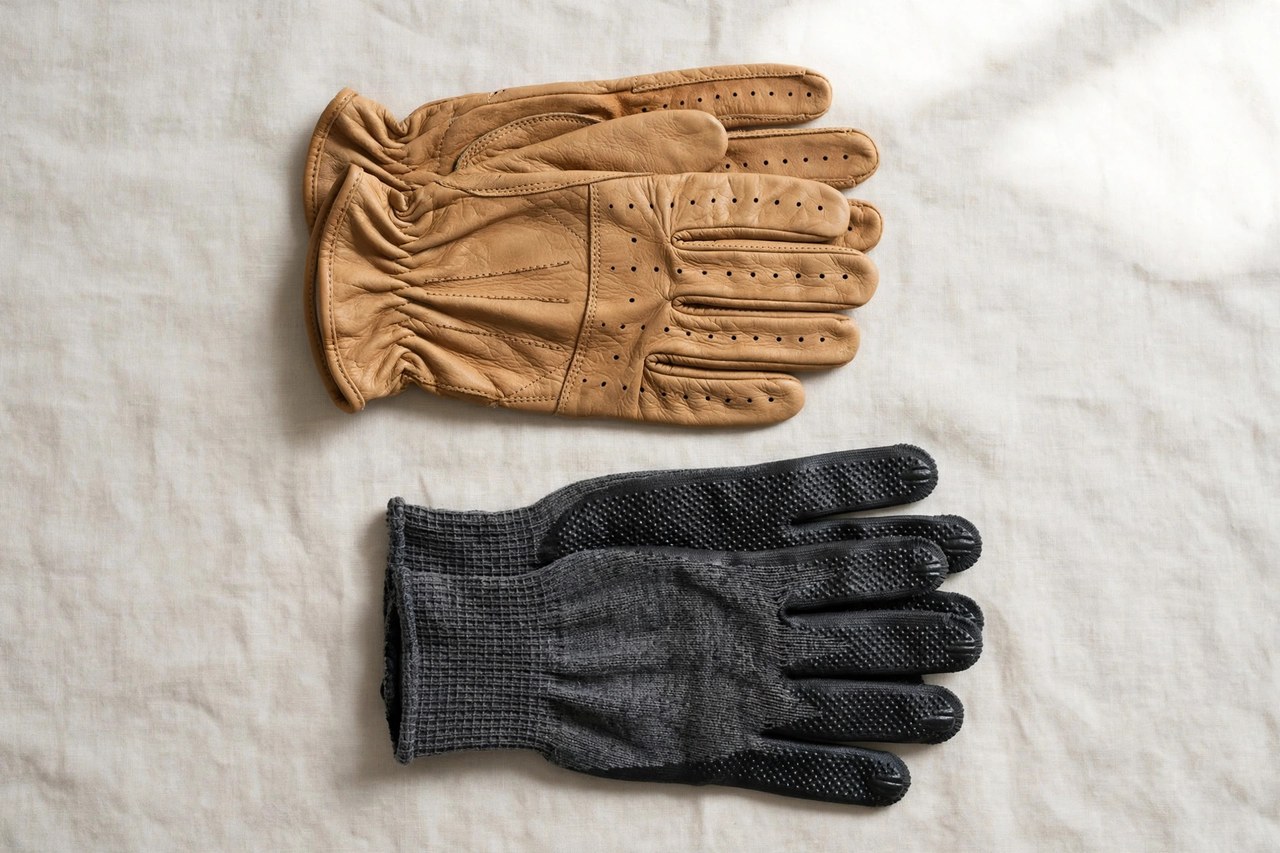
Men's work gloves protect hands from the specific hazards of a job - abrasion, cuts, punctures, heat, cold, chemicals or vibration. There is no universal work glove: a leather driver's glove, a cut-resistant knit and a chemical gauntlet solve different problems, and the right pair is the one matched to your task's real risks while still letting you do the work. This guide covers the styles worth knowing, the fit points that decide comfort, the fabrics and construction that separate a good buy from a regret, and the simple care that makes the garment last.
Styles and Construction
Leather remains the general-purpose standard: cowhide for durability and value, goatskin for the best dexterity-to-toughness balance, deerskin for softness, pigskin for breathability when wet. Grain leather resists abrasion; split leather costs less and suits lighter duty. Synthetic and knit gloves carry coated palms - nitrile for grip and oil resistance, latex for wet grip, polyurethane for fine dexterity - and cut-resistant liners woven with steel or high-performance fibers carry rated protection levels. Winter work adds insulation and waterproof inserts; impact gloves add padded backs for knuckle protection in extraction and heavy trades.
Accessories reward material honesty: solid metal over plated base metal, full-grain leather over bonded scraps, stitching over glue wherever fabric or hide is joined. Work every moving part through its full travel before paying - clasps, hinges, springs, adjusters - because small hardware fails before large materials do. And budget the care with the purchase: conditioner, the right cloth, a dry drawer; an accessory you can maintain will outlast a finer one you cannot.
Fit and Sizing
Gloves should fit like they mean it: snug across the palm with fingers reaching the ends - excess fingertip length catches and ruins fine work, while tight gloves fatigue hands and split seams. Measure hand circumference around the knuckles and use the maker's chart; leather eases slightly with wear, coated knits barely at all. For tool work, test your grip on a handle before committing - a glove that forces you to grip harder is a hazard of its own.
Accessories have exact fits and exact measures: belt length to the middle hole of a belt you own, hat size as head circumference, a watch case within the wrist's width. Makers' accessory charts vary more than apparel charts, so measure and use the chart rather than ordering a habitual letter - ninety seconds with a tape prevents the most avoidable returns in menswear.
Wearing and Care
Shake out and air work gloves after use; sweat is what rots leather and breeds smell in liners. Leather gloves can be washed gently with saddle soap and dried slowly away from heat, then conditioned to restore flexibility. Retire gloves when palms polish smooth, seams open or coatings crack - grip and cut protection are gone before the glove looks destroyed, and hands notice the difference at the worst moment.
Store accessories deliberately: leather away from sun and plastic, metal dry, belts rolled or hung by the buckle rather than folded at the same crease forever. Condition leather a few times a year, polish metal with the cloth meant for its finish, and repair hardware early - a loose screw today is a lost cufflink or a failed clasp next month. Rotate daily pieces in pairs and both will outlast a single workhorse.
Common Questions
Which leather is best for general work gloves?
Goatskin is the usual expert pick for all-round use: naturally lanolin-rich, it stays supple, resists abrasion well and gives good feel. Cowhide is tougher for heavy abrasion and cheaper, deerskin is the comfort choice, and pigskin breathes best in hot or damp work.
What do cut-resistance ratings mean?
They grade how much force a blade needs to cut through the material, on scales such as ANSI A1 to A9. Match the rating to the task - sheet metal and glass handling want high ratings, general handling needs only abrasion protection. No glove is cut-proof; ratings buy time, not immunity.
Should work gloves be tight or loose?
Snug, with fingertips reaching the glove ends. Loose gloves catch in machinery, bunch in the palm and force a harder grip; tight gloves split seams and tire the hand. Leather will ease about half a size with wear, coated synthetics will not.
More in Men's Clothes Guide W
Background
A glove is a garment covering the whole hand. Gloves have separate sheaths or openings for each finger and the thumb. Everything we do, including home improvement projects, typing, and making food for our family, depends on our hands and our fine motor skills. It is important to keep our hands, fingers and thumbs well protected. Work gloves are an important part of on the jobsite safety, gardening, and many other activities. Leather work gloves are capable of standing up to some of your most rigorous tasks. Leather helps protect workers' hands from exposures to cold, heat, abrasion and impact. Leather gloves provide protection from occupational hazards. For example, beekeepers use leather gloves to avoid being stung by bees. Construction workers might use leather gloves for added grip and for protecting their hands. Welders use gloves too for protection against electrical shocks, extreme heat, ultraviolet and infrared. Some of the work glove materials and fibers: pigskin, cowhide, goatskin, deerskin, canvas, chore jersey, latex-coated cotton, latex, nitrile, acrylic, Kevlar, poly-cotton and cotton.
More to Explore on Apparel Search
References & Further Reading
Looking for Men's Clothing Stores?
This guide explains men's work gloves. To browse where to buy, visit our men's clothing store directory, where you can find retailers that carry them.