Men's Leather Hats Guide
A leather hat is headwear built from the same durable, flexible tanned hide as the rest of this letter's family - a material created by tanning animal rawhide and skin, often cattle hide, at scales from cottage industry to heavy industry. In hats, leather earns its place outdoors: it sheds weather that would soak a cloth cap, blocks wind completely, and takes the knocks of travel, work and the trail while aging into the wearer's own patina rather than wearing out.
Shop Men's Leather Hats Now
Shop Men's Leather Hats on Amazon Shop Men's Leather Hats on eBayThe Amazon and eBay links on this page are affiliate links. If you make a purchase through them, Apparel Search may earn a commission.
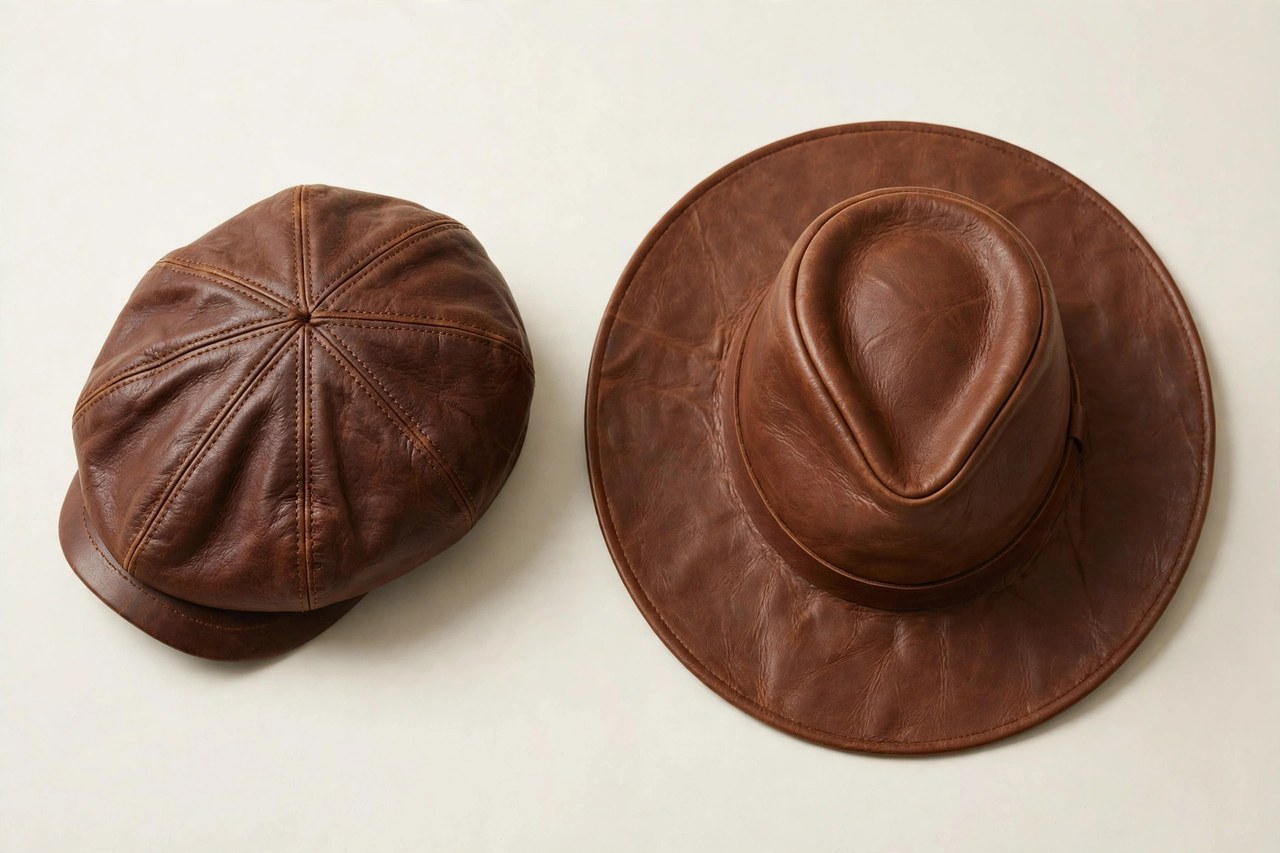
A leather hat is headwear built from the same durable, flexible tanned hide as the rest of this letter's family - a material created by tanning animal rawhide and skin, often cattle hide, at scales from cottage industry to heavy industry. In hats, leather earns its place outdoors: it sheds weather that would soak a cloth cap, blocks wind completely, and takes the knocks of travel, work and the trail while aging into the wearer's own patina rather than wearing out. This guide covers the styles worth knowing, the fit points that decide comfort, the fabrics and construction that separate a good buy from a regret, and the simple care that makes the garment last.
Brims, Crowns and Crushable Builds
Styles sort by brim and crown. Wide-brim leather hats - the outback and western families - shade the face and neck and shrug off rain into a pour-off at the brim's edge; crushable versions are built to be packed flat and spring back, which is why they dominate travel. Leather caps keep the familiar six-panel or flat-cap silhouettes in hide instead of cloth, warmer and far more windproof than their wool counterparts. Aviator and trooper styles add ear flaps, sometimes shearling-lined, for genuine winter work. Across styles, construction details decide comfort: a sweatband in leather or cloth that can be replaced, ventilation eyelets or mesh in the crown for summer weights, and a chin cord on wide brims meant for boats and ridgelines. Heavier cowhide holds a brim's shape for years; soft lambskin and suede finishes pack smaller and dress better but need gentler handling.
Accessories reward material honesty: solid metal over plated base metal, full-grain leather over bonded scraps, stitching over glue wherever fabric or hide is joined. Work every moving part through its full travel before paying - clasps, hinges, springs, adjusters - because small hardware fails before large materials do. And budget the care with the purchase: conditioner, the right cloth, a dry drawer; an accessory you can maintain will outlast a finer one you cannot.
Measure the Head, Start Snug
Hat fit is a measurement, not a guess, and leather forgives less than cloth. Measure the head circumference where the band will sit - above the ears, about an inch above the eyebrows - and buy that size; a leather hat should feel firm and even all around, never tight at the forehead alone, which signals an oval head in a round hat. Most leather stretches a fraction with wear and conforms at the band, so a new hat that is merely snug is right, while one that must be forced is not. If you are between sizes, foam sizing tape inside the sweatband takes up the difference invisibly. Wide brims should sit level, clear the tops of the ears, and stay put in a headwind once the cord is set - test all three in the shop if you can.
Accessories have exact fits and exact measures: belt length to the middle hole of a belt you own, hat size as head circumference, a watch case within the wrist's width. Makers' accessory charts vary more than apparel charts, so measure and use the chart rather than ordering a habitual letter - ninety seconds with a tape prevents the most avoidable returns in menswear.
Shape and Sweat: Hat-Specific Care
Care follows the leather rulebook with two hat-specific additions. First, shape: store the hat on a stand, a hook by its band, or a shelf crown-down on a clean surface - never by squeezing the brim into a closet gap, because leather remembers folds. Second, sweat: wipe the sweatband after hot days, since salt is leather's steady enemy, and let the hat air before storing it. Condition the outside lightly when it looks dry, brush dust from suede finishes with a dry brush, and dry a rain-soaked hat at room temperature stuffed loosely with paper to hold the crown. Kept this way, a leather hat is a decade-plus purchase that looks better in year five than in week one.
Store accessories deliberately: leather away from sun and plastic, metal dry, belts rolled or hung by the buckle rather than folded at the same crease forever. Condition leather a few times a year, polish metal with the cloth meant for its finish, and repair hardware early - a loose screw today is a lost cufflink or a failed clasp next month. Rotate daily pieces in pairs and both will outlast a single workhorse.
Common Questions
How should a leather hat fit?
Firm, even and level. Measure your head circumference where the band sits - above the ears, roughly an inch above the eyebrows - and buy that size. Leather conforms slightly with wear, so begin snug rather than loose, but never accept a hat that presses only at the forehead: that is a shape mismatch, not a size one. Between sizes, take the larger and add sizing tape inside the sweatband.
Are leather hats good in rain?
They are among the best hats for it. Leather sheds water that soaks cloth, and a wide brim channels rain off the edge, away from the face and collar. The conditions are care afterward: dry the hat slowly at room temperature, never with heat, hold the crown's shape with loose paper while it dries, and condition lightly once dry. Repeated soaking without drying and conditioning is what stiffens any leather, hats included.
What is the difference between a leather hat and a leather cap?
The brim. A hat carries a brim running around the crown - wide for sun and rain protection in outback and western styles - while a cap has only a front peak, in six-panel, flat-cap or newsboy silhouettes. In leather, caps trade the hat's weather coverage for a closer, dressier profile, and both share the same leather rules: measure the head, start snug, store holding the shape.
More in Men's Clothes Guide L
Leather Headwear
The category is plain: hats made of leather, for men looking for leather headwear, grounded in the same leather definition the whole L family shares: a durable and flexible material created by tanning animal rawhide and skin, often cattle hide, produced at manufacturing scales ranging from cottage industry to heavy industry, which people use to make various goods including clothing. The men’s hat guide in the H section and the leather clothing umbrella in this letter are linked below.
Looking for Men's Clothing Stores?
This guide explains men's leather hats. To browse where to buy, visit our men's clothing store directory, where you can find retailers that carry them.