Men's Leather Jackets Guide
A leather jacket is a jacket-length coat, usually worn over other apparel, made from the tanned hide of various animals. A jacket generally sits at mid-stomach length, has sleeves, fastens at the front or slightly to the side, and is lighter, tighter-fitting and less insulating than a coat. The leather version of that pattern became the defining outer garment of a century: designed for many purposes and associated with motorcyclists, military aviators, police and the music subcultures - greasers, punks, goths, metalheads and rivetheads among them - who wore it for protection, fashion, and occasionally presence.
Shop Men's Leather Jackets Now
Shop Men's Leather Jackets on Amazon Shop Men's Leather Jackets on eBayThe Amazon and eBay links on this page are affiliate links. If you make a purchase through them, Apparel Search may earn a commission.
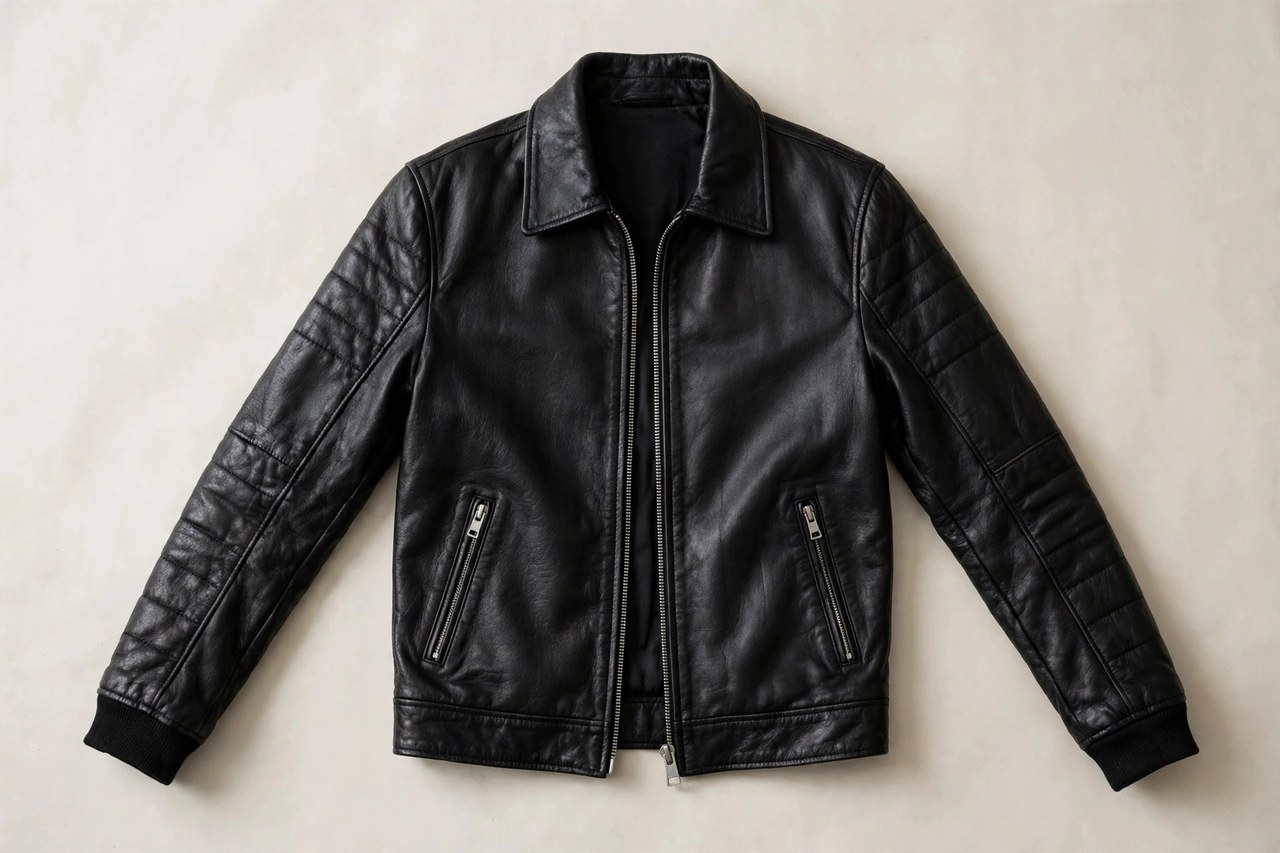
A leather jacket is a jacket-length coat, usually worn over other apparel, made from the tanned hide of various animals. A jacket generally sits at mid-stomach length, has sleeves, fastens at the front or slightly to the side, and is lighter, tighter-fitting and less insulating than a coat. The leather version of that pattern became the defining outer garment of a century: designed for many purposes and associated with motorcyclists, military aviators, police and the music subcultures - greasers, punks, goths, metalheads and rivetheads among them - who wore it for protection, fashion, and occasionally presence. This guide is built around the questions buyers actually ask: which style, which size, which fabric, and what will it look like after a year of real use - answered in order, with the trade-offs stated plainly.
Hides and the Classic Styles
The hides come first: antelope, buckskin, lambskin, sheepskin and cowhide are the most commonly used. Lambskin is the soft, fine-grained fashion hide - supple from the first wear, less abrasion-resistant. Cowhide is the protective standard, thick and slow to break in, the hide of motorcycle and work jackets. Goatskin sits between, pebbled and tough yet light; sheepskin, worn fleece-in as shearling, is the warm aviator build. Styles map to jobs: the asymmetric-zip motorcycle jacket with its wide lapels and belted waist, the straight-zip cafe racer with a snap collar, the flight jacket with knit cuffs and waistband, the blazer-cut leather jacket for dressed wear. Construction tells the truth about price - one-piece backs rather than patched panels, zippers of real metal with sliders that run one-handed, linings that are quilted, cotton or viscose according to the warmth promised, and seams stitched rather than glued. Faux leather in polyurethane or PVC serves the look at a lower price and for those avoiding animal hide - with a lifespan measured in a few seasons rather than decades.
Outerwear value hides below the surface: taped versus merely stitched seams, a zipper whose slider runs true under one hand, cuffs and hems that adjust to seal weather out, and a lining slippery enough to glide over the layers beneath. Shoulder build decides the hang over knitwear or a jacket, and pocket engineering decides whether hands and kit ride where your body expects them. Specify for the worst honest day, not the brochure day.
The Second-Skin Fit Test
A leather jacket should fit like a second skin that still lets you live in it: shoulders ending at your shoulders, chest closing without the zip straining or the back pulling when you reach forward as if to handlebars or a steering wheel, sleeves ending at the wrist bone with arms down. Raise both arms, sit, and drive an imaginary mile in the fitting room - riding styles are cut for that posture and feel different standing still. New cowhide will feel stiff and even creak; that is correct, and it breaks in to your shape over the first season, as leather's natural hide-forming behavior promises. Lambskin needs no such patience and gives no such protection. Size to the layers you will honestly wear beneath - a jacket fitted over a T-shirt alone is a jacket for one season of your climate.
Fit outerwear over the bulkiest layer it will honestly cover, and test the working range: arms forward as if driving, arms overhead, sitting with every closure fastened. The coat's shoulders should echo yours rather than extend past them, closures should meet without strain, and the hem must reach the coverage the garment exists to give. A coat fitted over a T-shirt alone belongs to a climate you may not live in.
Hangers, Conditioning and Specialists
Hang a leather jacket on a broad, padded hanger that carries its shoulders - wire hangers cut into hide - and store it in a cool, ventilated place under a breathable cover, never sealed plastic. Condition once or twice a year, more if the jacket lives in dry heated air, working the product sparingly into the panels and letting it absorb overnight. Keep it out of prolonged direct sun, which fades and dries one side at a time, and let a soaked jacket dry at room temperature before conditioning. Zippers get a smooth run and, if metal, an occasional touch of zipper lubricant; a stuck slider forced is a torn tape. Professional leather specialists, not ordinary dry cleaners, handle deep cleaning. Treated so, the real article outlasts fashion cycles entire - most modern leather jackets are produced in Pakistan, India, Canada, Mexico and the United States from hides left over from the meat industry, and the good ones among them are still being worn a generation later.
Hang outerwear on broad hangers that carry the shoulders, rest it between wears, and resist washing it often - spot-clean first, and wash by the maker's method with the detergent the fabric demands when a full clean is due. Refresh water-repellent finishes when rain stops beading, never store a coat dirty or compressed, and send leather and tailored pieces to professionals rather than experimenting at home.
Common Questions
Which leather is best for a jacket: lambskin or cowhide?
It depends on the jacket's job. Lambskin is soft, fine-grained and comfortable from the first wear - the fashion jacket's hide - but it scuffs and tears more easily. Cowhide is thicker, stiffer when new and far more abrasion-resistant, which is why motorcycle and work jackets use it; it breaks in over a season and then lasts for decades. Goatskin splits the difference, light and pebbled-tough. The classic jacket hides are antelope, buckskin, lambskin, sheepskin and cowhide - choose from that list by use, not by softness in the shop.
How should a leather jacket fit?
Close, but fully mobile: shoulders at your shoulders, the front zipping without strain, sleeves to the wrist bone, and enough room to reach forward, raise your arms and sit without the back or chest pulling hard. Cowhide will feel stiff at first and is meant to - it conforms to your shape as it breaks in. Buy for the layers you will actually wear underneath, because a leather jacket cannot be let out later.
How long does a real leather jacket last?
Decades, with ordinary care - broad hanger, breathable storage, conditioning once or twice a year, professional leather cleaning when truly needed. The failure mode is neglect: heat, sealed plastic storage and drying sun crack hide at any quality level. Faux leather alternatives in polyurethane or PVC cost less and suit those avoiding animal hides, but expect a few seasons before the coating flex-cracks, which is the honest trade the price reflects.
More in Men's Clothes Guide L
The Leather Jacket, Defined and Placed
A jacket is a mid-stomach-length garment for the upper body; it typically has sleeves, fastens in the front or slightly on the side, and is generally lighter, tighter-fitting and less insulating than a coat, which is outerwear. A leather jacket is a jacket-length coat usually worn on top of other apparel, made from the tanned hide of various animals; the material is typically dyed black or various shades of brown, though a wide range of colors is possible. Leather jackets can be designed for many purposes, and specific styles have been associated with subcultures such as greasers, motorcyclists, military aviators, police, and music subcultures — punks, goths, metalheads, rivetheads — who have worn the garment for protective or fashionable reasons, and occasionally to create a potentially intimidating appearance. Most modern leather jackets are produced in Pakistan, India, Canada, Mexico and the United States, using hides left over from the meat industry; fabrics simulating leather, such as polyurethane or PVC, are used as alternatives for those pursuing vegan lifestyles or for economic reasons. Antelope, buckskin, lambskin, sheepskin and cowhide are the hides most commonly used. The black leather motorcycle jackets and bomber jackets guides are linked below.
Looking for Men's Clothing Stores?
This guide explains men's leather jackets. To browse where to buy, visit our men's clothing store directory, where you can find retailers that carry them.