Men's Bomber Jackets Guide
A men's bomber jacket is the short, ribbed flight jacket that military aviation issued and civilian style adopted: a waist-length body, ribbed collar, cuffs and hem, a front zipper, and a silhouette that sits at the waist rather than covering the seat. Its ancestors kept open-cockpit and then jet-age aircrew warm without snagging in tight cockpits, and every modern version - nylon flight style, leather, suede, varsity hybrid - still trades on that compact, capable shape.
Shop Men's Bomber Jackets Now
Shop Men's Bomber Jackets on Amazon Shop Men's Bomber Jackets on eBayThe Amazon and eBay links on this page are affiliate links. If you make a purchase through them, Apparel Search may earn a commission.
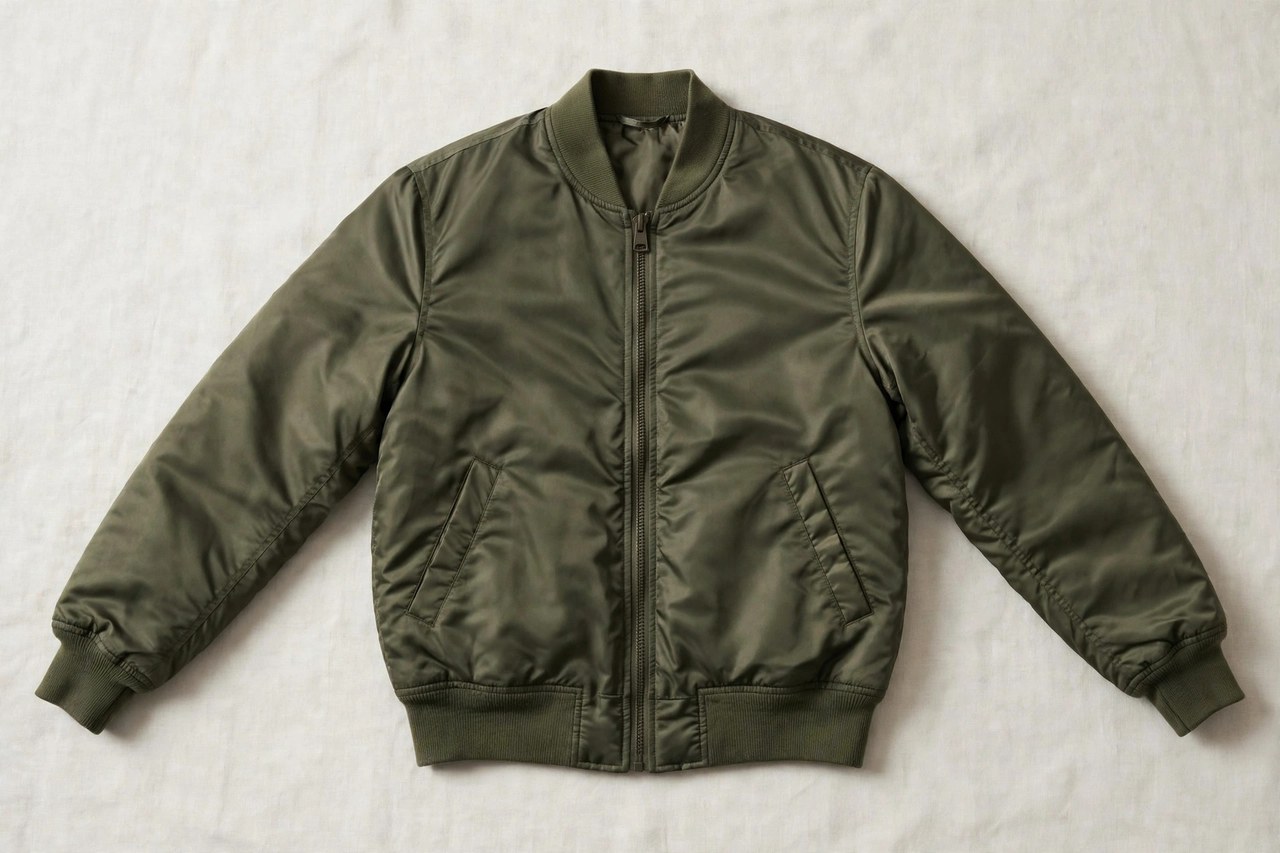
A men's bomber jacket is the short, ribbed flight jacket that military aviation issued and civilian style adopted: a waist-length body, ribbed collar, cuffs and hem, a front zipper, and a silhouette that sits at the waist rather than covering the seat. Its ancestors kept open-cockpit and then jet-age aircrew warm without snagging in tight cockpits, and every modern version - nylon flight style, leather, suede, varsity hybrid - still trades on that compact, capable shape. This guide explains what to look for, how the sizing actually works, which fabrics and constructions earn their price, and how to care for the garment so it keeps doing its job season after season.
Styles and Construction
The MA-1 pattern is the reference: nylon shell, ribbed knit trims, utility pocket on the sleeve, originally sage green with an orange lining for rescue visibility - the orange now appears as a fashion lining on faithful reproductions. Leather bombers follow the earlier A-2 pattern: a shirt-style collar, patch pockets, no ribbed hem at the back in its purest form. Modern fashion bombers stretch the idea into suede, satin, wool and even quilted builds, but the constants hold: short body, ribbed ends, zip front, easy shoulders.
Outerwear earns its price in the details you cannot see in a photograph: whether seams are taped or merely stitched, whether the zipper is a reputable make that runs without catching, whether cuffs and hems adjust to seal out weather, and whether the lining lets the garment slide over layers instead of gripping them. Shoulder construction decides how a coat hangs over a sweater or a suit jacket, and pocket placement decides whether your hands rest naturally or hover. Buy for the coldest, wettest day the garment will honestly meet, not the mildest.
Fit and Sizing
A bomber should end at the waistband and fit with room for its intended layer - a tee for the fashion version, a sweater for a winter-weight one - without the ribbed hem riding up when you raise your arms. Shoulder fit is easy by design (the military cut is generous), so judge by length and hem behavior instead. Ribbing should sit snug at wrist and waist without squeezing; baggy ribbing means a size too big or knit that has already given up.
Fit outerwear over the bulkiest layer it will honestly cover - a sweater for a casual jacket, a suit jacket for an overcoat - and test the full range: arms forward as if driving, arms raised, sitting with the garment closed. The shoulders of the coat should echo your own shoulders rather than extend past them, the closure should meet without strain across the chest, and the hem should reach the coverage the garment exists for. A coat that fits only over a T-shirt is a coat for a climate you may not live in.
Wearing and Care
Nylon bombers wash gently and hang dry; leather and suede versions go to the specialist care rules of their materials, with conditioning for leather on schedule. Ribbed knits are the mortality point - snags pull them, and stretched ribbing makes the whole jacket read tired - so zip the jacket before washing and store it hung, not crushed in a drawer. Keep moths away from wool-blend ribbing in summer storage.
Outerwear care begins with hanging it properly - broad hangers that support the shoulders - and resting it between wears so insulation and shape recover. Most pieces need washing far less often than owners think; spot-clean first, and when a full wash comes, use the maker's instructions and a technical or gentle detergent as the fabric demands. Refresh water-repellent finishes when rain stops beading, store the garment clean and uncompressed, and have leather and tailored pieces professionally cleaned rather than experimenting at home.
Common Questions
What is the difference between MA-1 and A-2 bomber jackets?
They are two generations of flight jacket. The A-2 (1930s-40s) is leather, with a shirt-style snap collar, patch pockets and a waistband only at the front. The MA-1 (1950s jet age) is nylon, with a ribbed knit collar, cuffs and full hem, a sleeve utility pocket and originally an orange rescue lining. Both are 'bombers' - the A-2 reads dressier, the MA-1 more utilitarian.
How should a bomber jacket fit?
Short and clean: the hem ends at the waistband, ribbed cuffs sit at the wrist, and there is room inside for the layer you actually intend - a tee in summer-weight versions, a sweater in winter ones. The military cut is generous in the shoulder, so do not size by shoulder alone; if the ribbed hem rides above the belt when you reach up, the body is too short or too small.
Why is the lining of some bomber jackets orange?
Rescue signaling. The MA-1's orange lining let a downed airman reverse the jacket to be spotted from the air. Civilian reproductions keep the orange as a mark of fidelity to the original specification - wearing it inside-out today is a fashion statement that borrows the gesture without the emergency.
More in Men's Clothes Guide B
Flight Jackets in the First World War
A flight jacket, bomber jacket or bombardier jacket is a jacket originally created for military pilots, which eventually became part of popular culture and apparel. In World War I, most airplanes did not have an enclosed cockpit, so pilots had to wear something that would keep them sufficiently warm; the U.S. Army officially established the Aviation Clothing Board in September 1917 and began distributing heavy-duty leather flight jackets with high wraparound collars, zipper closures with wind flaps, snug cuffs and waists, some fringed and lined with fur. The two most historical and well-known American flight jackets are the A-2 and the MA-1.
Looking for Men's Clothing Stores?
This guide explains men's bomber jackets. To browse where to buy, visit our men's clothing store directory, where you can find retailers that carry them.