Men's Leather Boots Guide
A boot is footwear that covers the foot and ankle, and sometimes part of the calf, the knee or even the hip. Leather boots are the category's original form: traditionally made of leather, with a heel clearly distinguishable from the rest of the sole, and worn both for their functionality - protection from water, cold, mud and hazards, ankle support, traction - and for reasons of style and fashion.
Shop Men's Leather Boots Now
Shop Men's Leather Boots on Amazon Shop Men's Leather Boots on eBayThe Amazon and eBay links on this page are affiliate links. If you make a purchase through them, Apparel Search may earn a commission.
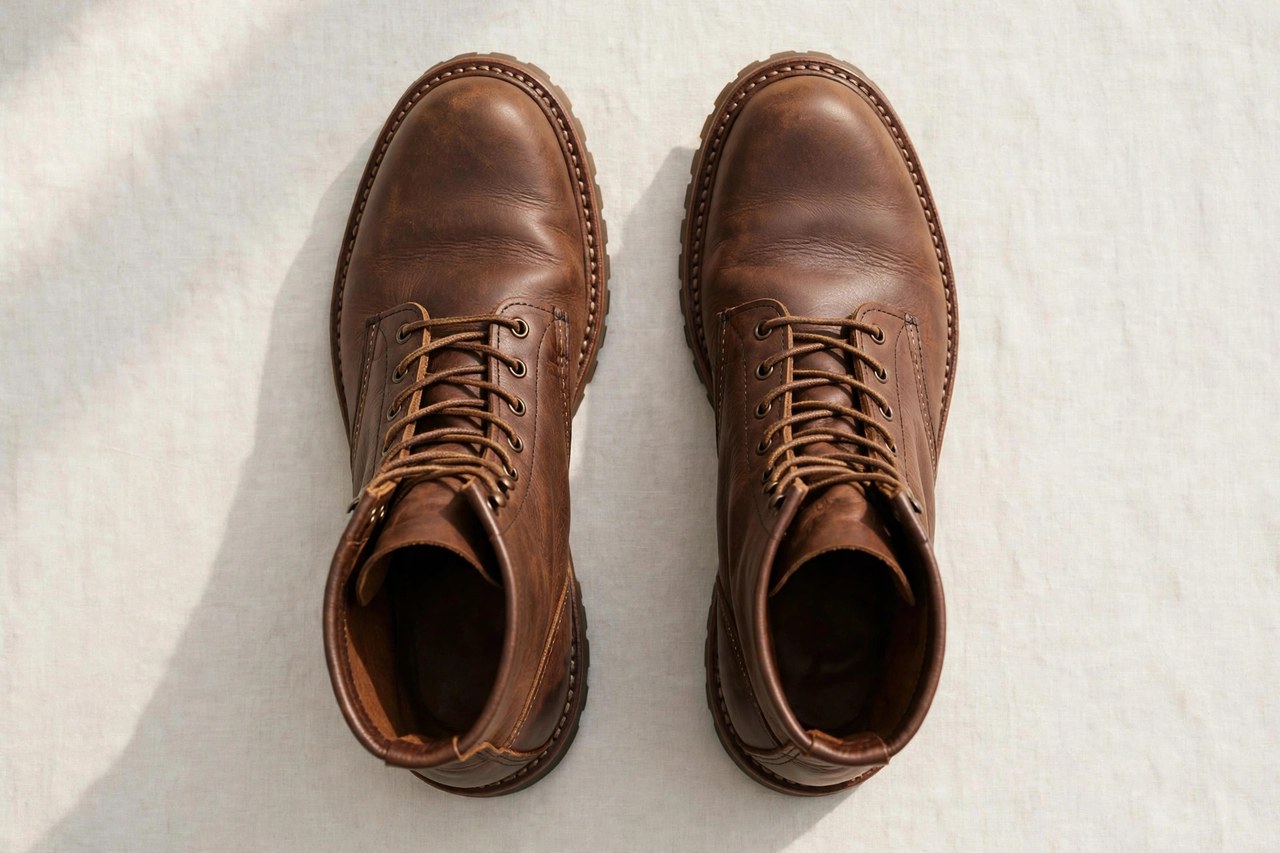
A boot is footwear that covers the foot and ankle, and sometimes part of the calf, the knee or even the hip. Leather boots are the category's original form: traditionally made of leather, with a heel clearly distinguishable from the rest of the sole, and worn both for their functionality - protection from water, cold, mud and hazards, ankle support, traction - and for reasons of style and fashion. This guide is built around the questions buyers actually ask: which style, which size, which fabric, and what will it look like after a year of real use - answered in order, with the trade-offs stated plainly.
Jobs First: Work, Hike, Dress, Western
Sort boots first by the job, because the constructions barely overlap. Service and work boots build on thick, often lugged soles, safety toes where the site demands them, and water-resistant or waterproof membranes for standing in weather. Hiking boots trade weight for ankle support and grip. Dress and Chelsea boots slim the profile - a leather or low-profile rubber sole, a shaped waist, a last that points the toe - so the boot disappears under a trouser crease. Western boots keep their own architecture of angled heel, tall shaft and stitched patterning. Across all four, the leather decides the lifespan: full-grain uppers that can be conditioned back from scuffs, rather than corrected or split leathers under plastic coatings that crack where the boot flexes. Sole attachment is the repairability line - a Goodyear-welted or stitchdown boot can be resoled for decades of upper life, while a cemented sole makes the boot disposable when the tread goes.
Judge footwear by attachment and compound: cemented soles are light and affordable, stitched or welted constructions cost more and can be repaired, and the outsole rubber decides grip against longevity - soft compounds bite, hard compounds endure. Linings decide comfort over hours, removable insoles decide whether your own supports can come along, and honest weight decides whether the pair disappears on the foot or taxes every mile of the day.
The Fit That Never Changes Length
Fit boots in the socks and at the hour you will work in them, with a thumb's width ahead of the longest toe, the heel seated without lift once the laces do their job, and no pinch across the widest part of the foot - leather stretches in width with wear, but never in length, so a short boot stays short forever. The instep should lace snugly without the eyelet rows pulling together or gaping wide, either of which announces a volume mismatch no insole fully cures. Walk a slope if the shop allows it: heel slip shows on the downhill, toe strike on the up. Ankle boots should clear the ankle bone without sawing at it, and tall shafts should admit two fingers at the top when new - they will relax, never tighten.
Fit footwear late in the day in the socks you will actually wear, with roughly a thumb's width beyond the longest toe, the heel held without lift, and the foot's widest point meeting the shoe's widest point. Sizes are unstandardized between makers - trust your measured length and width over the printed number, and require no break-in argument: a shoe that needs excuses in the shop delivers them on the road.
Trees, Rest and Resoling
Boots earn their price in care. Rest every pair at least a day between wears with trees or loosely packed paper inside, brush dirt from the welt line where grit works into the stitching, and condition the uppers when they begin to look dry - little and often beats a yearly drenching that darkens and saturates. Dry wet boots at room temperature, never against a radiator, which cooks the leather and cracks it on the next flex. Reproof water-resistant finishes when rain stops beading on the surface, resole welted boots before wear reaches the midsole, and store tall boots upright with shapers or rolled towels in the shafts so the leather never takes a folded set.
Rotation is the first care rule: a day of rest between wears lets linings dry and cushioning rebound, and it doubles a rotation's life compared with daily wear of one pair. Clean after use, dry at room temperature away from radiators, hold shape with trees or paper, and condition leather on a schedule rather than when it looks thirsty. Reproof weather finishes when water stops beading, and resole stitched footwear before the wear reaches the welt.
Our leather boot care guide covers the full winter routine in order — wiping off salt, conditioning, waterproofing, and drying boots slowly so the leather never cracks.
Common Questions
What is the difference between leather boots and leather shoes?
Coverage and intent. A boot covers the foot and ankle at minimum - and in some styles part of the calf, knee or hip - which gives it ankle support, weather protection and hazard coverage a shoe cannot offer; the boots, shoes and footwear guides are linked both ways. A shoe ends below the ankle, runs lighter and cooler, and dresses more easily. Most men keep both: shoes for the ordinary day, boots for weather, ground and work that punish them.
Are Goodyear-welted boots worth the extra cost?
If you will resole them, yes. In a Goodyear welt, the upper is stitched to a leather strip - the welt - and the sole is stitched to the welt, so a cobbler can remove a worn sole and sew on a new one without disturbing the upper. On full-grain leather that can mean several soles across decades, which turns a higher purchase price into the lowest cost per year in the boot category. A cemented boot is glued together and is effectively finished when its sole is.
How should leather boots fit when new?
Snug across the instep and heel, with room - about a thumb's width - ahead of the toes. Leather gives in width as it breaks in and conforms to your foot, but it does not gain length, and the heel should be held by the laced fit rather than slipping with every step. Slight initial stiffness in the ankle and across the vamp is normal; pinching at the toes or pain at the ankle bone is not, and neither breaks in.
More in Men's Clothes Guide L
What a Boot Is
A boot is a type of footwear and a specific type of shoe. Most boots mainly cover the foot and the ankle, while some also cover some part of the lower calf; some boots extend up the leg, sometimes as far as the knee or even the hip. Most boots have a heel that is clearly distinguishable from the rest of the sole, even if the two are made of one piece. Traditionally made of leather or rubber, modern boots are made from a variety of materials. Boots are worn both for their functionality — protecting the foot and leg from water, extreme cold, mud or hazards, as work boots may protect wearers from chemicals or use a steel toe, or providing additional ankle support for strenuous activities with added traction requirements, such as hiking — and for reasons of style and fashion. The whole leather family — belts, clothing, gloves, hats, jackets and pants — and the leather definition itself are linked below.
More to Explore on Apparel Search
- Men's Shoes
- Men's Shoes Guide
- Men's Boots
- Fashion
- Clothing Retail Stores
- Fashion News
- Fashion Designers
- Popular Brands
- Footwear News
- Shoe Definition
- Footwear Definition
- Footwear Definition List
- Men's Shoe Wholesalers
- Men's Shoe Stores
- Where to Buy Shoes
- Shopping For Shoes
- Leather Apparel Retailers
- Leather Belts
- Leather Gloves
- Leather Hats
- Leather Jackets
- Leather Pants
- Men's Footwear
- Fashion Designer Directory
- Men's Clothes Guide H-P
- Men's Clothes Guide Q-Z
Looking for Men's Clothing Stores?
This guide explains men's leather boots. To browse where to buy, visit our men's clothing store directory, where you can find retailers that carry them.