Men's Leather Belts Guide
A leather belt is at once a tool and a finish: it holds the trousers where they were cut to sit, and it is the one accessory that appears in nearly every outfit a man owns. Leather - a durable and flexible material created by tanning animal rawhide and skin, often cattle hide - is the belt material that outlasts the rest, because a solid strap of hide flexes millions of times at the same holes without cracking the way layered and bonded substitutes do.
Shop Men's Leather Belts Now
Shop Men's Leather Belts on Amazon Shop Men's Leather Belts on eBayThe Amazon and eBay links on this page are affiliate links. If you make a purchase through them, Apparel Search may earn a commission.
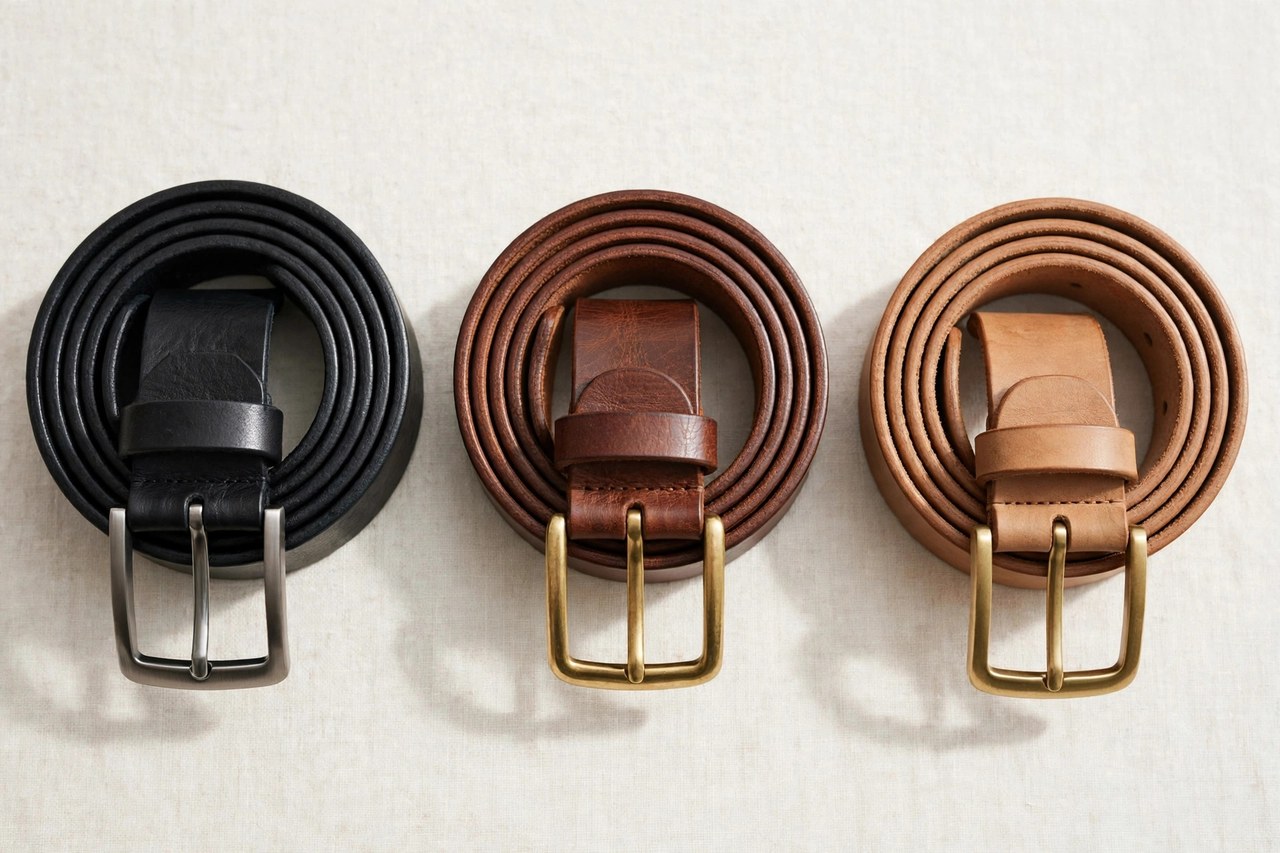
A leather belt is at once a tool and a finish: it holds the trousers where they were cut to sit, and it is the one accessory that appears in nearly every outfit a man owns. Leather - a durable and flexible material created by tanning animal rawhide and skin, often cattle hide - is the belt material that outlasts the rest, because a solid strap of hide flexes millions of times at the same holes without cracking the way layered and bonded substitutes do. This guide covers the styles worth knowing, the fit points that decide comfort, the fabrics and construction that separate a good buy from a regret, and the simple care that makes the garment last.
Grains, Stitching and Buckles
Construction decides lifespan, and the vocabulary is short. Full-grain leather is the top layer of the hide with its tight natural grain intact - the strongest, best-aging belt material, which darkens and polishes with wear instead of peeling. Top-grain is sanded and corrected: smoother, more uniform, a step down in character and durability. Anything described as genuine leather or bonded leather is a lower split or a reconstituted product and belongs to the budget rack, with a budget lifespan. Better straps are stitched at the edges rather than only glued, cut about an eighth of an inch thick, and finished with burnished or painted edges that do not fray. The buckle should be solid brass, stainless steel or another cast metal - plated pot metal chips and flakes - on a frame, plaque or heeled-bar style that matches the belt's width and formality: narrow and plain for dress trousers, wider and heavier for jeans.
Accessories reward material honesty: solid metal over plated base metal, full-grain leather over bonded scraps, stitching over glue wherever fabric or hide is joined. Work every moving part through its full travel before paying - clasps, hinges, springs, adjusters - because small hardware fails before large materials do. And budget the care with the purchase: conditioner, the right cloth, a dry drawer; an accessory you can maintain will outlast a finer one you cannot.
Size to the Middle Hole
Belt sizing has one honest rule: buy for the middle hole. Most makers size belts two inches over the trouser waist - a 34 trouser takes a 36 belt - but the reliable method is measuring a belt you already wear well, from the buckle's fold to the hole you use, and ordering that length. The finished fit shows a short tail past the buckle, reaching just beyond the first belt loop, with the tip neither stabbing at the second loop nor dangling. Width is the style fit: 1 to 1.25 inches reads dress, 1.5 inches is the jeans standard, and anything wider is a deliberate casual statement. Match the leather's color and finish to your shoes in formal wear - black with black, brown within the same family - and let casual outfits relax the rule.
Accessories have exact fits and exact measures: belt length to the middle hole of a belt you own, hat size as head circumference, a watch case within the wrist's width. Makers' accessory charts vary more than apparel charts, so measure and use the chart rather than ordering a habitual letter - ninety seconds with a tape prevents the most avoidable returns in menswear.
Rest, Condition, Rotate
Belts rest best hung by the buckle or rolled loosely in a drawer, never left threaded through a pair of trousers on a hook, which sets a permanent bend at the buckle. Condition the strap a few times a year - full-grain leather dries at the holes and the fold first - and wipe salt and rain dry promptly, letting a wet belt dry at room temperature away from heat. Rotate two belts through the week rather than wearing one daily: hide, like shoe leather, recovers its shape on rest days and cracks early without them. A scuffed buckle can be polished, a loose screw or rivet tightened; when the holes elongate into ovals, the strap has given its service.
Store accessories deliberately: leather away from sun and plastic, metal dry, belts rolled or hung by the buckle rather than folded at the same crease forever. Condition leather a few times a year, polish metal with the cloth meant for its finish, and repair hardware early - a loose screw today is a lost cufflink or a failed clasp next month. Rotate daily pieces in pairs and both will outlast a single workhorse.
Common Questions
What size leather belt should I buy?
The size that puts you on the middle hole. The usual shortcut is two inches over your trouser waist size, but trouser sizing drifts between brands, so measure a belt that already fits you - from the fold where leather meets buckle to the hole you use most - and order that measurement. The men's belts guide in the B section covers the wider category; the middle-hole rule applies there too.
Is full-grain leather worth it for a belt?
Yes - a belt is the cheapest place in a wardrobe to buy the best leather, because it uses so little of it. Full-grain is the hide's strongest, tightest layer; it flexes at the same hole for years, develops a rich patina, and can be re-conditioned indefinitely. Bonded and 'genuine leather' straps are ground or split layers that crack at the holes and peel at the edges, usually within a season or two of daily wear.
Should my belt match my shoes exactly?
For dress wear, match family and finish: black belt with black shoes, brown with brown, suede with suede, and a similar level of shine. Exact shade-for-shade matching matters less than undertone and formality. Casual outfits - jeans, boots, woven or tooled belts - relax the rule considerably, and contrast there reads intentional rather than careless.
More in Men's Clothes Guide L
Leather, Defined
Leather is a durable and flexible material created by tanning animal rawhide and skin, often cattle hide. It can be produced at manufacturing scales ranging from cottage industry to heavy industry. The belts category, the men’s belts guide in the B section of this directory, and the fashion designer directory are linked below.
Looking for Men's Clothing Stores?
This guide explains men's leather belts. To browse where to buy, visit our men's clothing store directory, where you can find retailers that carry them.