About Belts
Belt types, materials, sizes, buckles and leather care — a guide to the fashion belt.
There are many different types of belts — conveyor belts, timing belts, seat belts and weightlifting belts among them — but Apparel Search is a fashion website, and this guide is about the type of belt that holds up your pants. What began as a practical strap has become one of the hardest-working accessories in a wardrobe, worn with everything from tailored trousers to evening dresses.
Search Apparel Search
What Is a Belt?
Leather belts were first used mainly with men's pants; today women wear a wide variety of belts with many different outfits. Belts are no longer simply for formal wear — they are an accessory that makes a fashion statement in today's market.
Belt Materials
Belts come in a wide range of materials. Plastic, jute, fabric, wood, reptile skins, suede and straw are a few examples of the materials being used to make belts in today's market. Although leather belts are still considered the most common, there is truly a huge variety of materials to consider. Fancier belts designed using beads, sequins or other jewels can also be worn with women's evening wear.
Belt Sizes and Fit
Suede and leather belts are available in standard sizes, with the holes punched according to waist size, grouped as small, medium and large. Men's belts commonly run from a minimum of 30 inches to a maximum of 44 inches. Women's belts come as small as 22 inches in length and go up to 32 inches, and some women's belts have the option of tie strings rather than punched holes — this makes the belt look fancier as well as being one size fits all.
Most belts are adjustable, but some styles are made for a particular sized waist, such as cinches, corsets and contours: these define the shape of the wearer, so they are available in particular sizes to suit the customer's body. Belts that come along with a garment, such as a dress belt, are the exact size for that apparel and usually do not go well with other garments. Sashes are another form of belt, made of thin materials such as lace or cloth; they look similar to a wide ribbon and suit almost every kind of dress.
Not every belt is worn around the waist. A bandolier is worn over the torso and shoulder, and suspenders and braces use loops to hold up trousers. Many informal belts these days also provide a place for a cell phone and other small items, and there are styles to go with practically every kind of attire.
About Belt Buckles
The buckle is an integral part of the belt, and buckles come in a wide variety of sizes, in materials such as metal, wood and plastic. Some fasten with a clasp method made of Velcro or buttons rather than a traditional frame.
Buckles on fancier belts for evening wear are studded with stones or embroidered; the rhinestone buckles are the most popular of these, and the most expensive. Newer kinds of buckles include digital, scrolling and light-up belt buckles, which are especially good for a night of dancing. Buckles on cowboy belts, cowgirl belts, Texas belt buckles, war belts and military belts are a few of the other distinct buckle families in the market.
Some consumers prefer customized belt buckles with an engraving or other message on them. Silver buckles can be custom made to order, as can gold belts and designer belts set with turquoise buckles. Large buckles go well with belts made of animal and reptile skins such as kangaroo hide, alligator skin, snakeskin and crocodile skin. On some belts the buckle can be changed, and owners of that type often keep a few buckles so they can change them whenever they fancy.
Custom-Made Belts
Custom belts are made on exclusive order from the customer. Although there are tons of belt options in the market, some individuals still prefer to own something unique and fancy. Fashion designers come out with belts made of different materials that make a statement of uniqueness, and some release single pieces; even so, there are buyers who prefer a belt custom designed to guarantee it is one of a kind.
A custom-made belt is manufactured to the customer's imagination and budget. Semi-precious stones such as turquoise and rhinestones can be studded into the belt, and manufacturers are able to produce gold- and silver-studded belts on a customer's order. Many customers prefer a plain or simple belt with an elaborately designed buckle — buckles made of diamond, gold or silver lend a classy touch even to the simplest of belts. Although top designers rarely take custom orders, a few dealers and manufacturers provide the service exclusively to select clientele, so shopping around can help find the best arrangement. A custom belt is also the answer for anyone whose waist size is not available in the market, and custom-made belts are available in all possible shades to go with evening wear.
Why Leather Belts Stay Popular
Belts made of leather are nearly always in vogue. Even with belts being made of newer fabrics and materials such as plastic, jute and reptile skins, the classic leather belt maintains its popularity. Leather belts can be expensive; however, they can be used without any problem for a number of years as long as they are kept in condition, and they are classy to look at with formal or casual clothes.
The catch is that leather needs care, because it is more prone to deterioration than most other materials used to make belts. Since leather is animal skin, it consists of fibers that are liable to break if not lubricated regularly; if the fibers become dry they tend to break or crack, visibly. Ultraviolet rays in sunlight, ozone and other pollutants in the atmosphere can also cause leather to deteriorate faster through adverse chemical reactions, and treatment with harsh chemical compounds or high temperatures can damage leather faster as well.
Taking Care of a Leather Belt
There are some excellent leather dressings available that keep leather belts looking new and healthy. These lubricants are usually petroleum based and take good care of a belt for about five to six months, controlling oxidation and abrasion; most of these dressings are chemical-free and not harsh on the leather. Leather belts should be lightly coated with leather dressing at least twice a year to maintain their durability and appearance — and it is good practice to apply a layer of dressing even to a brand-new leather belt.
Two handling rules matter. First, dry leather must not be bent or stretched before treatment, because that might cause the fibers to crack or break; a lubricant solves this by not letting the fibers chafe against one another. Dust particles and external abrasion aggravate the problem, so treat a belt as soon as the leather looks very dry or flaky. Second, use and store leather away from high temperatures and direct heat, and do not leave a belt stored without proper treatment — leather that sits untreated is still prone to oxidation, which results in the surface cracking or breaking from dryness.
Western Belts
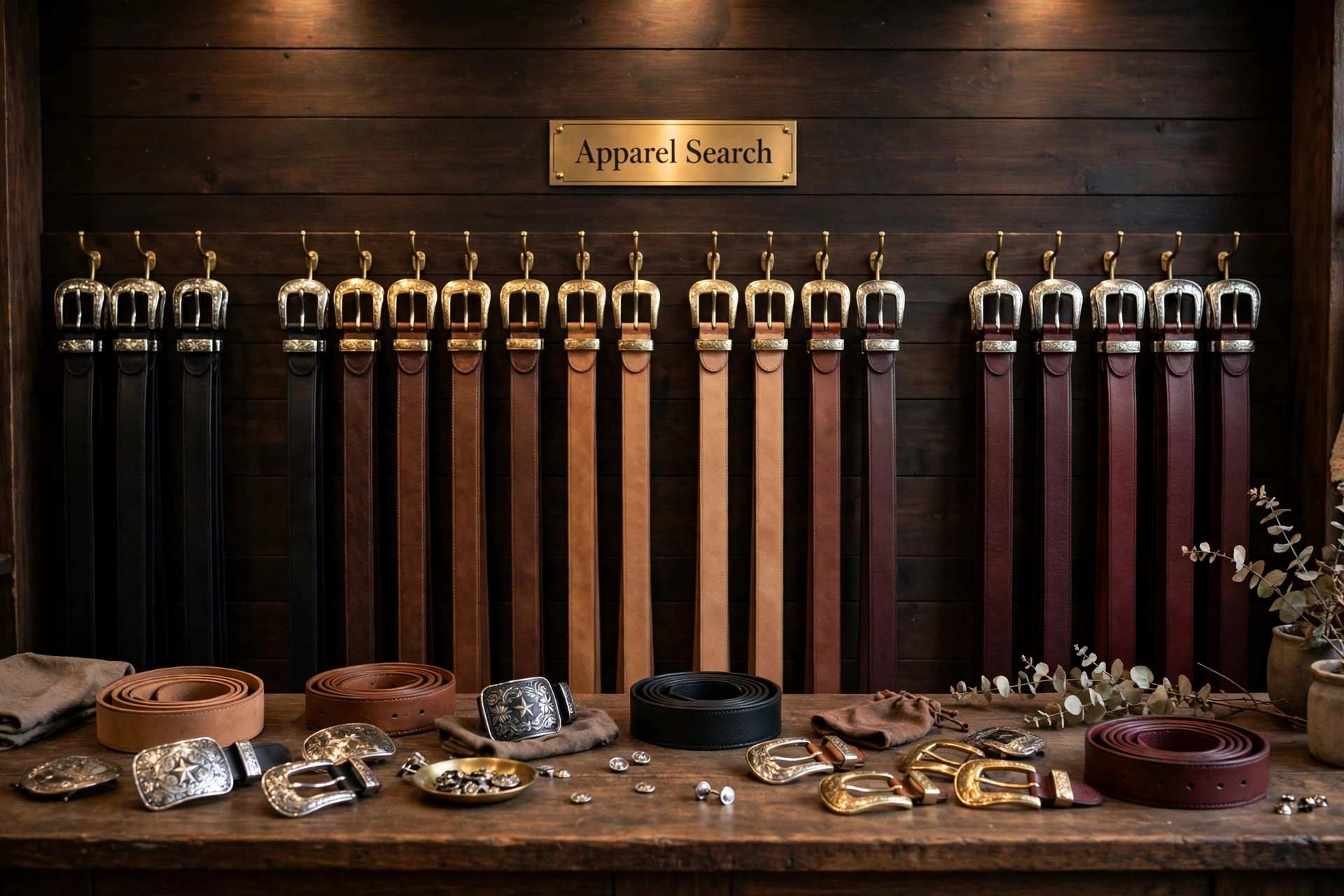
No western outfit would be complete without a western belt with an authentic-looking belt buckle — it gives the feeling of the Old West as seen in the movies, and western design belts go back as far as the beginning of the last century. Western belts are made in western American influenced designs and are usually made of the finest leather. Handmade belts are more popular, and of course more expensive, than factory-created ones. Although the most popular colors for western belts are tan or brown, they are now available in other, bolder colors suitable for both men and women. More fancy ones are studded with rhinestones, and belts made with rhinestones are especially popular among cowgirls. Learn more about the complete look in the guide to western wear.
Western belt buckles come in unique designs; many have been influenced by the Old West, and although certain characteristics of a cowboy belt or a western buckle can only change so much, the variety makes a big impression. Although leather is still the most popular material for western belts, manufacturers have ventured into snake, crocodile and alligator skins. Belts with embossed, printed or stamped designs are quite popular with cowboys and cowgirls, and western concho belts and belts with basket weave designs are popular kinds as well. These belt designs are a staple for active cowboys and cowgirls, and they also become trendy at times for people who do not normally live the cowboy lifestyle.
What Is a Money Belt?
Money belts are mostly used while traveling to keep money safe. A money belt is basically a security wallet worn close to the body, so it is not susceptible to pickpockets the way luggage or a handbag is; travel documents and other valuables are safer in one for the same reason. Money belts can be secured under a shirt or blouse and are not easily detectable, which makes them a sound choice when traveling long distances.
Money belts come in perfect waist sizes and are mostly waterproof. The material also soaks up sweat and does not allow it to seep through to the money within, keeping the money safe. Money belts are made with a variety of materials such as cotton, poly-cotton, silk, nylon and other soft materials that are comfortable to wear and at the same time strong and durable.
Photos


Common Questions
What materials are belts made from?
Leather is the most common belt material, but belts are also made from plastic, jute, fabric, wood, suede, straw and reptile skins. Fancy evening belts may add beads, sequins or other jewels.
How do belt sizes run?
Men's suede and leather belts commonly run from 30 to 44 inches, grouped as small, medium and large. Women's belts run from about 22 to 32 inches, and some women's styles fasten with tie strings so that one size fits all.
How often should a leather belt be treated?
Lightly coat a leather belt with leather dressing at least twice a year — a good dressing protects for about five to six months. Dress a new belt as well, and never bend or stretch dry leather before treating it, because the dry fibers can crack.