Women's Belts Guide
Widths, honest sizing and leather versus woven — the umbrella guide to choosing belts that actually fit and finish an outfit.
Shop Women's Belts Now
Shop Women's Belts on Amazon Shop Women's Belts on eBayThe Amazon and eBay links on this page are affiliate links. If you make a purchase through them, Apparel Search may earn a commission.
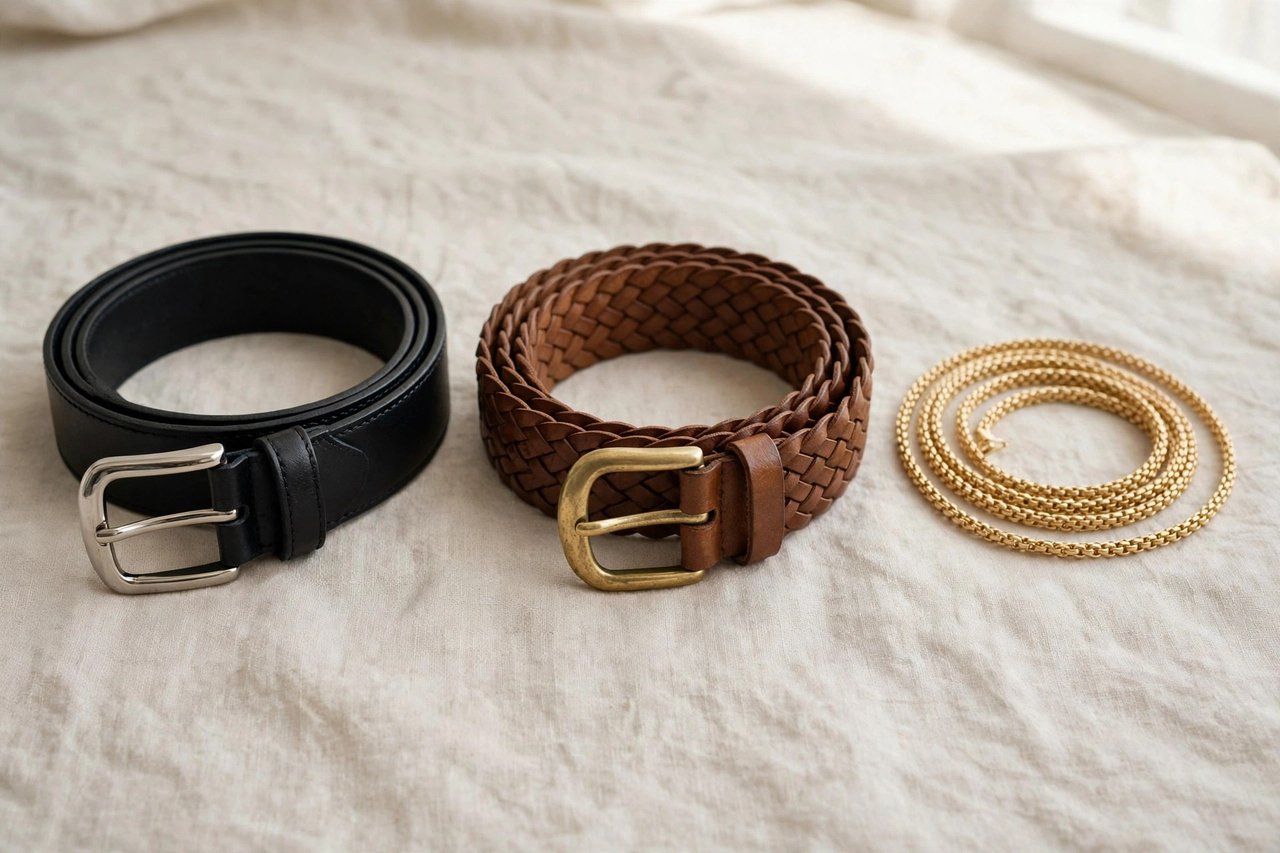
A belt does three jobs at once: it holds clothing in place, it defines the waist, and it finishes an outfit the way punctuation finishes a sentence. Few accessories change a silhouette so quickly — the same loose dress becomes shapely with a wide belt at the waist and casual with a slim one slung at the hip, while plain trousers and a tee look deliberately styled the moment a good leather belt appears. Yet belts are also the accessory women most often buy in the wrong size, because belt sizing follows rules that differ from clothing sizing. This umbrella guide covers widths, honest measuring, the main materials and styles, and the handful of styling rules that make belts look intentional rather than added as an afterthought.
Think of a small belt wardrobe the way you think of shoes: a couple of hardworking neutrals in quality materials, one or two pieces with personality, and specialty styles for dresses and coats. With that core covered, almost any outfit in your closet can be belted convincingly. The sections below will help you build that core without waste, and the separate buckle guide linked at the end of this page goes deeper on the hardware itself.
Widths and the Jobs They Do
Width is the first decision because it determines where and how a belt can be worn. Skinny belts under three quarters of an inch are detail pieces: they thread through dress loops, cinch cardigans and add a line of color or metal over dresses without restructuring the silhouette. Classic mid-width belts around one to one and a half inches are the workhorses, sized for trouser and jeans loops and balanced on most frames. Wide belts from two inches upward are shape-makers worn over dresses, tunics, blazers and coats, usually at the natural waist where they create an hourglass line even on straight figures.
Proportion should guide your pick. A very wide belt on a short waist can crowd the distance between bust and hip, so petite wearers often do better with a medium width worn slightly lower or a wide belt in a color close to the garment beneath it. Taller and longer-waisted wearers can carry dramatic widths easily. Also match width to loops before anything else: a belt must pass through the loops of the trousers or jeans you plan to wear it with, and forcing a wide belt through narrow loops will damage both. When a dress has no loops at all, the belt is free to be chosen purely for effect.
Leather, Woven and Other Belt Types
Smooth leather belts are the foundation: black and a warm brown in a classic width will handle most wardrobes. Full-grain leather ages best, developing character instead of cracking, while bonded and faux leathers cost less and ask for gentler treatment. Woven and braided leather belts add texture and a practical bonus — the prong can fasten anywhere along the weave, giving near-infinite adjustment that is kind on days when waistlines fluctuate. Suede belts soften tailored outfits and pair beautifully with suede shoes or boots. Fabric, canvas and webbing belts with ring buckles bring a casual, sporty note to shorts and summer trousers.
Beyond the basics sit the specialists. Chain belts drape at the hip as jewelry more than structure. Stretch and elastic belts move with the body and are favorites over dresses and during pregnancy. Reversible belts put two colors on one strap and are travel gold. Corset and wide waist belts make a deliberate statement over plain dresses and coats. For each type, judge the strap by its edges and flexibility: a good strap bends smoothly without cracking on the surface, and finished or stitched edges outlast raw, painted ones that peel.
Belt Sizing: Measure Your Waist, Not Your Jeans
Here is the sizing truth that prevents most returns: your belt size is not your jeans size. Belt sizes are given as the measurement in inches from the buckle to the middle hole, and that measurement should match the place on your body where the belt will actually sit. For a belt worn at the natural waist over dresses, measure snugly around your waist. For a belt worn through jeans loops at the mid or low hip, measure around your body exactly where the waistband sits, over the jeans themselves if possible. A common shortcut is to add about two inches to your trouser size, but measuring takes a minute and removes all the guesswork.
A well-sized belt fastens on its middle hole, leaving room to loosen after a meal or tighten on a thinner day and keeping the strap end a tidy length. If you consistently use the last hole, the belt is too small; the first hole means it is too large or has stretched. Between sizes, size up — a tailor or cobbler can punch an extra hole cleanly, while nothing fixes a belt that is simply short. For waist belts worn over thick coats or sweaters, measure over the garment you will actually wear beneath. Keep a note of your waist and hip belt measurements in your phone; it makes every future belt purchase, including vintage finds, a confident one.
Styling Rules That Always Work
A few durable rules cover most situations. Define a waist somewhere: if an outfit is loose on top and bottom, a belt at the natural waist restores shape. Match leather tones loosely with shoes and bag for formal outfits, but treat exact matching as optional in casual wear — mixed browns and black with brown both appear in modern styling. Use contrast deliberately: a belt in a contrasting color splits an outfit into clear sections and can shorten a long torso, while a belt matched to the garment beneath lengthens and slims. Mind the buckle: polished metal suits dressier looks, matte and antique finishes suit casual ones.
Belts also solve specific wardrobe problems. A wide belt over a cardigan or blazer turns layers into a silhouette. A slim belt over a shirt dress keeps the waist from vanishing. A woven belt adds the finishing texture that plain chinos and a tee need to look like an outfit rather than separates. With high-waisted trousers, a tucked top plus a belt with a handsome buckle is nearly a uniform for looking polished. The one caution is clutter: if the outfit already has a busy neckline, statement jewelry and patterned shoes, a quiet belt or none at all is the tasteful choice.
Care, Storage and Building the Core Collection
Leather belts last for decades with minimal care. Hang them by the buckle or roll them loosely; never leave a belt threaded through trouser loops in the closet, which stresses both the strap and the loops. Wipe smooth leather with a dry cloth, condition it once or twice a year if it feels dry, and keep suede belts brushed and away from rain. Store woven belts rolled rather than folded sharply so the braid keeps its pattern. If a strap end frays or a hole elongates, a cobbler can trim, re-finish and re-punch it for a small fee, extending the life of a favorite piece.
If you are building from zero, buy in this order: a classic black leather belt, a brown leather belt in your most-worn shoe tone, a woven belt for casual and summer wear, and one wide waist belt for dresses and coats. Add a metallic or chain belt later for evenings. That sequence covers work, weekends and occasions without duplication, and each addition after the core can be chosen for pure pleasure — a color you love, a buckle with character, a vintage find. A belt collection built this way stays small, works hard and never leaves you staring at a dress wondering how to give it a waist.
Related Women's Guides
More to Explore
Photos

Looking for Women's Clothing Stores?
This guide helps you choose women's belts by width, material and style. To browse where to buy, visit our women's clothing store directory, where you can find retailers that carry them.