Women's Belt Buckles Guide
Frame, plate, western and novelty buckles explained — materials, sizes and how interchangeable buckles multiply one belt.
Shop Women's Belt Buckles Now
Shop Women's Belt Buckles on Amazon Shop Women's Belt Buckles on eBayThe Amazon and eBay links on this page are affiliate links. If you make a purchase through them, Apparel Search may earn a commission.
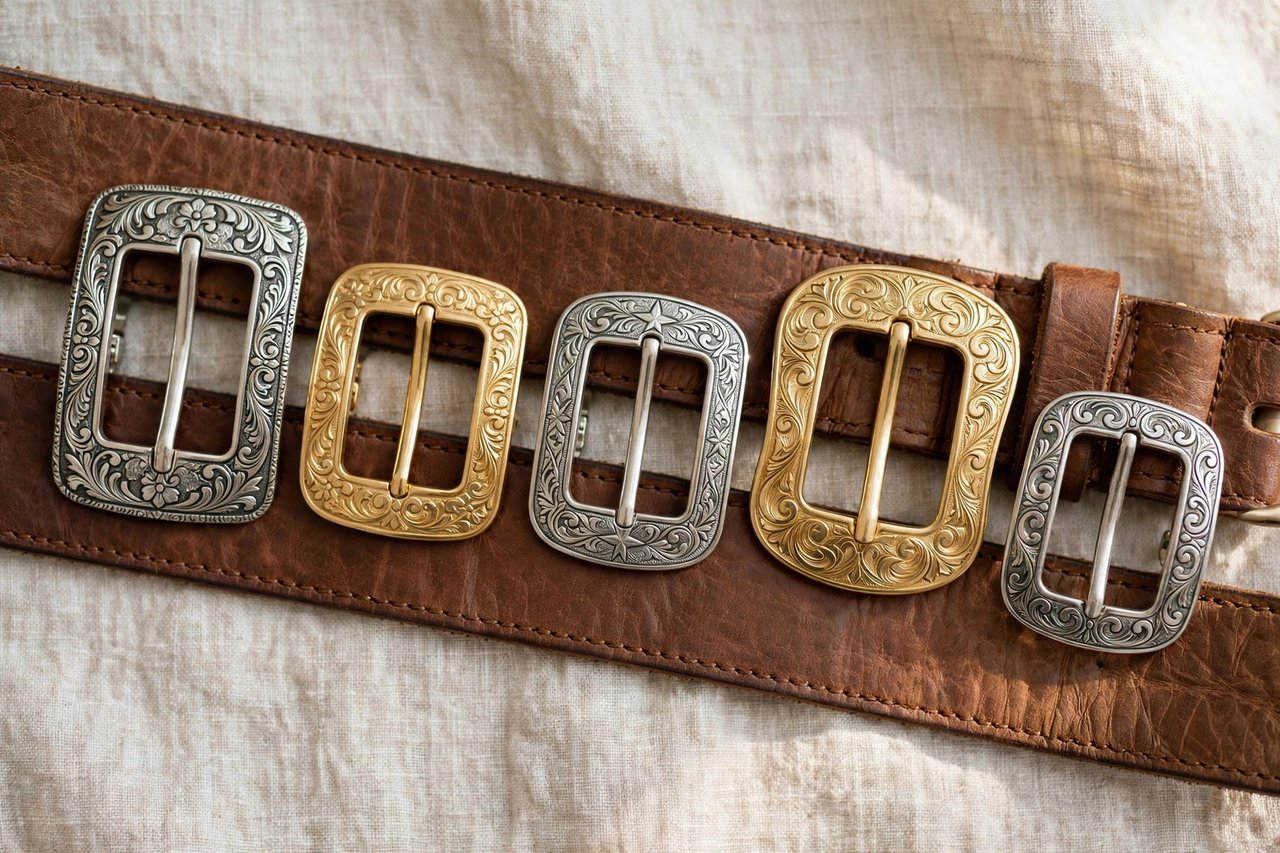
A belt buckle is small hardware with outsized influence: it decides whether a belt reads as classic, western, edgy or playful, and it is often the single detail that finishes an outfit at the waist. Many women own buckles without ever thinking of them as a separate purchase, because buckles usually arrive attached to a strap. Yet once you understand buckle types, materials and the simple snap systems that let one strap carry many buckles, the waist of your wardrobe becomes endlessly changeable for very little money or closet space. This guide names the main buckle families, explains how they fasten, and shows how to match buckle to strap and occasion.
The buckle also has a mechanical job that cheap versions fail at quietly. It must grip the strap without slipping, distribute tension so the leather does not tear at the holes, and lie flat enough not to dig in when you sit. A beautiful buckle that twists, pinches or slowly chews the strap is a bad buy at any price. Learning to judge weight, edge finishing and the attachment system will help you spot the difference in a shop or a product photo before you spend anything.
The Main Buckle Types
Frame buckles are the classic design: a metal frame with a single prong that passes through a hole in the strap. They are the quiet, versatile default on dress and casual belts alike. Plate buckles cover the front of the strap with a solid or engraved plate and usually fasten with a hook or stud behind the plate; they are the showpiece style of western belts and many fashion belts. Ring and O-ring buckles thread the strap through one or two rings with no holes at all, common on fabric, woven and casual belts. Box-frame and plaque buckles grip the strap by friction or a hidden clasp, giving a clean, hole-free look on dress belts.
Western buckles deserve their own mention: large, often silver-toned plates with engraved scrollwork, sometimes in a three-piece set with a matching tip and keeper. Novelty and statement buckles take shapes — hearts, bows, animals, logos in crystal or enamel — and turn the belt into jewelry. Interchangeable buckles are not a shape but a system: the buckle snaps or screws onto the strap, so a single quality leather strap can wear a plain frame for work, an engraved plate for weekends and a crystal novelty piece for a night out.
Materials, Finishes and Quality Clues
Most fashion buckles are cast from zinc alloy and plated in gold, silver, antique brass, gunmetal or rose tones. Good plating is even, warm in color and thick enough not to flake at the prong where friction concentrates. Solid brass and stainless steel buckles cost more, weigh noticeably more in the hand and age gracefully — brass develops a patina, steel shrugs off scratches. Leather-covered buckles match tailored outfits and bridal belts, while resin, wood and woven buckles suit casual and warm-weather straps. Enamel and crystal details add sparkle but also add fragile points, so check that stones are set into metal rather than simply glued onto a flat surface.
Simple quality checks work everywhere. Run a fingertip around the inner frame: rough casting edges will saw at a leather strap over time. Flex the prong gently; it should feel firmly rooted, not wobbly. On plate buckles, look at the back: a solid, cleanly finished reverse with a sturdy hook signals a piece made to be worn, while a hollow, sharp-edged back often means corners were cut. Weight is a useful clue but not a verdict — oversized novelty buckles are sometimes intentionally light so they do not drag a soft strap downward through the day.
Matching Buckle to Strap and Size
Compatibility is measured in millimeters and inches, and it is the detail that makes online buckle shopping succeed or fail. A buckle is sized to the inner width of the strap it fits: common women's widths are 25 mm for slim dress belts, 30 to 35 mm for everyday belts and 38 to 40 mm for jeans and western straps. A buckle made for a narrower strap will bind and twist on a wider one, and a wide buckle on a skinny strap slides around and looks lost. Measure your strap at the buckle end, inside the keeper, before ordering any replacement or interchangeable piece.
Fastening style must match too. Snap-on interchangeable buckles need a strap end finished with matching snaps, while screw-back systems use a small Chicago screw that can be fitted to many straps with a punched hole. Prong buckles need correctly spaced holes in the strap; ring buckles need a strap long enough to thread and fold back. Proportion matters aesthetically as well: a large western plate needs a substantial strap and a sturdy outfit like denim to balance it, while a delicate frame buckle disappears if it is asked to anchor a very wide belt. Match metal tones to your other hardware — bag clasps, boot buckles, jewelry — when you want a pulled-together finish.
Styling With Buckles as the Focal Point
Treat a statement buckle the way you would a pendant necklace: give it a clean background and let it be seen. A plate or novelty buckle shows best on a plain strap worn with a tucked top, a simple dress or a coat cinched at the waist. Frame buckles in polished metal quietly elevate trousers and pencil skirts without asking for attention. Western sets shine with denim, boots and plain tees or tucked plaid shirts, and they look most modern when the rest of the outfit stays restrained. For formal wear, choose slim straps, small buckles and finishes that match your shoes or jewelry rather than competing with them.
Interchangeable systems are where styling gets economical. One black and one brown quality strap, each with snap fittings, plus a small box of buckles — plain, engraved, crystal, novelty — can produce a dozen distinct belts. That is especially useful for travel, where two straps and three buckles weigh almost nothing and refresh outfits across a whole trip. When you wear a buckle as the focal point, keep other waist-level details quiet: skip large belt-adjacent prints and let trousers or jeans stay simple so the hardware earns its moment.
Care, Storage and the Vintage Buckle Hunt
Buckles ask for little care beyond protection from moisture and cosmetics. Wipe plated buckles with a soft dry cloth after wearing, keep them away from perfume spray that dulls finishes, and store statement pieces in small pouches so crystals and enamel do not chip against each other. Solid brass can be polished back to brightness or left to deepen, depending on the look you prefer; a jeweler or a dab of brass polish handles heavy tarnish. If a prong loosens or a snap weakens, a cobbler or jeweler can often repair it for less than the cost of a replacement buckle with real character.
One pleasure of this category is vintage hunting. Flea markets, estate sales and vintage shops turn up solid, beautifully cast buckles from decades when even inexpensive belts used substantial hardware. Check the strap width they fit, test the prong and clasp, and look for maker's marks on the reverse — then have a plain modern strap made or punched to fit your find. A vintage buckle on a fresh leather strap looks like a designer piece, costs a fraction as much, and gives an ordinary jeans-and-tee outfit a detail nobody else in the room is wearing.
Related Women's Guides
More to Explore
Photos

Looking for Women's Clothing Stores?
This guide helps you choose women's belt buckles by type and finish. To browse where to buy, visit our women's clothing store directory, where you can find retailers that carry them.