Buckle
Miscellaneous Definitions — the simple, durable clasp for belts, straps, boots and shoes, from Apparel Search
Search Apparel Search
At a Glance
Definition: A buckle is a clasp used for fastening two things together, such as the ends of a belt, or for retaining the end of a strap, valued for its simplicity, durability and adjustability.
Category: Miscellaneous Definitions
Word Origin
Buckle comes from the Latin buccula. Buckles were first used commonly in the cheek strap of the Roman Galea helmet, hence the connection with the Latin bucca, meaning cheek.
A buckle is the clasp that joins the ends of a belt, or holds the end of a strap in place. Before the zipper was invented, buckles were the standard way of fastening boots and other shoes, and they have never really left: belts made them familiar, but straps on footwear, bags and watches still depend on them. This page covers where the buckle came from, why so simple a device lasted, and where it is used today.
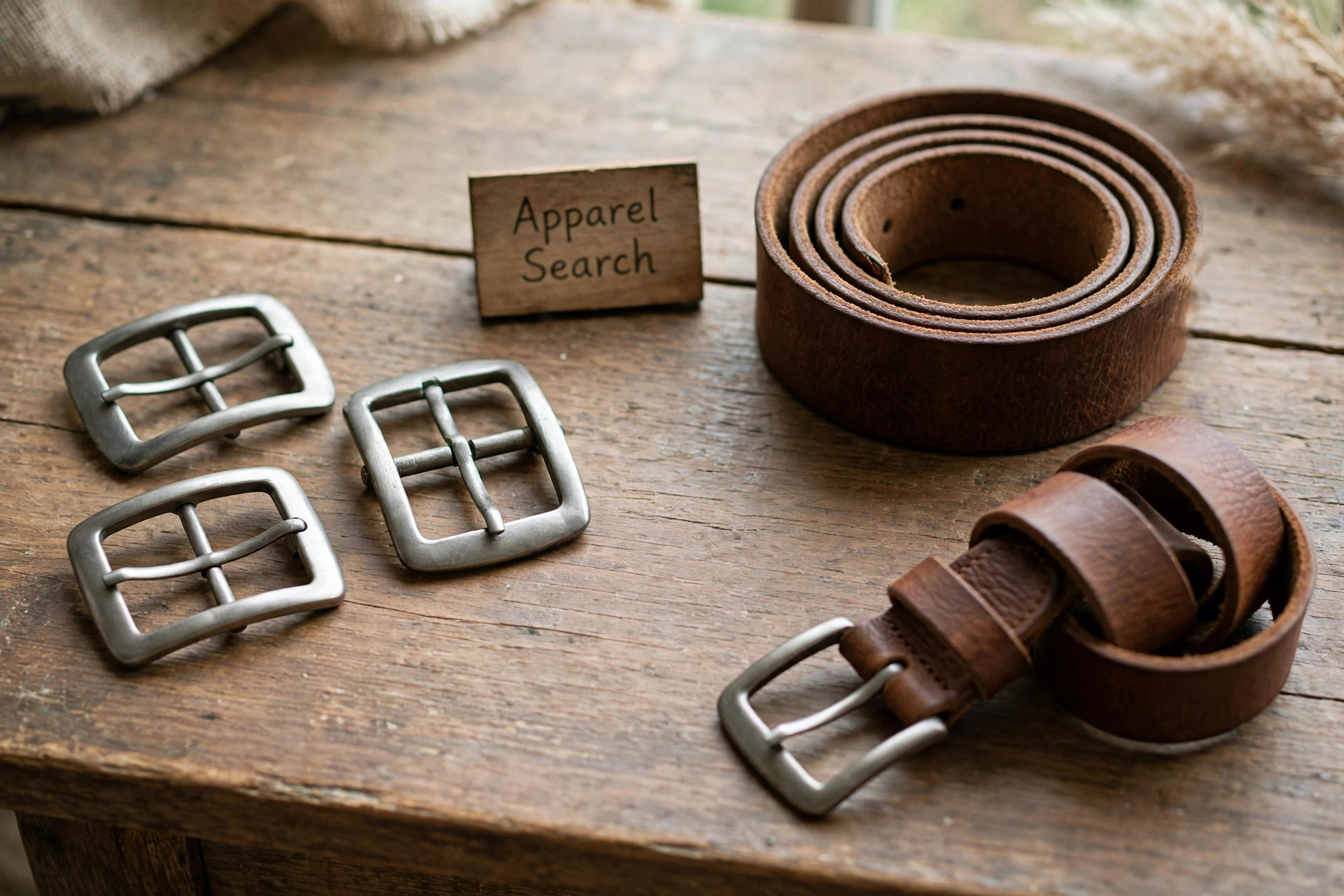
A Clasp That Adjusts
The buckle's appeal is mechanical. A strap is passed through or around a frame and held there — typically by a pin or bar engaging a hole in the strap, or by friction against the frame — so the fastening can be tightened, loosened and refastened along the strap's length without anything being cut, tied or sewn. That adjustability is what sets it apart among fastenings for clothing: the same belt fits at several settings, and the same boot strap can be drawn tighter or eased off.
Because of the simplicity and durability of the buckle, it became popular in harnesses and embroidery, and especially in shoes and boots. It was a typical clasp for clothing until the zipper was invented, and its long service explains its place in dress history: for centuries, wherever a strap, belt, shoe or piece of harness had to close securely and adjustably, a buckle was the normal answer.
Greece, Rome and the Cheek Strap
Buckles were used in ancient Greece and Rome, particularly in military equipment. Their first common use was in the cheek strap of the Roman Galea, the helmet — the use that gives the word its origin, from the Latin buccula, connected with bucca, a cheek. A fastening trusted to hold a soldier's helmet in place was well placed to spread into harness, footwear and dress, and its simplicity and durability carried it through every later change of fashion in fastenings.
Belts, Boots and Modern Uses
Today the buckle is most commonly used for belts, the use most people picture first: a frame at the end of a waist strap that fastens the belt and often serves as its visible decoration as well. It is still used in shoes and particularly boots. Tanker boots employ buckles because of the disadvantages of laces — straps fasten securely, with no loose lace ends to trail or come undone.
Buckles can also be seen on backpacks, watches and other wrist jewellery, or used for ornamental purposes on various other objects. They are commonly seen in modern gothic fashion, where pronounced decorative buckles on boots, straps and clothing are part of the style itself rather than only a fastening. The word also does duty beyond the object: a buckle can refer to a seat belt or safety belt, as in the phrase buckle up, and in Canadian heraldry a buckle is the brisure — the mark of difference — of an eighth daughter. Neither extended use changes the core meaning: a durable, adjustable clasp that fastens two things together or retains the end of a strap.
Common Questions
Where does the word buckle come from?
Buckle comes from the Latin buccula. Buckles were first used commonly in the cheek strap of the Roman Galea helmet, hence the word's origin in the Latin bucca, meaning cheek.
Why do tanker boots use buckles instead of laces?
Tanker boots employ buckles because of the disadvantages of laces: buckled straps fasten securely without loose lace ends to come undone or trail.
Where are buckles used besides belts?
Buckles are still used in shoes and particularly boots, and they can also be seen on backpacks, watches and other wrist jewellery, or for ornamental purposes on various objects.